

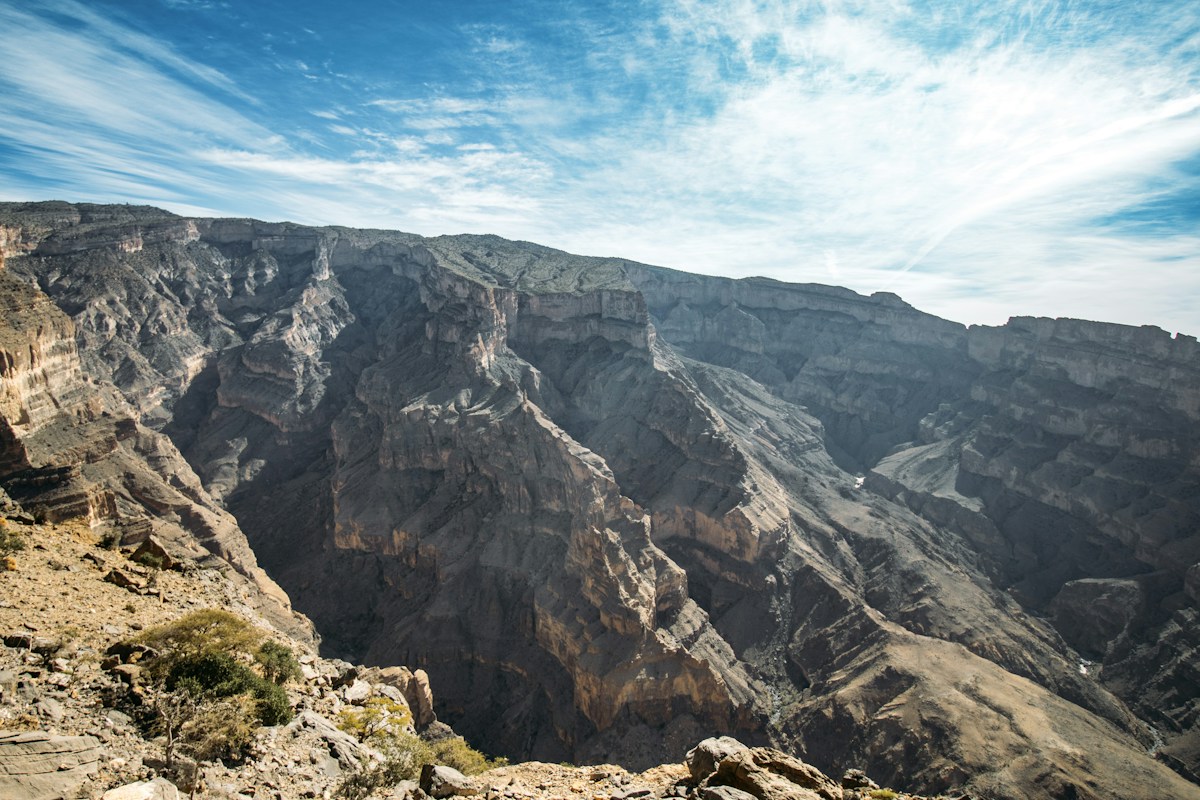
Cover photo: Rafael Peier / Unsplash License.
Updated 19 November 2026. Lire en français
For a first road trip combining Muscat, the Hajar Mountains and the Sharqiya Sands, the cooler months generally provide a simpler starting point. Choosing dates still requires looking at activities and overnight conditions, not just the afternoon temperature. A mountain stop, a wadi walk and a desert night call for different preparation.
This guide provides climate reference points for planning. Use the Oman itineraries to arrange the stages and the Oman rental overview to identify the vehicle and dates you want to discuss.
The best period depends on your route
Experience Oman describes a relatively mild, dry winter from November to early March, very hot lowland summers and cooler mountain conditions. Its Sharqiya Sands guide recommends September to April for the desert. October to April is therefore a useful broad planning window for northern Oman, but the ends of that period should not be assumed to feel like January.
| Period | What it changes for a road trip |
|---|---|
| October and November | The transition towards milder weather. Still check lowland temperatures and heat during walks or while setting up the tent. |
| December to February | A useful winter starting point for combining coast and desert. Prepare for cooler mountain nights and leave time to arrive before darkness. |
| March and April | Increasing warmth. Adapt activity times and exposed stages instead of automatically retaining a midwinter schedule. |
| May to September | Lowland heat becomes a major planning factor. Region, altitude and sleeping conditions need specific attention; a winter circuit cannot simply be copied. |
| Dhofar khareef | Approximately mid-June to September in official climate guidance. This southern phenomenon needs separate consideration from northern weather and current security advice. |
These are descriptions of usual climate, not predictions for an individual date or evidence of road conditions. Compare your dates with the places you actually intend to visit and leave room to move an activity.
Coast, mountains and desert require different overnight plans
Muscat and the coast: organise exposed activities
Oman’s foreign ministry tourism information highlights strong summer heat in the lowlands. For a trip during that period, investigate visit times, shaded breaks and suitable overnight accommodation. A rooftop tent should not be treated as an air-conditioned room. Driving air conditioning does not establish the temperature of the sleeping setup when parked.
Set a pace that suits the people travelling, especially for walking and exposed sightseeing. Identify drinking-water supplies and retain an indoor option if the planned night becomes unsuitable. The camping guide explains water planning and how to assess overnight locations.
The Hajar Mountains: bedding, altitude and wind
Relatively cooler mountain conditions do not remove the need to read a local forecast. Ask what bedding is supplied, which extra sleeping bags or blankets are appropriate and how the tent should be used in wind. A low valley and a high-altitude site can require different preparation on the same night.
Check the approach against the vehicle and current road conditions too. The driving guide distinguishes Jabal Akhdar, Jebel Shams and unpaved tracks. Pleasant weather does not grant permission to use a road or camp inside a reserve.
Sharqiya Sands: heat, wind and a clear meeting point
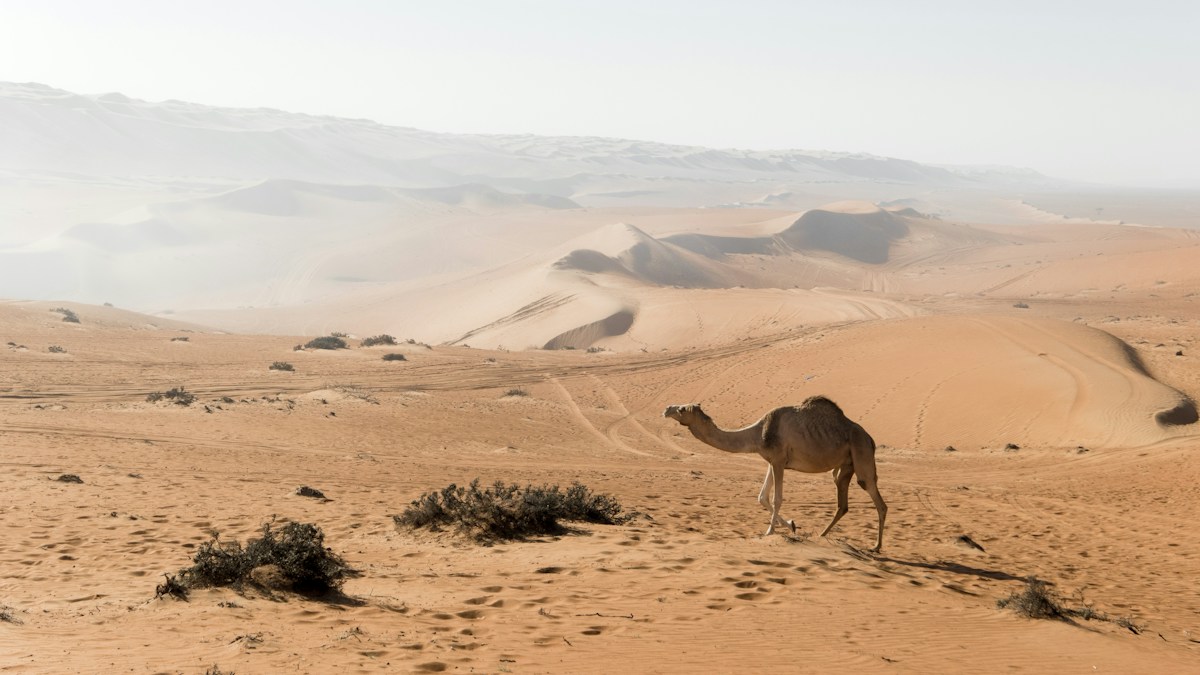
The tourism portal’s recommended desert season covers several months. Before a night in the sands, confirm the actual location, approach, bedding and meeting arrangements with any planned escort. A daylight arrival leaves more time to set up and adjust the evening if necessary.
Wind and visibility can change the activity even within your chosen season. Keep the organiser’s contact available offline, and do not turn a cancelled camp approach into an improvised dune crossing.
Wadis and cyclones: warnings take priority over the calendar
No month makes a wadi automatically accessible. Oman Meteorology advises against camping or parking near wadis even when they appear dry, and against crossing flooded roads. A favourable Muscat forecast does not establish conditions in another valley. Before a visit, check warnings for the relevant area and local instructions; cancel the approach when conditions require it.
For tropical systems, the Civil Aviation Authority explains that dangerous effects can occur outside the cone showing the probable path of the centre. Being outside that shape does not establish safety. Follow impact warnings, closures and authority instructions instead of drawing your own conclusion from a track map.
Build in an activity that can move or be replaced. A different visit should remain possible without a rushed, long-distance drive. If a walk or excursion is cancelled, another entrance to the same site is not automatically a usable alternative.
Khareef, islands and turtles: check the terms of each visit
Khareef changes Dhofar’s climate during part of the summer, according to Experience Oman. It is not a countrywide season. Nor does it establish that a southern journey should go ahead: as checked on 19 November 2026, French advice recommends avoiding Salalah, Duqm, Musandam and the Yemen border except for essential reasons. The FCDO also describes potential regional disruption. Salalah should therefore not be presented as an automatic summer alternative.
At the Daymaniyat Islands, the Environment Authority prohibits landing and camping from May to October. This does not mean that every marine excursion is closed throughout those months. Confirm the permitted programme, required permissions and weather conditions with the organiser.
For turtles, use an organised visit and follow the Ras Al Jinz reserve arrangements. Official nature information describes nesting that varies through the year; a recommended period cannot promise a sighting. Protected beach access remains regulated whatever the season.
Check your dates at three stages
- Before confirming: review the climate of each region, time available, security advice and change conditions. Establish the sleeping equipment and vehicle access arrangements.
- Shortly before departure: consult Oman Meteorology information, any closures and activity confirmations. Check special opening arrangements if the trip overlaps holidays or Ramadan.
- Every morning: review local alerts, the next approach and the backup plan. Change an activity before committing to an isolated road.
Leave a financial allowance for a different overnight stop or replacement activity too. The budget guide explains how to plan it without inventing a rental rate or assuming changes will always be free.
Frequently asked questions
Can I plan a trip during the summer school holidays?
Start by selecting regions and sleeping arrangements compatible with the expected heat, rather than copying a winter route. Consider altitude, timings, indoor accommodation and security advice. Dhofar’s khareef does not by itself establish that a trip to Salalah is appropriate.
Which month works for both mountains and desert?
Winter months offer a coherent starting point for that combination, provided you prepare bedding for higher-altitude nights. Then compare forecasts, activity access and vehicle conditions rather than seeking a month that guarantees clear skies.
Does a sunny sky mean a wadi visit can go ahead?
Sunshine alone is insufficient. Relevant warnings, the condition of the approach and local instructions still determine the decision. A dry channel is not an overnight campsite, and a barrier or closure must be respected even when your starting point looks sunny.
Should the equipment change with the season?
Confirm at least the bedding, cold protection and wind instructions, then water storage and charging for the proposed stages. Included equipment and optional extras depend on the vehicle; a tent photograph is not a confirmed inventory.
Your request is free, with no commitment and no immediate payment. Availability, equipment, permitted routes and rental conditions must be confirmed for your chosen vehicle and dates.
Information and official sources checked on 19 November 2026. Local rules, travel advice and weather conditions can change: review the official links before departure.