

Planning a Costa Rica road trip is one of the best ways to explore the country beyond the classic tourist route. Volcanoes, cloud forests, wild beaches, jungle lodges, waterfalls, national parks, surf towns and remote wildlife reserves are all easier to reach when you have your own vehicle.
But Costa Rica is not a destination where you should simply rent the cheapest car and follow Google Maps blindly. Roads can be narrow, steep, muddy, unpaved or affected by heavy rain. Some of the country’s most beautiful regions, including Monteverde, the Nicoya Peninsula and the Osa Peninsula, often require more planning than expected.
This guide will help you decide whether to self-drive, when a 4×4 is really necessary, how to choose the right itinerary, what to know about rental insurance, and how to build a realistic Costa Rica road trip from 4 to 21 days.
Whether you are planning a short loop from San José, a 2-week adventure across the Pacific and Caribbean coasts, or a slower 4WD camper road trip, the goal is simple: choose the right route, the right vehicle and the right pace.

Quick answer: should you drive in Costa Rica?
Yes, driving in Costa Rica is worth it if you want flexibility, independence and access to places that are harder to reach by shuttle or organized tour. A self-drive trip is especially useful if you want to visit several regions in one journey, stop for wildlife, stay in rural lodges or explore beaches and mountain roads at your own pace.
A Costa Rica road trip is ideal for couples, families and small groups who want a mix of nature, beaches, adventure and freedom. It is also a great option if you prefer to avoid fixed tour schedules and want to adjust your route depending on weather, road conditions or last-minute discoveries.
However, self-driving is not for everyone. You may prefer shuttles or guided transfers if you are uncomfortable with mountain roads, nervous about driving in heavy rain, traveling alone during the wet season, or planning to visit very remote areas without much driving experience.
For a simple dry-season route between San José, La Fortuna, Manuel Antonio and the main Pacific coast, a standard car can sometimes be enough. For Monteverde, Nicoya, Drake Bay, rural lodges, unpaved roads or the wet season, a high-clearance SUV, AWD or proper 4×4 is strongly recommended.
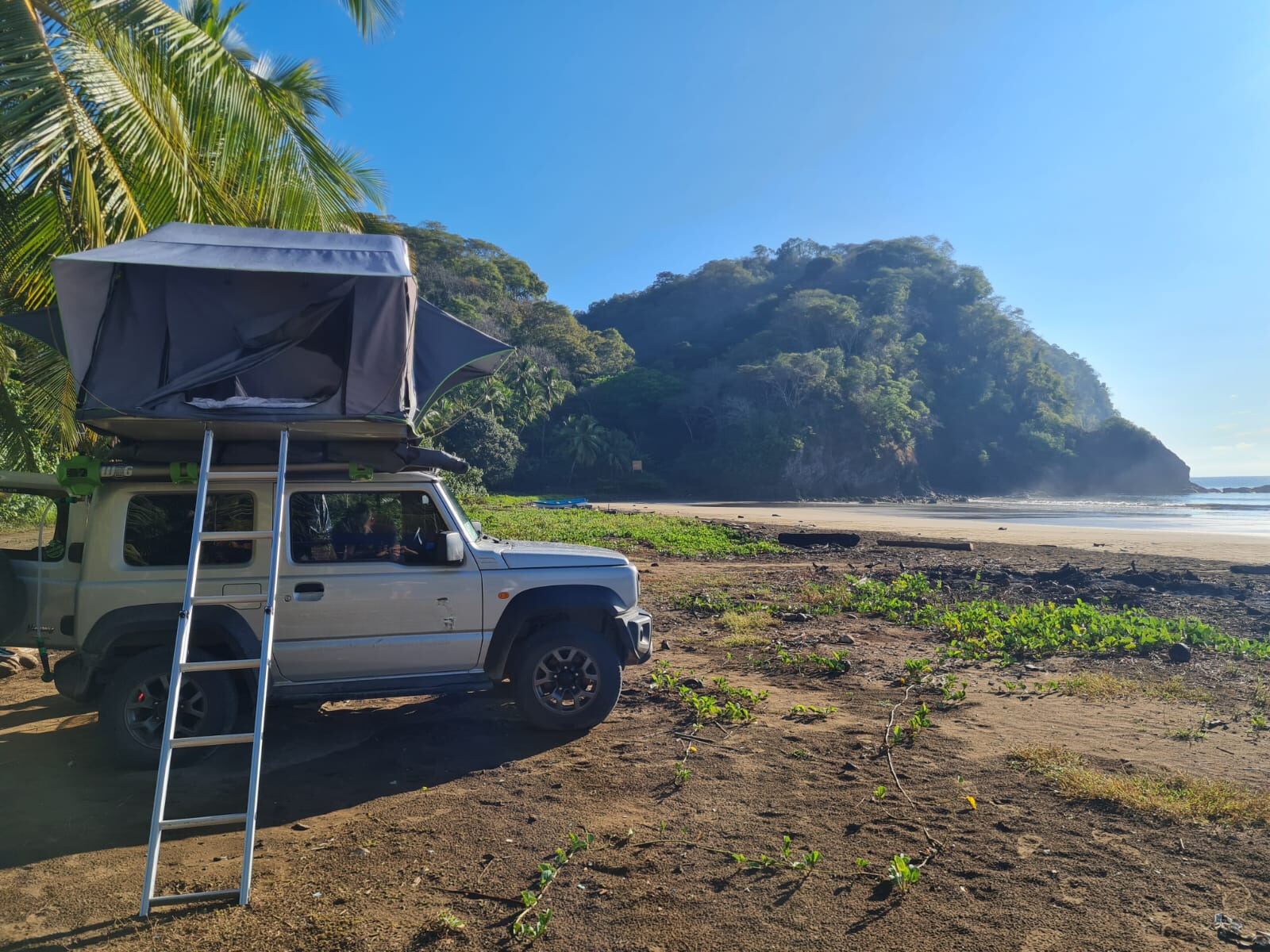
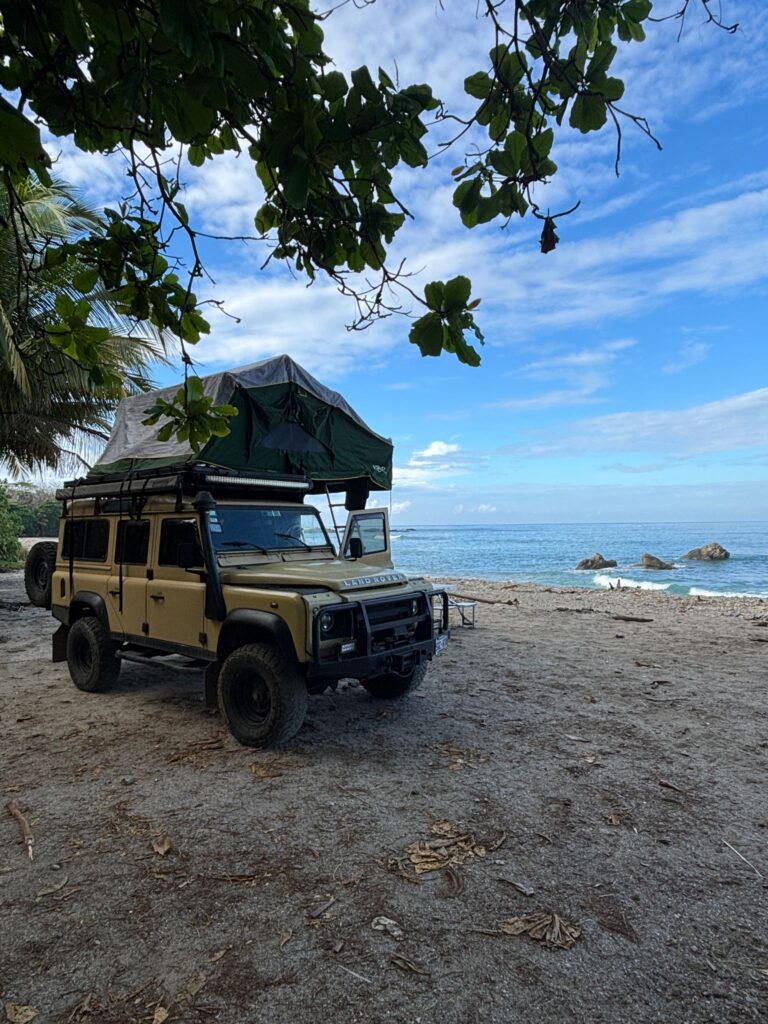
For travelers who want even more freedom, a 4WD camper or 4×4 with rooftop tent can be a smart option. It gives you more flexibility with your route, more autonomy, and the possibility to build a more adventurous Costa Rica road trip without depending only on hotels.
[CTA] Planning a Costa Rica road trip? Tell us your dates, route and travel style. Pampa Cruz can help you find a suitable 4×4, 4WD camper or adventure vehicle for your trip.
Button: Find a 4×4 camper in Costa Rica
At-a-glance Costa Rica itineraries: 4, 7, 14 and 21 days
Most Costa Rica road trips start and end in San José, close to the main international airport and rental hubs. The itineraries below are designed as realistic loops, with drive times, route logic and enough flexibility to avoid unnecessary backtracking.
Drive times in Costa Rica can vary a lot depending on weather, roadworks, traffic, ferry schedules and road conditions. Always leave more margin than you would in Europe or North America.
4-day Costa Rica road trip: Arenal and Manuel Antonio
This express itinerary works if you only have a few days and want a simple loop with two of Costa Rica’s most iconic areas: Arenal Volcano and Manuel Antonio National Park.
It is best for travelers with a tight schedule who still want a mix of volcanoes, rainforest, beaches and accessible wildlife.
Day 1: San José to La Fortuna / Arenal Volcano
Pick up your vehicle in San José and drive north toward La Fortuna. The road is mostly manageable, but it is best to leave early and avoid driving after dark.
Once you arrive, you can relax in the hot springs, enjoy views of Arenal Volcano or take a short walk around town.
Approximate drive time: 3 hours.
Day 2: Arenal exploration
Spend the day around La Fortuna. Popular options include Arenal Volcano hikes, hanging bridges, La Fortuna Waterfall, hot springs or wildlife watching.
This is a good place to start your trip because activities are easy to organize and the roads around the main attractions are generally accessible.
Day 3: La Fortuna to Manuel Antonio
Drive from La Fortuna to Manuel Antonio on the Central Pacific coast. This is a longer transition day, so leave early and avoid taking risky shortcuts through mountain roads unless road conditions are clearly good.
Manuel Antonio combines beaches, wildlife and a compact national park, making it one of the easiest places to enjoy Costa Rican nature on a short trip.
Approximate drive time: 5 hours.
Day 4: Manuel Antonio to San José
Visit the beach or national park early in the morning, then drive back to San José to return your vehicle.
Approximate drive time: 3 hours.
Vehicle recommendation for this route:
In dry season, a standard car or SUV may be enough for this itinerary if you stay on main roads. In wet season, or if you want more comfort and flexibility, a high-clearance SUV is a better choice.
A 4×4 is not always essential for this express loop, but it can still make the trip more comfortable and less stressful.
7-day Costa Rica road trip: Arenal, Monteverde and Manuel Antonio
This is one of the most popular Costa Rica road trip itineraries. It includes three very different environments: Arenal’s volcanic landscapes, Monteverde’s cloud forest and Manuel Antonio’s beaches and wildlife.
It is the best route for first-time travelers who want the classic Costa Rica highlights without building an overly complex itinerary.
Day 1: San José to La Fortuna / Arenal
Pick up your rental car or 4×4 and drive to La Fortuna. Keep the first day simple, especially if you are arriving after a long international flight.
Approximate drive time: 3 hours.
Day 2: Arenal
Use this day for hiking, hot springs, waterfalls, hanging bridges or wildlife tours. If you are traveling with children or want a smoother pace, Arenal is a good place to spend two nights.
Day 3: Arenal to Monteverde
The drive from Arenal to Monteverde is one of the most scenic parts of the route, especially around Lake Arenal. It can also be rough, steep and bumpy depending on the season.
This is where a high-clearance SUV or 4×4 becomes very useful. During the rainy season, a proper 4×4 is strongly recommended.
Approximate drive time: 3.5 to 4 hours.
Day 4: Monteverde Cloud Forest
Spend the day exploring Monteverde’s cloud forest reserves, hanging bridges, canopy tours or night walks.
Monteverde is cooler, greener and often misty. Roads around the area can be rough, so avoid planning too many long drives in one day.
Day 5: Monteverde to Manuel Antonio
Leave Monteverde early and drive toward the Central Pacific coast. Manuel Antonio is a good final stop because it combines wildlife, beaches, restaurants and easier access back to San José.
Approximate drive time: 4.5 to 5 hours.
Day 6: Manuel Antonio National Park and beaches
Visit Manuel Antonio National Park in the morning and keep the afternoon flexible for the beach or a short local activity.
This is also a good place to slow down after several driving days.
Day 7: Manuel Antonio to San José
Drive back to San José, return your vehicle and plan enough buffer before your flight.
Approximate drive time: 3 hours.
Vehicle recommendation for this route:
For this 7-day Costa Rica itinerary, a high-clearance SUV is recommended. A 4×4 is strongly advised in wet season, mainly because of the Arenal to Monteverde section and local roads around Monteverde.
If you want a more adventurous trip, a 4WD camper or 4×4 with rooftop tent can make this route more flexible, especially if you want to stay outside the busiest hotel zones.
14-day Costa Rica road trip: Caribbean, Arenal, Monteverde, Nicoya and Pacific Coast
A 14-day itinerary gives you enough time to experience several sides of Costa Rica without rushing every single day. This route connects the Caribbean coast, Arenal, Monteverde, the Nicoya Peninsula and the South Pacific coast.
It is a more ambitious trip, so the right vehicle matters. A 4×4 or high-clearance SUV is highly recommended, especially if you travel in the wet season or plan to explore unpaved roads.
Day 1: San José to Puerto Viejo de Talamanca
Start by driving to the Caribbean coast. Puerto Viejo offers a different atmosphere from the Pacific side, with lush vegetation, beaches, Afro-Caribbean culture and easy access to Cahuita National Park.
Approximate drive time: 4.5 to 5 hours.
Day 2: Puerto Viejo and Cahuita
Spend the day exploring beaches, Cahuita National Park, local restaurants or the coastal road around Puerto Viejo.
This is a good place to begin slowly before crossing back toward the mountains.
Day 3: Puerto Viejo to Bajos del Toro or central highlands
Drive inland toward the central highlands. Bajos del Toro is a beautiful waterfall and cloud forest area, but roads can be narrow and weather can change quickly.
If you prefer a simpler route, you can skip this stop and drive directly toward La Fortuna.
Approximate drive time: 4 to 5 hours, depending on the route.
Day 4: Bajos del Toro waterfalls or transfer to La Fortuna
Use the morning for waterfalls or nature walks, then continue toward La Fortuna.
Approximate drive time to La Fortuna: 1.5 to 2.5 hours, depending on your base.
Day 5: Arenal / La Fortuna
Spend a full day around Arenal. This is a good moment in the trip for hot springs, volcano hikes, hanging bridges or a slower rest day.
Day 6: La Fortuna to Monteverde
Drive around Lake Arenal and continue toward Monteverde. This is one of the most important sections where vehicle choice matters. Expect rougher roads, potholes and steep sections.
Approximate drive time: 3.5 to 4 hours.
Day 7: Monteverde
Explore the cloud forest, canopy bridges, coffee farms or night wildlife tours. Keep your schedule flexible because rain, fog and road conditions can affect timing.
Day 8: Monteverde to Puntarenas, ferry to Paquera, then Montezuma
Drive from Monteverde to Puntarenas, take the ferry to Paquera, then continue toward Montezuma or another Nicoya Peninsula base.
The ferry is part of the adventure, but it requires planning. Book ahead when possible and leave enough time for loading and waiting.
Approximate timing: 2.5 to 3 hours driving to Puntarenas, around 1 hour by ferry, then 1 to 1.5 hours driving to Montezuma.
Day 9: Montezuma and the Nicoya Peninsula
Spend the day around Montezuma, Santa Teresa, Cabuya or nearby beaches. Roads in this area can be dusty, rough or muddy depending on the season.
A high-clearance vehicle is useful, and a 4×4 is recommended if you want to explore more remote beach roads.
Day 10: Nicoya Peninsula to Uvita or Dominical
Drive back toward the mainland and continue south along the Pacific coast to Uvita or Dominical.
This is a long travel day, especially if ferry timing is not ideal. Leave early and avoid planning a major activity on arrival.
Approximate drive time: 5 to 6 hours, including ferry logistics.
Day 11: Uvita and Dominical
Use this day for beaches, waterfalls, Marino Ballena National Park, surf towns or a slower day on the South Pacific coast.
Uvita and Dominical are good bases if you want nature without going as far as the Osa Peninsula.
Day 12: Uvita to Sierpe, then boat to Drake Bay
Drive to Sierpe, park your vehicle in a secure lot, and take the passenger boat to Drake Bay.
This is the easiest and most common way to reach Drake Bay for many travelers. Do not plan this transfer too tightly, as boat schedules, weather and tides matter.
Approximate timing: 1.5 to 2 hours driving to Sierpe, then 1 to 1.5 hours by boat.
Day 13: Drake Bay and Corcovado option
Use this day for Drake Bay, snorkeling, wildlife, beaches or a guided Corcovado National Park day trip.
Corcovado is one of Costa Rica’s most spectacular wildlife experiences, but it requires planning and should not be rushed.
Day 14: Return toward San José or add one extra night
Returning from Drake Bay to San José in one day is possible but very long and tiring. You need to take the boat back to Sierpe, collect your vehicle, then drive back to the Central Valley.
If your schedule allows, add a 15th day or break the journey with one night on the Pacific coast.
Important note about this 14-day route:
If you only have exactly 14 days, consider removing one stop, such as Bajos del Toro, or making Drake Bay an optional extension. This will make the trip smoother and reduce the risk of spending too much time in transit.
Vehicle recommendation for this route:
For this route, a 4×4 is strongly recommended. Monteverde, Nicoya, rural lodges and the South Pacific can all involve rough roads, especially during the wet season.
A 4WD camper or 4×4 with rooftop tent can work very well for this type of itinerary if you want more flexibility and a more adventurous travel style.
21-day Costa Rica road trip: the grand loop at a slower pace
With 21 days, you can build a much better-paced adventure. Instead of trying to tick off every region, you can stay longer, add rest days and adapt to weather or road conditions.
A 21-day Costa Rica road trip can include Puerto Viejo and Cahuita on the Caribbean coast, Bajos del Toro or another highland waterfall region, La Fortuna and Arenal Volcano, Monteverde Cloud Forest, the Nicoya Peninsula, Uvita, Dominical, Drake Bay, Corcovado National Park and San Gerardo de Dota.
This longer route is ideal if you want to reduce long driving days and avoid the common mistake of moving every night.
Recommended pacing:
For a 21-day trip, plan at least two nights in most major stops. For Drake Bay, three nights is better. For Nicoya, choose one or two bases instead of trying to visit every beach town.
The best Costa Rica road trips are not the fastest ones. They are the ones that leave space for rain, wildlife, road delays, ferry timing and spontaneous stops.
Vehicle recommendation for this route:
A 4×4 or high-clearance SUV is the most comfortable option for a 21-day loop. If you want a more independent trip, a 4WD camper gives you the freedom to explore remote areas while keeping your route flexible.
[CTA] Planning a two or three-week road trip in Costa Rica? Send us your dates, number of travelers and preferred route. We can help you find a 4×4 camper or adventure vehicle adapted to your itinerary.
Button: Get a personalized Costa Rica road trip quote
Do you really need a 4×4 in Costa Rica?
You do not need a 4×4 for every Costa Rica road trip, but you should not underestimate the importance of ground clearance and road conditions.
Ask yourself these questions before booking your vehicle:
Are you driving to Monteverde? Are you visiting the Nicoya Peninsula? Are you planning to reach Drake Bay or the Osa Peninsula? Are you traveling between May and November? Are you staying in rural lodges or remote beach areas? Do you want to keep your route flexible? Are you considering a rooftop tent or camper-style road trip?
If you answer yes to two or more of these questions, a high-clearance SUV, AWD or full 4×4 is the safer choice.
When a standard car can be enough
A standard car may be enough for a dry-season route between San José, La Fortuna, Manuel Antonio and other main paved destinations.
This works best if you stay on main roads, avoid remote lodges, drive only during daylight and do not take shortcuts through mountain or rural roads.
When a 4×4 is strongly recommended
A 4×4 is recommended for Monteverde, Nicoya, Drake Bay access areas, rural roads, muddy tracks, river crossings, steep driveways and the wet season.
Even when a road is technically possible in a standard vehicle, a 4×4 gives you more comfort, more margin and more route flexibility.
Why choose a 4WD camper or 4×4 with rooftop tent?
A 4WD camper is ideal if you want a more adventurous Costa Rica road trip. It allows you to travel with more autonomy, adjust your itinerary more easily and enjoy a stronger sense of freedom.
It is especially interesting for travelers who want to combine beaches, mountains, national parks and remote areas without relying only on hotels.
For Costa Rica, the best setup is usually compact, high-clearance and easy to drive. Bigger is not always better on narrow roads.
[CTA] For Monteverde, Nicoya, Drake Bay or a wet-season road trip, a 4×4 gives you more safety, comfort and flexibility.
Button: Find the right 4×4 for Costa Rica
Costa Rica rental and insurance: what to check before booking
Rental insurance in Costa Rica can be confusing because the cheapest online price is rarely the final price. Some mandatory fees or insurance elements may appear later in the booking process or at the rental desk.
Before confirming any rental, make sure you understand exactly what is included.
Third-party liability insurance
Third-party liability insurance is generally mandatory in Costa Rica. It covers damage or injury caused to other people or property, but it does not fully protect your rental vehicle.
Always confirm the coverage limits and whether this insurance is already included in the quote.
Collision damage waiver
Collision damage waiver, often called CDW, reduces your financial responsibility if the rental vehicle is damaged.
Some credit cards offer CDW coverage, but this depends on your card, your country of residence, the rental company and the vehicle type. You may need written proof of coverage.
Even if your card offers coverage, some rental agencies may still require their own insurance. Always clarify this before arrival.
Deposit and credit card hold
Most rental companies place a security deposit or hold on a credit card. The amount can be significant, especially for 4x4s, campers or vehicles with rooftop tents.
Before booking, check the deposit amount, whether a credit card is required, whether debit cards are accepted, how long the hold takes to be released, and what happens in case of damage or late return.
Road restrictions and insurance validity
Insurance may not apply if you drive on prohibited roads, cross rivers, drive on beaches, ignore rental conditions or take the vehicle into restricted areas.
This is especially important in Costa Rica because some scenic routes may look tempting but can invalidate your coverage.
Before departure, ask your rental provider which roads or areas are prohibited.
Rental checklist before confirming
Before booking your Costa Rica 4×4 rental or 4WD camper, confirm the mandatory insurance included in the quote, CDW options, deductible, deposit amount, payment method, authorized roads, ferry rules, spare tire, roadside assistance process, pick-up and drop-off times, late return conditions and wet season restrictions.
[CTA] Want to avoid rental surprises? Tell us your route and we’ll help you find a suitable 4×4 or camper with clear rental conditions.
Button: Ask for vehicle availability
Road conditions in Costa Rica: what to expect
Costa Rica’s main roads are usually paved, but driving can still be slower than expected. Roads are often narrow, traffic can build up around towns, and weather can quickly change conditions in mountain or jungle areas.
You should always plan routes based on time, not just distance.
Main highways
Routes between San José, La Fortuna, Manuel Antonio and other major destinations are generally manageable, but they can include trucks, slow traffic, roadworks and limited shoulders.
Drive patiently and avoid tight schedules.
Mountain roads
Roads to Monteverde and other mountain areas can be steep, unpaved, bumpy and affected by fog or rain.
A high-clearance SUV or 4×4 is much more comfortable for these sections.
Coastal and rural roads
In Nicoya, the South Pacific and some rural lodge areas, roads may include potholes, mud, dust, steep access tracks or small river crossings.
During the wet season, conditions can change quickly.
Google Maps and Waze
Navigation apps are useful, but they are not perfect. They may suggest shortcuts that are technically shorter but slower, rougher or riskier.
Use offline maps, check your route in advance and ask locally before taking remote backroads.
Driving tips
Drive during daylight whenever possible. Avoid night driving, especially outside cities. Leave early on long transfer days. Do not rush ferry connections. Watch for pedestrians, cyclists, animals and sudden roadworks.
Keep fuel above half tank in remote areas. Check the weather before mountain or jungle drives. Avoid unmarked shortcuts. Ask your rental provider about restricted roads.
Ferry and boat access: Puntarenas, Paquera, Sierpe and Drake Bay
Some Costa Rica road trips involve ferries or boat transfers. These are not difficult, but they require planning.
Puntarenas to Paquera ferry
The Puntarenas to Paquera ferry connects the mainland with the Nicoya Peninsula. It is useful if you are heading toward Montezuma, Santa Teresa, Tambor or other southern Nicoya destinations.
If you travel with a vehicle, book ahead when possible and arrive early. Ferry delays can affect the rest of your route, so avoid planning tight connections.
Before taking the ferry, confirm that your rental company allows ferry crossings and that your insurance remains valid.
Sierpe to Drake Bay boat
For Drake Bay, many self-drive travelers park in Sierpe and take a passenger boat through the mangroves to Drake Bay.
You cannot simply drive everywhere around Drake Bay in the same way you would in other regions. Boat access is often the most practical option.
Bring only what you can carry, protect electronics from water and leave enough time between the boat transfer and any onward drive.
Costa Rica road trip budget: what to include
The total cost of a Costa Rica road trip depends on your season, vehicle type, insurance, accommodation style and activities.
Flights are not included in the estimates below, but your road trip budget should include more than just the rental vehicle.
Budget road trip
A budget road trip usually includes a small car or basic SUV, simple guesthouses or hostels, local restaurants, public beaches and selected national park visits.
This works best for simple routes on paved roads and travelers who do not need a 4×4.
Midrange road trip
A midrange road trip usually includes a high-clearance SUV or 4×4, good insurance, comfortable hotels or cabinas, guided activities in key parks and a mix of local restaurants and self-catering.
This is the best option for most first-time Costa Rica road trips.
Adventure or camper road trip
An adventure road trip usually includes a 4×4, 4WD camper or rooftop tent vehicle, more flexible routing, remote areas, campsites or nature lodges, and extra margin for road conditions.
This option is best for travelers who value freedom, outdoor living and access to less conventional routes.
Extra costs to remember
When planning your budget, include mandatory insurance, CDW or additional coverage, security deposit or card hold, fuel, parking, national park entries, guided tours, ferry tickets, boat transfers, toll roads, extra driver fees, camping or lodge fees, and late return or one-way fees if applicable.
[CTA] Your budget depends a lot on the route, season and vehicle type. Share your dates with us and we’ll check the most relevant 4×4 camper options.
Button: Request a Costa Rica 4×4 quote
Alternatives to self-driving in Costa Rica
Self-driving is not the only way to explore Costa Rica. Depending on your travel style, you may prefer a hybrid approach.
Shared shuttles
Shared shuttles connect popular destinations such as La Fortuna, Monteverde, Manuel Antonio, Puerto Viejo and Tamarindo. They are easier than driving but less flexible.
Private transfers
Private transfers are more expensive but comfortable. They are useful for families, groups or travelers who do not want to drive after a long flight.
Public buses
Public buses are inexpensive but slower. They work better for simple routes and travelers with more time.
Hybrid road trip
A hybrid plan can be very smart. For example, you can rent a car or 4×4 for Arenal, Monteverde and Manuel Antonio, then use a boat or shuttle for Drake Bay or remote extensions.
This can reduce stress while still giving you freedom for the most scenic parts of the journey.
Safety, family travel and accessibility
Costa Rica is a well-established travel destination, but road trip safety still depends on planning and common sense.
Families should allow extra time between stops, avoid long night drives and choose routes with enough downtime. Children will enjoy wildlife, beaches and short hikes more if the itinerary is not too packed.
Solo travelers should be more cautious with remote roads, especially in the rainy season. If you are traveling alone and plan to visit isolated areas, consider a simpler route or a hybrid option.
Accessibility varies a lot. Main hotel areas and popular parks are easier to manage, while Monteverde, Nicoya and Drake Bay can be more challenging due to steep roads, uneven ground, mud, boats or limited infrastructure.
Pets are also restricted in many national parks, so always check rules before traveling with animals.
Best Costa Rica road trip routes by travel style
Choosing the best Costa Rica road trip route depends on your travel style, your driving confidence, your season and the number of days you have.
Best route for first-timers
San José → La Fortuna → Monteverde → Manuel Antonio → San José.
This is the classic route for volcanoes, cloud forest, beaches and wildlife. It is the best option if you want a balanced first trip without making the itinerary too complicated.
Best route for a short trip
San José → La Fortuna → Manuel Antonio → San José.
This works well for 4 to 5 days if you keep the pace simple. It is not the most original route, but it gives you a strong introduction to Costa Rica.
Best route for adventure travelers
San José → Puerto Viejo → Arenal → Monteverde → Nicoya → Uvita → Drake Bay.
This route gives you coast-to-coast variety, but it requires more time and a suitable vehicle. It is best for confident drivers who want a more complete Costa Rica road trip.
Best route for a 4×4 camper trip
San José → Arenal → Monteverde → Nicoya Peninsula → Uvita / Dominical → optional Osa Peninsula extension.
This route combines mountain roads, beaches, wildlife and flexibility. It is one of the best options for a 4WD camper or 4×4 with rooftop tent.
Best route in the rainy season
Stick to a simpler loop with fewer remote roads, such as San José → La Fortuna → Manuel Antonio → Uvita → San José.
Avoid overloading your itinerary with Monteverde, Nicoya and Drake Bay in the same short trip during the wettest months unless you are comfortable with rougher roads.
[CTA] Want to build the right route for your travel style? Send us your dates, destination ideas and budget. We’ll help you find the best vehicle for your Costa Rica road trip.
Button: Plan my Costa Rica road trip
Final advice: build margin into your Costa Rica road trip
The biggest mistake when planning a Costa Rica road trip is trying to do too much. Distances may look short on a map, but drive times, rain, ferries, roadworks and slow mountain roads can quickly change your day.
A good itinerary should include realistic drive times, at least two nights in major stops, daylight driving, a suitable vehicle for the route, weather flexibility, clear insurance conditions and enough time for wildlife, beaches and unexpected stops.
If you want a simple, comfortable trip, focus on Arenal, Monteverde and Manuel Antonio. If you want a more adventurous journey, add Nicoya, Uvita and Drake Bay with a 4×4 or 4WD camper. If you have three weeks, slow everything down and let the road trip become part of the experience.
Costa Rica is one of the best countries in the world for a nature-focused road trip, but the right vehicle and route make all the difference.
[CTA] Planning a Costa Rica road trip? Tell Pampa Cruz your dates, number of travelers, route idea and budget. We’ll help you find a suitable 4×4, 4WD camper or adventure vehicle for your trip.
Button: Get my Costa Rica 4×4 quote
Final advice: build margin into your Costa Rica road trip
The biggest mistake when planning a Costa Rica road trip is trying to do too much. Distances may look short on a map, but drive times, rain, ferries, roadworks and slow mountain roads can quickly change your day.
A good itinerary should include realistic drive times, at least two nights in major stops, daylight driving, a suitable vehicle for the route, weather flexibility, clear insurance conditions and enough time for wildlife, beaches and unexpected stops.
If you want a simple, comfortable trip, focus on Arenal, Monteverde and Manuel Antonio. If you want a more adventurous journey, add Nicoya, Uvita and Drake Bay with a 4×4 or 4WD camper. If you have three weeks, slow everything down and let the road trip become part of the experience.
Costa Rica is one of the best countries in the world for a nature-focused road trip, but the right vehicle and route make all the difference.
[CTA] Planning a Costa Rica road trip? Tell Pampa Cruz your dates, number of travelers, route idea and budget. We’ll help you find a suitable 4×4, 4WD camper or adventure vehicle for your trip.
Button: Get my Costa Rica 4×4 quote
FAQ: Costa Rica road trip planning
Do I need a 4×4 in Costa Rica?
Not always. For simple paved routes in dry season, a standard car may be enough. For Monteverde, Nicoya, Drake Bay, rural lodges, wet season travel or camper-style trips, a high-clearance SUV or 4×4 is strongly recommended.
Is Costa Rica easy to drive around?
Costa Rica is manageable for confident drivers, but roads can be narrow, slow, steep, muddy or poorly lit. Avoid night driving, leave extra time and choose your vehicle based on your route.
How many days do I need for a Costa Rica road trip?
Seven days is enough for Arenal, Monteverde and Manuel Antonio. Two weeks allows you to add the Caribbean coast, Nicoya or the South Pacific. Three weeks is ideal for a slower loop with Drake Bay or the Osa Peninsula.
What is the best Costa Rica road trip itinerary for first-timers?
The best first-time route is San José → La Fortuna / Arenal → Monteverde → Manuel Antonio → San José. It combines volcanoes, cloud forest, beaches and wildlife without becoming too complex.
Can I visit Drake Bay with a rental car?
Many travelers drive to Sierpe, park the car there and take a passenger boat to Drake Bay. This is often easier than trying to drive all the way, especially during the wet season.
Is it safe to drive in Costa Rica at night?
Night driving is not recommended outside major towns. Roads can be poorly lit, with pedestrians, animals, potholes, rain or fog. Plan your drives during daylight whenever possible.
What insurance do I need for a Costa Rica car rental?
You should confirm mandatory third-party liability insurance, CDW options, deductible amount, deposit conditions and any road restrictions. Always check what is included before you arrive at the rental desk.
Is a 4WD camper a good option in Costa Rica?
Yes, a 4WD camper can be an excellent option if you want flexibility, autonomy and a more adventurous road trip. It is especially useful for travelers visiting several regions and wanting to stay open to route changes.
What is the best season for a Costa Rica road trip?
The dry season is generally easier for driving, especially on rural or unpaved roads. The wet season can be beautiful and less crowded, but you should choose your route and vehicle more carefully.
Can I do Costa Rica without driving?
Yes. You can use shuttles, private transfers, buses and guided tours. A hybrid plan can also work well: rent a car or 4×4 for part of the trip, then use transfers for more remote or difficult sections.