

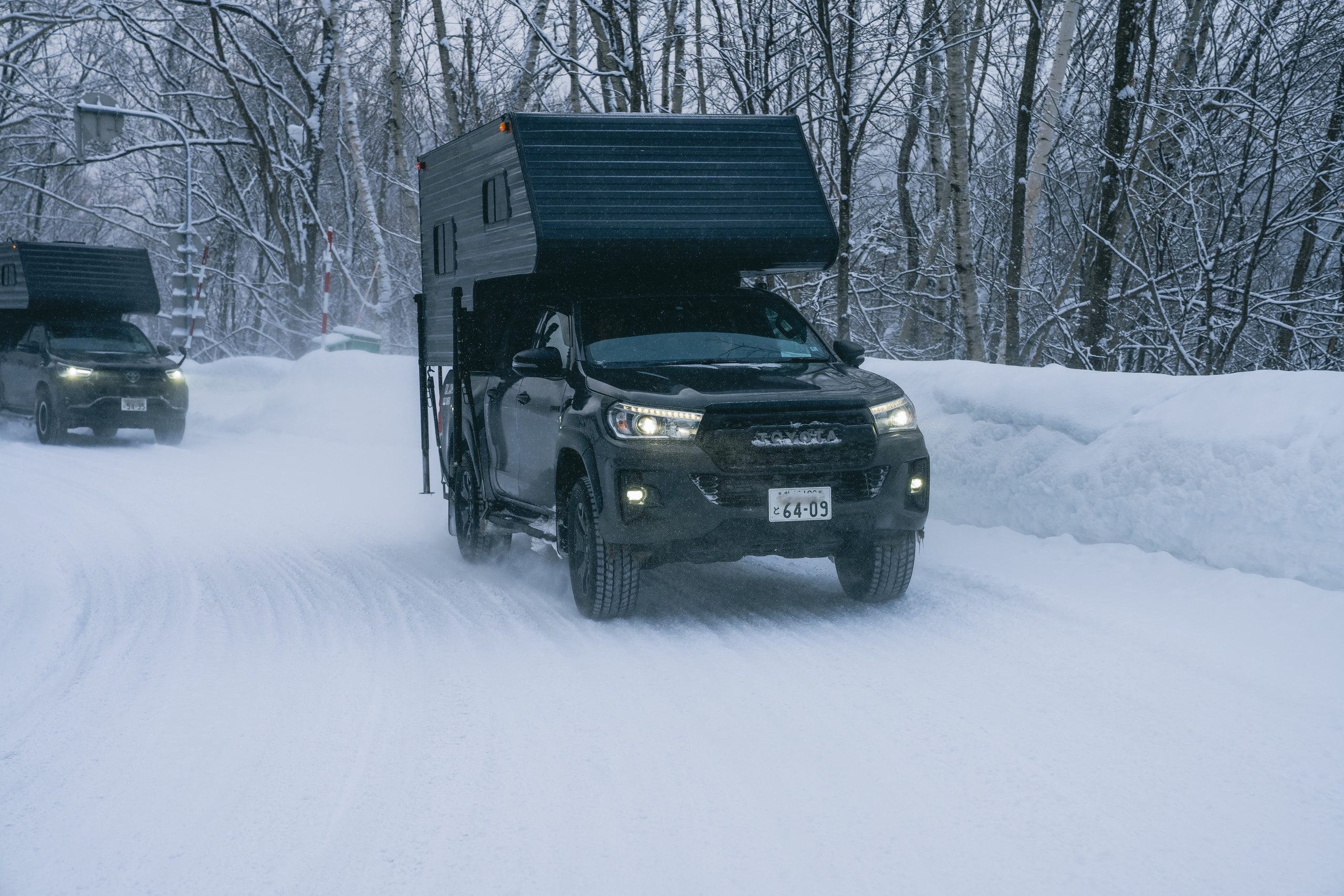
Header photo: a vehicle actually listed on Pampa Cruz. The photo does not confirm winter equipment or rental conditions.
A rental vehicle can make it easier to travel between Hokkaido’s ski areas. A successful independent trip still depends on three separate checks: valid driving documents, equipment suited to the conditions and a route you can change. Four-wheel drive does not replace any of them. This guide is for short-term visitors; residents and travellers with a particular re-entry history should check the rules that apply to their circumstances.
Practical information checked on 13 November 2026. Confirm rental conditions for your dates and check live road information during the trip. Start with the vehicles offered in Hokkaido, then use our 7-, 10- and 14-day Hokkaido ski itineraries to choose a manageable route.
Which driving documents do you need in Japan?
The deciding factor is the country that issued your licence. The Japanese National Police Agency describes two main routes for visitors: an International Driving Permit under the 1949 Geneva Convention, or an eligible national licence with an authorised Japanese translation. A self-made translation or an unverified online “international licence” is not a substitute.
| Licence issued in | Documents to prepare for this visitor route |
|---|---|
| France, Belgium, Switzerland, Germany | Original national licence with a Japanese translation prepared by an authorised organisation. |
| United Kingdom, United States, Canada | A valid 1949 Geneva Convention IDP; bring your original national licence too. |
| Australia, New Zealand | A valid 1949 Geneva Convention IDP and your original national licence. |
| Other issuing countries | Check the applicable NPA or JAF procedure before booking. |
A French-issued international permit is not accepted for this purpose: the Japanese embassy in France explains the national-licence-and-translation route. Bring your passport so your entry date can be checked. Permission to drive is limited by both document validity and the period allowed after arrival.
Arrange documents for every driver
Read the current JAF guidance before travelling. Translation applications are now online rather than made over the counter. JAF’s direct online application requires access from a network in Japan. Do not plan an airport pickup around an assumed instant translation. Each person who may drive needs the correct documents and must be accepted under the rental agreement. Check the vehicle category, minimum age and driving experience required by that particular rental.
Check winter equipment before selecting a vehicle
The Hokkaido government’s winter driving guidance highlights ice that can be difficult to see and sudden snowfall in mountain areas. Ask for a clear answer to these practical questions before you make the vehicle the basis of your itinerary:
- Which winter tyres will be fitted for your exact dates?
- Is the actual vehicle 4WD, AWD or two-wheel drive?
- Are compatible chains supplied, and what use is allowed or required by the rental instructions?
- What snow-clearing equipment and cold-weather washer fluid are provided?
- Will everyone, their luggage and their ski equipment fit safely?
“Heating” may mean the cab heater used while travelling. It does not establish that the living space can be heated with the engine off. If you are considering overnight stays, read our guide to choosing a ski-trip vehicle and checking winter sleeping capability.
Build a route that can absorb a change in weather
A map’s journey time is a useful indication of scale, not an arrival promise. For a first visit, spend several nights in each area, make longer moves in daylight and leave room to change a stage. It is easier to manage a shorter ski day than a return schedule with no room for a closed road.
Before moving between bases, consult the MLIT road restriction service and Hokkaido’s official weather information links. Check the complete route, including the roads between your overnight stop and the resort. If restrictions or official advice make the move unsuitable, postpone it and use your alternative accommodation plan.
Allow time at both ends of the rental
A long flight, paperwork, an unfamiliar vehicle and a night drive are a demanding combination. Allow time to understand the controls, load equipment and settle into your first overnight stop. Towards the end of the trip, move back towards the return location before your flight day. The airport you fly into is not necessarily the vehicle handover point: confirm the address, transfer arrangements, opening hours and any additional charges.
What should you check at handover?
Compare the vehicle you receive with the equipment agreed in advance. Record its condition as part of the handover, ask for a demonstration of unfamiliar controls and save the assistance number. Note the vehicle’s height and parking limits. Find the supplied winter equipment and check that you can reach it after loading your luggage. Keep bags secured and doors clear.
On the road, use a cautious pace, leave more space and avoid abrupt inputs. Bridges, shaded areas and junctions deserve particular care. If snow and ice driving are outside your experience or comfort level, consider a trip based around booked transfers and fixed accommodation instead. Those services need to be arranged separately; hiring a vehicle should not make you feel committed to an unsafe journey.
Understand the rental agreement and assistance
Check the insurance cover, excess, deposit and assistance procedure. Ask about any exclusions or charges involving tyres, chains, the roof, underbody damage, vehicle downtime or recovery from snow. The answer depends on the contract, so do not transfer conditions from another listing. Confirm permitted roads and what to do if weather affects the planned return.
If an accident occurs, the NPA says to report it to the police on 110, including accidents without injuries. Call 119 if an ambulance is needed. Follow the rental company’s instructions as well and retain the documents required for the incident.
Frequently asked questions
Does a 4WD let me drive anywhere in winter?
No. Tyres, road conditions, closures and rental restrictions still apply. A closed route remains closed regardless of the vehicle’s drivetrain.
Can someone else take over driving?
Only after the rental company has accepted them under its procedure. They also need driving documents valid in Japan.
Does a published listing confirm my travel dates?
No. A listing shows a vehicle offered for rental. Availability, equipment and the agreed conditions need confirmation for your particular request.
Do I have to sleep in the vehicle for a self-drive ski trip?
No. Use it for the journeys and book hotels or lodges separately. That is the practical default until winter sleeping equipment and conditions have been documented.
Prepare your Hokkaido rental request
Include travel dates, the number of passengers, the equipment you are bringing and whether you plan to use separate accommodation. Explore the Hokkaido vehicle options and prepare your request. Free, no-obligation booking request, with no immediate payment.