

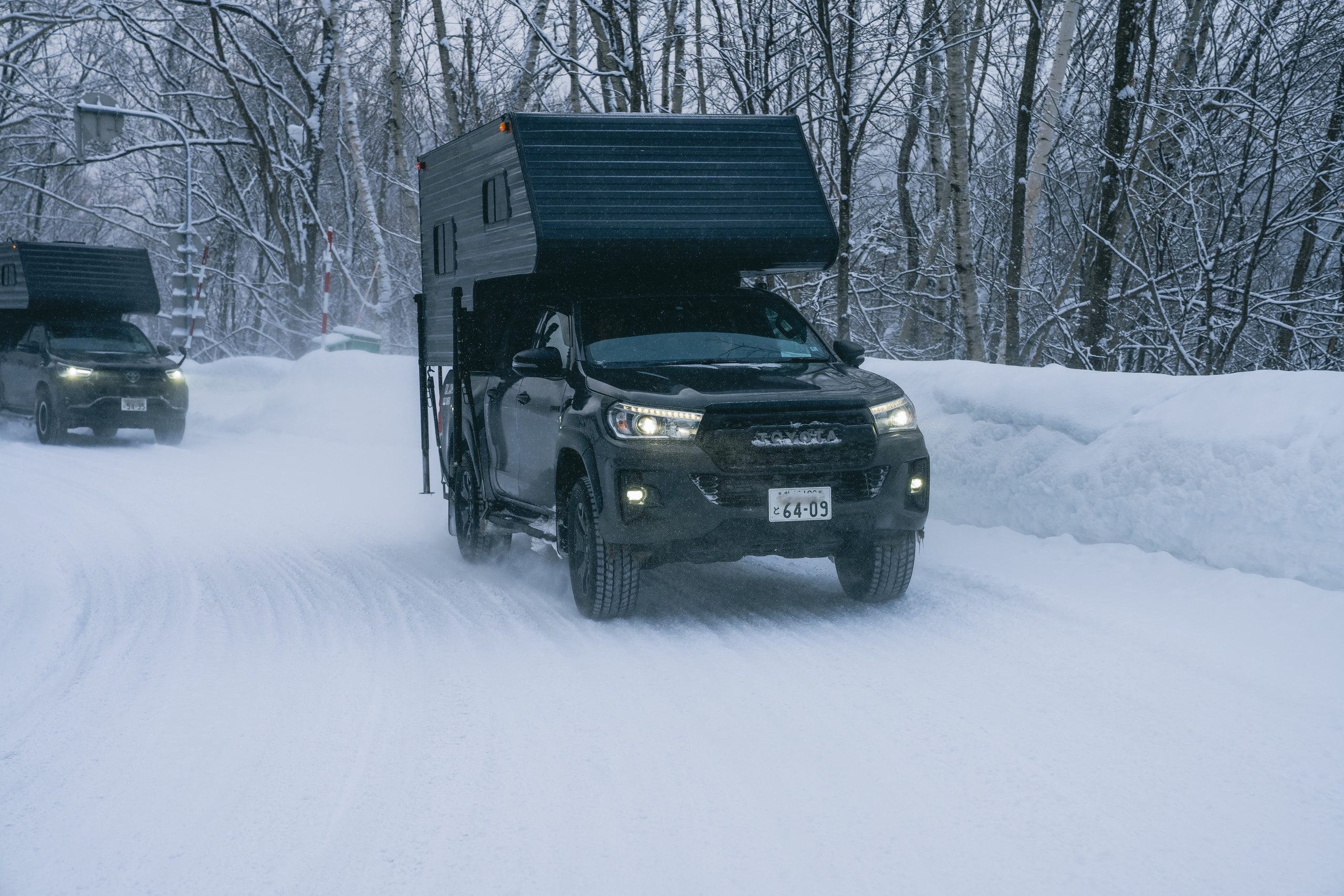
Header photo: a vehicle actually listed on Pampa Cruz. The photo does not confirm winter equipment or rental conditions.
A Hokkaido road trip can focus on lakes, hot springs and rural landscapes, starting and ending around Sapporo. With seven to ten days, we recommend choosing one part of the island and leaving some days with little driving. The routes below are primarily for travel outside the ski season. For a snow-focused holiday, use our separate Hokkaido ski itineraries.
Information checked on 13 November 2026. These are editorial route suggestions, not tours sold by Pampa Cruz or guaranteed driving schedules. Check roads, activities and accommodation for your dates. Sapporo is the published location of the Hilux listings; places suggested as stops do not automatically become rental collection or return bases.
When should you plan a Hokkaido road trip?
Spring: allow for lingering cold
The official Hokkaido spring guide explains that snow remains possible in April, while mornings and evenings can still be cold in May and June. A spring date does not guarantee summer road conditions. Choose a flexible route and check seasonal road and campsite openings before committing to a mountain stop.
Summer: give scenery and activities enough time
Flowers, walks and camping require a different plan from a ski holiday. The official summer guide also advises a warm layer for cooler mornings, evenings and poor weather. A week can focus on the lakes in the central-western area; ten days allow a few extra nights around Furano and Biei.
Autumn: choose the region as well as the date
Autumn colour does not peak everywhere at once. The official foliage guide distinguishes mountain areas from places around Sapporo, Jozankei and Toya. Check local updates for the year you travel. Keep a lower-altitude alternative if weather makes a mountain detour unsuitable.
A suggested 7-day loop from Sapporo
This route concentrates on the central-western region described in the official regional guide: Sapporo, Otaru, Toya, Noboribetsu and Shikotsu. It assumes six nights before returning the vehicle on day seven. Overnight accommodation or authorised pitches need separate arrangements.
| Day | Suggested area | Planning approach |
|---|---|---|
| 1 | Sapporo | Collection, supplies and vehicle familiarisation; keep the day light. |
| 2 | Otaru and surroundings | Explore locally and stay nearby, without adding an ambitious coastal excursion. |
| 3 | Jozankei, via the Sapporo area | Hot springs and a suitable walk; do not depend on an unverified mountain shortcut. |
| 4 | Lake Toya | Transfer and settle in for two nights. |
| 5 | Lake Toya and surroundings | Keep the same overnight base and choose an activity for the weather. |
| 6 | Noboribetsu | A day focused on this area, with booked accommodation or an authorised pitch. |
| 7 | Return to Sapporo, possibly via Shikotsu | Stop only if road conditions and return hours allow. |
The final day is not designed to fit a substantial hike, a lengthy soak and a closely timed flight around vehicle return. If your return appointment is early, come back to Sapporo the previous evening and remove a stop. An extra night in a practical location is usually preferable to a schedule that leaves you catching up every day.
With 10 days, add Furano and Biei
For a ten-day alternative, spend day one in Sapporo and days two to four around Furano and Biei. Return towards Sapporo and Otaru on day five, continue to Jozankei on day six, then spend days seven and eight around Toya. Day nine covers Noboribetsu. Keep day ten for the return, adding Shikotsu only if the schedule allows.
Avoid treating Furano and Biei as a handful of quick photo stops. The Biei Tourism Association gives approximately 34 kilometres and 40 minutes between the two towns, excluding unusual conditions and stops. Visits, meals, detours and parking take additional time. Staying several nights in the area lets you choose outings around the weather.
This loop does not include Shiretoko, Kushiro or the far north. Make those the focus of a different trip, or give them a substantial portion of a longer stay. Adding them merely to tick names off a list undermines the purpose of an unhurried route from Sapporo.
Choose the vehicle and overnight arrangements together
The catalogue currently includes two Toyota Hilux truck campers located in Sapporo. Being listed does not guarantee that either is available on your dates or can be delivered to each destination. Review the Hokkaido vehicle listings and confirm the exact meeting point, collection hours and return arrangements.
Separate belted seats, sleeping berths, luggage space and the facilities you need. For the Hilux vehicles listed in Sapporo, confirm the sleeping capacity, bed layout and dimensions before planning a family trip. A snowy photograph or a camper body does not establish suitability for cold overnight use. Our vehicle selection guide sets out the questions.
The JNTO camping guide explains the role of designated auto-camping pitches. Ask each place about its opening dates, acceptance of truck campers or rooftop tents, reservations and available services. An accessible parking area does not automatically permit setting up tables, cooking equipment or an overnight camp.
Prepare the driving days without overloading them
Mark overnight stops first, then add one main activity per day. Identify where you can buy food and refuel, allow for breaks and respect road closures even when a navigation app suggests the route. See our guide to driving in Japan and Hokkaido for documents and checks before collecting the vehicle.
Keep the arrival and departure days particularly simple. A late flight, collection handover or unexpected queue can remove the time you planned for sightseeing. Avoid paying in advance for an activity that depends on completing several tightly timed transfers that same day.
Hokkaido road trip FAQ
Can I drive around the whole island in seven days?
We recommend a regional loop for a first one-week trip. It gives you more time for visits and room to respond to changing weather.
Can I return the vehicle in Furano or Toya?
Those are suggested stops, not confirmed return locations. Any different collection or return point needs acceptance and a price before you book.
Do I have to sleep in the vehicle every night?
No. Plan hotels, authorised nights in the vehicle or a mixture, depending on confirmed equipment and the places available for your dates.
Compare vehicles for your Hokkaido road trip. Free, no-obligation booking request, with no immediate payment.