

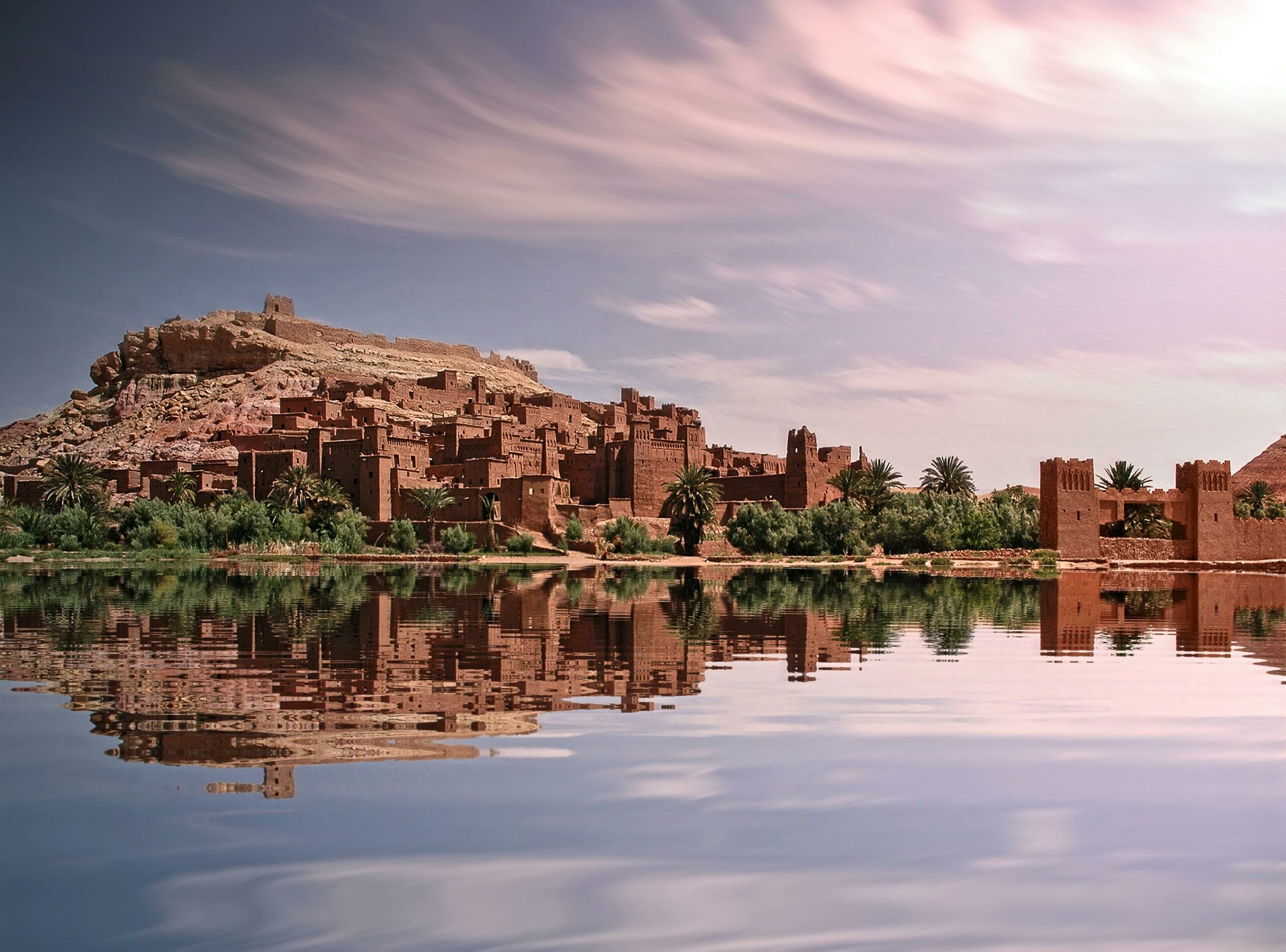
Looking for a 14-day Morocco road trip in a 4×4 camper with a rooftop tent? This itinerary combines the Atlantic coast, the Anti-Atlas Mountains, the Drâa Valley and the spectacular landscapes near the Sahara. Starting and ending in Marrakech, it brings together surfing villages, mountain passes, oases, gorges and desert viewpoints.
Before you go: this is an ambitious sample itinerary, not a guaranteed route or a list of authorised off-road tracks. Driving times and road conditions vary considerably; some daily stages may be too long in winter or after rain. Adjust the route to your vehicle’s rental restrictions, the weather, your comfort and the number of days available. Staying longer in fewer places is often the better choice.
First, browse 4×4 campers and rooftop tent vehicles available in Morocco. Pampa Cruz lists Suzuki Jimny, Nissan Navara campers and Mitsubishi Pajero pop-up-roof campers, subject to individual equipment and availability. Booking requests are free and non-binding.
Why travel through Morocco in a 4×4 camper?
Morocco offers remarkable variety within one journey: historic medinas, seafood on the Atlantic coast, mountain villages, palm groves and desert scenery. An equipped vehicle allows you to adapt the itinerary, cook simple meals and sleep at authorised sites. However, a 4×4 does not automatically grant access to difficult desert tracks, dunes or protected areas.
For most travellers, a self-drive itinerary is best planned around accessible paved roads and clearly authorised secondary routes, leaving technical desert excursions to qualified local operators.
Day 1: Marrakech to Essaouira
Collect your camper, check the camping equipment and start with the journey to Essaouira. Explore its historic medina, fishing port and restaurants. Allow time for a vehicle handover and supplies rather than rushing to arrive after dark. Spend the night in authorised accommodation or at a suitable campsite.
Day 2: Essaouira to Imsouane
Follow the Atlantic coast towards Imsouane, a village known for its bay and surfing culture. Depending on the season and current swell, choose a suitable beach or simply enjoy the atmosphere. Do not assume the coast is suitable for wild camping or beach driving.
Day 3: Imsouane to Agadir
Continue to Agadir, where you can explore the seafront, buy provisions and organise the next part of your journey. The city is a practical base before entering the mountains. A campsite or established accommodation can make a comfortable stop.
Day 4: Agadir to Tafraoute
Head inland into the Anti-Atlas towards Tafraoute. The landscape shifts from coastline to mountains and rock formations. Drive slowly on mountain bends and stop at accessible viewpoints. Any secondary tracks should be cleared with the rental company in advance.
Day 5: Tafraoute to Ouarzazate
This can be a demanding drive, depending on the route and road conditions. Cross the southern mountain landscapes towards Ouarzazate, known for its kasbahs and film heritage. Consider splitting this stage into two days if you prefer relaxed travel or need to avoid driving after dark.
Day 6: Ouarzazate to Zagora
Travel through the Drâa Valley towards Zagora, taking time for palm groves and traditional villages. Plan your fuel stops before continuing south. Choose an authorised campsite or guesthouse for the night.
Day 7: Zagora to M’Hamid El Ghizlane
Continue towards M’Hamid, one of the gateways to the Moroccan Sahara. A stay in an authorised local camp is a safer alternative to independently following remote sand tracks. If you want a dune excursion, book with a qualified local guide and verify the rental restrictions.
Day 8: M’Hamid towards Tazarine
Allow a full day, and potentially more, to travel back through southern valleys towards Tazarine. Do not follow a direct line through the desert based on a GPS map: the appropriate public-road route may be much longer. Check your route locally and consider a different overnight stop if necessary.
Day 9: Tazarine to Merzouga
Continue across southeastern Morocco towards Merzouga and the dunes of Erg Chebbi. You can reach nearby accommodation on standard roads without driving the rental vehicle into the dunes. Local operators can arrange excursions and authorised desert camps.
Day 10: Merzouga towards Boulemane
Drive north through the valley landscapes towards Boulemane or another suitable overnight stop. This is a good day to slow down and explore villages, rather than concentrating only on kilometres.
Day 11: Boulemane to the Imilchil region
The Imilchil region is known for its mountain scenery and traditional villages. Check weather and road access carefully, particularly in colder months when mountain routes may be affected by snow or ice. Do not attempt closed passes in a rental 4×4.
Day 12: Imilchil to Tinghir
Travel towards Tinghir and the Todgha Gorges where road conditions permit. The region offers dramatic cliffs and accessible viewpoints. Mountain roads can be slow and remote, so avoid planning too many stops in one day.
Day 13: Tinghir, Jbel Saghro and Dadès Valley
Explore the area around Jbel Saghro and the Dadès Valley using roads authorised for your vehicle. Several scenic routes are winding or affected by seasonal conditions. You do not need to tackle difficult pistes to appreciate the landscapes.
Day 14: Dadès Valley to Marrakech
Return to Marrakech with plenty of time to check mountain conditions, refuel and complete the vehicle return. If the weather has changed or the route is long, plan an earlier return or an additional overnight stop. Finish with time to explore the city.
Best time for this Morocco 4×4 road trip
Spring and autumn often offer comfortable conditions for a route combining coast, southern valleys and some mountain areas. The hottest months can be difficult in desert regions, while winter brings the possibility of snow and road closures in the Atlas.
Read our best time to visit Morocco in a 4×4 camper guide before choosing dates. Conditions matter more than the calendar, especially in mountains and remote southern areas.
Where can you sleep in a rooftop tent in Morocco?
Choose authorised campgrounds, established accommodation or clearly permitted locations. Avoid assuming that beaches, dunes and roadside viewpoints are available for camping. The equipment needed changes by region: coastal wind, cold nights in the Atlas and summer desert heat all affect comfort.
Ask your rental partner about the sleeping setup, kitchen equipment, fresh water storage and any restrictions on the use of the vehicle.
Optional detours: surf, Atlas and desert
If surfing is your priority, spend more time around Taghazout, Imsouane and Essaouira. Our Morocco surf trip guide gives a more relaxed coastal route.
For mountain landscapes, explore our Atlas Mountains 4×4 road trip guide. For the Sahara region, see Merzouga, Zagora and M’Hamid by 4×4.
Morocco road trip FAQ
Is two weeks enough for Morocco by 4×4?
Two weeks is enough for a memorable journey, but the full route described here is ambitious. Choose fewer stops if you want more time for hiking, surfing and relaxing.
Do you need a 4×4 to visit Merzouga?
Not for the main approach to the village via public roads. Deep sand and remote desert tracks are separate activities that require special precautions and permission.
Can you use a rooftop tent in the Atlas?
Yes, where camping is authorised and the weather is suitable. Be prepared for cold nights and wind, particularly in winter.
Which 4×4 campers are available in Morocco?
Depending on availability, Pampa Cruz offers Suzuki Jimny, Nissan Navara Camper and Mitsubishi Pajero vehicles with camping configurations. Always check the specific vehicle listing.
Can I change the pickup or return location?
Some partners offer different pickup and drop-off locations at an additional cost, but options depend on the exact booking. Ask before reserving.
Ready to plan your own itinerary? Find your 4×4 camper in Morocco on Pampa Cruz. A booking request is free and carries no obligation.