

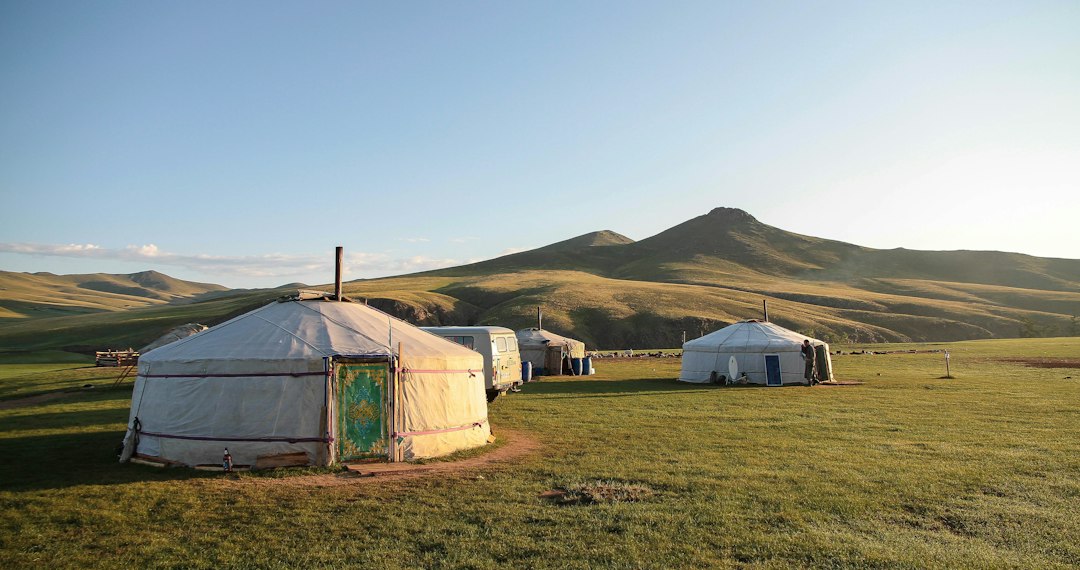
Mongolia — photo by Vince Gx on Unsplash.
The best time for a Mongolia road trip depends on the region, your sleeping arrangements and the route you are permitted to use. Climate averages help compare months; they cannot confirm that a track is open or predict the temperature inside your tent. For a first camping project, looking initially at June, July, August and early September is a useful planning approach, subject to local confirmation.
Choose the period that makes the whole journey work: a suitable vehicle, manageable stages, comfortable enough nights, verified access and realistic alternatives. Selecting only the warmest month can overlook rainfall. Choosing a less rainy period may mean planning for considerably colder overnight conditions.
What Ulaanbaatar’s climate averages tell you
This table gives the monthly mean temperature and average monthly precipitation total for the Ulaanbaatar station published by the Japan Meteorological Agency. The reference period is 1991–2020. These historical normals are not a forecast for your departure, overnight temperatures or a representation of every region in Mongolia.
| Month | Mean temperature | Monthly precipitation |
|---|---|---|
| January | −21.4 °C | 1.8 mm |
| February | −16.2 °C | 2.8 mm |
| March | −6.1 °C | 4.0 mm |
| April | 3.1 °C | 9.1 mm |
| May | 10.3 °C | 21.4 mm |
| June | 16.3 °C | 44.9 mm |
| July | 19.1 °C | 79.8 mm |
| August | 16.8 °C | 66.2 mm |
| September | 10.2 °C | 28.3 mm |
| October | 1.1 °C | 9.6 mm |
| November | −10.4 °C | 6.6 mm |
| December | −19.0 °C | 3.2 mm |
Sources: JMA station data and the 1991–2020 normals methodology, checked on 18 November 2026.
Within this series, July is both the warmest and wettest month. June and September are not interchangeable: their mean temperatures differ substantially. These comparisons apply to the named station. The Gobi, an upland valley and the shores of Khövsgöl need their own local checks before you choose overnight stops and equipment.
Match the period to your priorities
| Proposed period | Main planning question | How to adapt |
|---|---|---|
| May | Is your setup suitable for cold nights at the planned stops? | Confirm each overnight option and retain suitable indoor alternatives. |
| June | Are the route and services operating for your dates? | Check the specific circuit rather than assuming every area is accessible. |
| July–August | What changes if rain affects the tracks? | Keep time available and prepare a route using confirmed access. |
| September | Which overnight conditions and services remain suitable? | Avoid dependence on a single camp or connecting track. |
| October–April | Does the project need a specialist cold-weather arrangement? | Do not automatically reuse a summer itinerary or camping setup. |
This is a decision guide, not an opening calendar. No month removes the need to confirm the vehicle and permitted use. If a festival or event is a priority, verify its dates and allow it a genuine place in the schedule. Adding an event to a day already occupied by a substantial drive can make both parts of the plan impractical.
Make the seasonal decision region by region
Central Mongolia and the Orkhon Valley
Plan the main approach, final access to your accommodation and local excursions separately. Reaching a town does not establish the condition of a valley track. Several nights around one area can be more useful on a first visit than a chain of diversions, each dependent on different access conditions.
The Gobi
Build each day around your driving capacity, breaks and an identified overnight stop. Check wind, visibility and heat at the intended stages, together with water and fuel arrangements. Ulaanbaatar’s average temperature cannot determine the supplies you need in the Gobi. Keep an alternative if a visit or connecting journey has to be postponed.
Khövsgöl and the north
Your plan should identify the shore and overnight locations, rather than simply naming the lake. Check road access, night-time conditions and operating services for your dates. Reaching its southern end does not make a complete circuit a reasonable assumption: distance, permission and road conditions need separate examination.
Weather affects the route as well as your comfort
The FCDO highlights flooding, dust, snow and wind hazards. Check forecasts for the areas you will cross, then seek current local road information. Clear skies after a weather event do not establish that the affected access is usable again.
Agree a decision rule before departure: if the next stage cannot be confirmed, use the prepared alternative or remain somewhere suitable. That flexibility requires time, a reachable contact and a workable overnight option. It depends as much on the shape of your itinerary as on the equipment you pack.
Ask specific questions about sleeping outdoors
Find out what is actually supplied: sleeping spaces, mattresses, sleeping bags or blankets, protective equipment and setup instructions. Ask about the recommended operating temperatures of the kit, wind limitations and drying arrangements. A photograph of an open rooftop tent on a sunny day does not answer those questions.
Discuss everyone’s minimum comfort requirements: sleeping, toilets, sheltered meals and the frequency of indoor stays. With children or a group whose expectations differ, changing the overnight plan is more useful than assuming everyone will adapt. An additional night in the same place can also improve how the following stages feel.
Build your calendar in a useful order
- Choose one priority region and count the nights actually available.
- Discuss the season and local access before fixing every stage.
- Confirm a vehicle, sleeping arrangements and rental terms for your proposed dates.
- Arrange overnight stops, supplies and a simplified alternative.
- Check forecasts and official advice again before departure, then keep reviewing local conditions while travelling.
Keep a margin before your flight home. A spare day can become time in the capital if everything runs to plan, or absorb a change to the schedule. If your dates are tightly fixed, reducing the geographical scope gives you more flexibility than relying on favourable conditions for every day of the journey.
What to check again shortly before leaving
Return to the assumptions behind your plan. Are the intended overnight stops still confirmed? Has the agreed route changed? Does the equipment list match your sleeping needs? Can you contact the relevant person if the plan needs adjusting? Store the updated information somewhere you can access without relying on a live connection.
Revisit any choice that depended on a particular service operating. A changed overnight stop can also change fuel, water and driving requirements for that day. Update the whole stage together. Treat forecast uncertainty as a reason to preserve options, especially when the alternative would be a longer return journey.
Recheck entry requirements for a 2027 departure
As checked on 18 November 2026, Mongolia’s immigration agency lists a thirty-day tourist visa exemption for 34 nationalities during 2026. That notice does not confirm an extension into 2027. Verify the rules for your passport and travel dates before committing.
A suitable month does not itself make self-drive suitable for every traveller. Read your government’s advice and consider your experience and support arrangements. France Diplomatie advises against hiring without a driver, a relevant caution when assessing the wider project.
Questions about when to travel
Is July automatically the best month?
No. In the Ulaanbaatar normals shown here, both temperature and rainfall peak in July. Your region, overnight plans and permitted route determine the appropriate balance.
Can I use the same itinerary in June and September?
You can start with the same idea, but recheck the overnight conditions, services, access and equipment. Approval for one travel period does not establish suitability for another.
Does a rooftop tent make year-round travel possible?
Its presence alone does not demonstrate that. The entire arrangement must suit the expected conditions, including vehicle use, sleeping equipment and alternatives. Confirm the equipment guidance and practical limits.
When should I ask for a trip assessment?
Once you know your approximate dates, group and priorities. Concrete answers can then shape the itinerary. An initial discussion should not be confused with confirmed vehicle availability.
Ask Pampa Cruz to review your Mongolia plans. Share your preferred period and priorities. The enquiry is free, with no obligation or immediate payment; vehicles, availability and conditions remain subject to confirmation.