

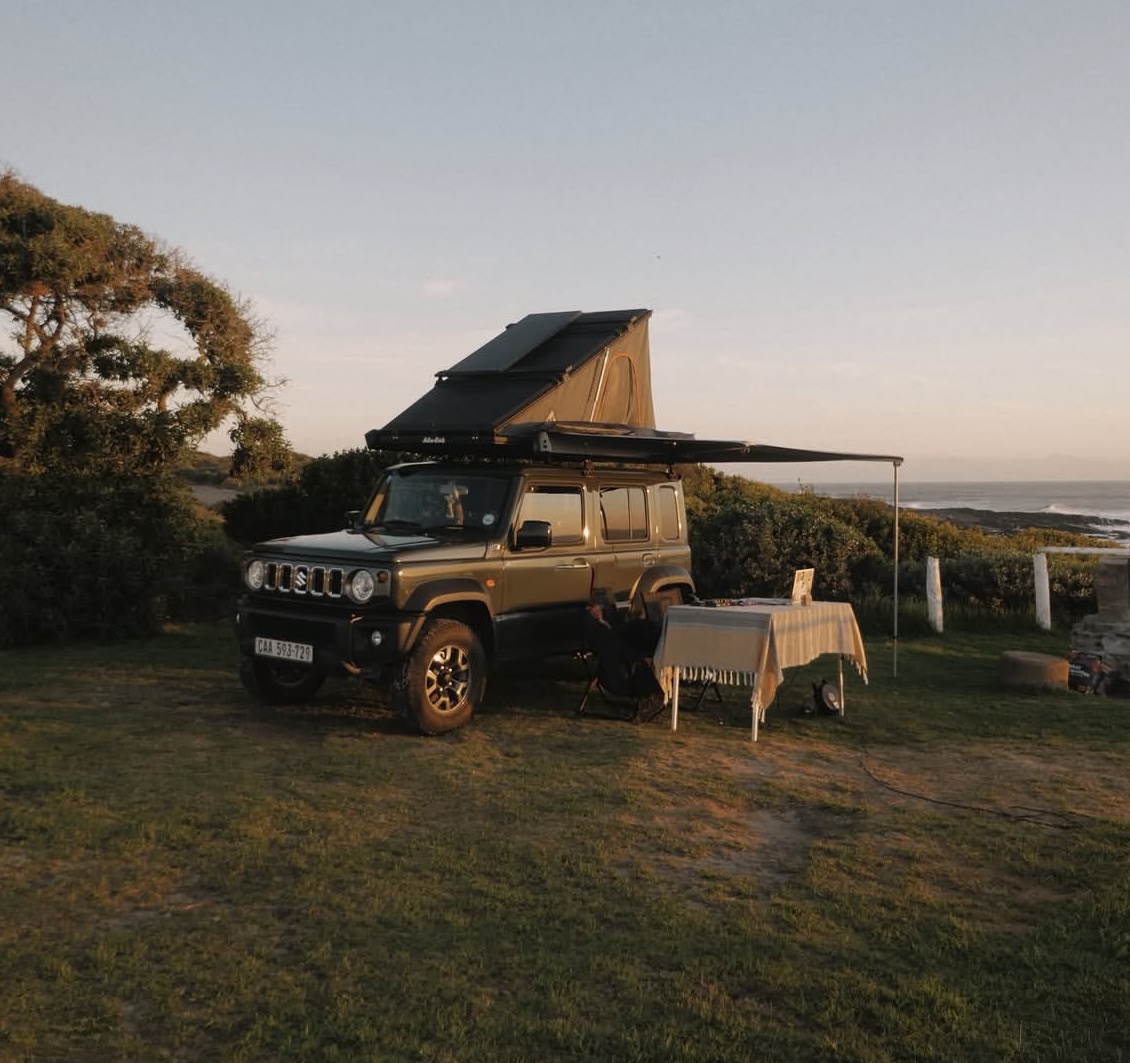
Preparing for AfrikaBurn in a 4×4 camper means planning several days of everyday camp life: sleeping, cooking, storing supplies, managing water and taking your waste home. Comfort often comes from details checked before departure: a suitable bed, equipment everyone can operate and a packing system that makes things easy to find.
AfrikaBurn 2027 is scheduled for 26 April to 2 May at Quaggafontein in the Tankwa Karoo. This camping checklist helps you prepare your vehicle and camp before leaving Cape Town. To compare sleeping arrangements, start with our AfrikaBurn 4×4 and camper rental page. Included equipment always depends on the particular listing and your confirmed rental inventory.
Is AfrikaBurn South Africa’s Burning Man?
AfrikaBurn is a regional event within the Burning Man network, held in South Africa’s Tankwa Karoo. Participants create the art, camps and activities together. When travelling by 4×4, plan for self-reliance: water, food, sleeping arrangements, power and taking your waste home. Your group sets up and manages its own camp while contributing to the wider community.
What should you bring to AfrikaBurn? Build four separate lists
Make a shared inventory with four columns: vehicle equipment, provisions, personal belongings and shared camp equipment. Give every item an owner and a storage location. This helps avoid counting the same stove twice or discovering that nobody has arranged extra water containers.
1. Equipment supplied with the vehicle
- Seat belts and usable sleeping places for your group.
- Roof tent or camper body, mattress, bedding and bed dimensions.
- Fridge, stove, compatible fuel, kitchenware, table and chairs.
- Water storage, pump and wastewater collection equipment.
- Auxiliary battery, sockets, lighting and charging while parked.
- Spare wheels, tools, compressor and the equipment in your agreement.
Ask for a demonstration of setup and packing away. A promotional photograph is not an inventory: establish what is included, what is optional and what you need to provide yourself.
2. Food, water and other provisions
Plan meals, drinks, water, cleaning products and consumables for the whole journey. Match your menu to the fridge space and cooking equipment available. Include straightforward meals that need little cooking or washing up. The organiser’s preparation guidance explains that gifts of food from other camps cannot replace your own provisions.
3. Personal belongings
Each traveller needs a refillable bottle, headlamp, daytime clothing, warm layers, closed shoes, sun protection and toiletries. Add your documents and any regular medication you need. The official first-timer advice also recommends keeping clean clothes protected from dust for the journey home.
4. Shared camp equipment
Assign responsibility for shade, suitable anchors, communal lighting, food storage and waste. Give each task a coordinator without leaving all the work to that person. Everyone should know where supplies are stored and how to dismantle the setup. Check together which equipment travels in each vehicle.
How much water do you need for AfrikaBurn?
The official water guide gives a minimum of 5 litres per person per day. This covers drinking and basic camp needs. Adjust your quantities for actual use, particularly if you plan to shower.
| Example stay | Calculation | Corresponding minimum |
|---|---|---|
| 2 people, 7 days | 2 × 7 × 5 litres | 70 litres |
| 4 people, 7 days | 4 × 7 × 5 litres | 140 litres |
| 2 people, 9 days | 2 × 9 × 5 litres | 90 litres |
Include your travel days and an appropriate reserve. Compare the calculation with the storage you actually have: a 40- or 60-litre tank does not automatically cover a week for two people. Arrange suitable additional containers, identify drinking water clearly and account for their space in the load. Do not rely on finding an improvised refill at the event.
Dust, shade and wind: make comfort practical
Keep a clean sleeping zone: shoes at the entrance, clothes in closed bags and a small brush within reach. Store frequently used items near the opening to reduce rummaging. Protect sensitive equipment according to its instructions without blocking vehicle ventilation or the fridge’s airflow.
An awning needs a setup appropriate to the wind. Have its anchors, operating limits and stowing procedure explained at collection. Avoid improvising a large sail attached to the vehicle. The official camping guide emphasises anchoring structures and covering exposed peg ends. Leave enough space for guy lines without obstructing walkways.
Think about your daily routine when choosing a layout: getting into bed, changing clothes and storing bedding. Try these movements before loading the vehicle. An attractive setup is more useful when you can operate it easily after a long day outside.
Power and refrigeration: check what works while parked
A socket does not mean an unlimited power supply. Ask which appliances use the auxiliary battery, how it recharges and which outlets require an external hookup. Discuss expected fridge operation under your planned conditions, rather than relying on the word “solar” alone.
Make a short list of essential devices. Charge lights before departure, check their cables and use modest lighting. Do not plan daily drives simply to recharge the battery: the Tankwa Town rules require personal vehicles to remain parked during the stay, apart from arrival and departure.
Keep a separate light accessible when opening the tent at night. Being able to find a cable, switch or torch without unpacking the kitchen is a small improvement that makes a noticeable difference to camp life.
Luggage: leave room for the journey home
Test your complete load in Cape Town, including water and groceries. Soft bags are often easier to distribute than several large suitcases. Keep documents, warm clothing, a light, water and equipment needed for a roadside stop accessible.
Ask about the vehicle’s permitted load and how to distribute it. A load that fits into the storage area has not necessarily been checked for weight. Reserve enclosed space for rubbish and dirty belongings from the beginning; this need does not disappear simply because you have eaten some provisions.
Your Cape Town preparation, step by step
- Confirm the schedule. Allow time for collection, shopping and a practice setup. Decide your return timing before arranging the final overnight stop.
- Read the rental terms. Confirm AfrikaBurn use, any additional charges, cleaning instructions and the scope of assistance. Our South Africa road trip budget guide helps organise the different costs.
- Check the inventory. Count accessories and try the sleeping arrangement, kitchen, lighting and closures. Raise missing items before you leave.
- Shop, then load. Work through your four lists, distribute supplies and check that every traveller can locate essential items.
- Prepare the route. Read the official directions and road updates, keep them available offline and review our South Africa driving advice.
Use this time to practise tasks together. Let another member of the group close the roof tent or find the gas shut-off after the demonstration. If one person is tired or busy later, the rest of the group can still manage the setup.
On arrival: set up camp and find your bearings
Check the current map for permitted camping areas. Arrange sleeping space, shade, cooking and waste without obstructing movement. Agree where the keys will be kept and choose a meeting point. Mobile reception should not be your only way of finding one another.
You collect and drive the vehicle, then build and manage your own camp. The official supplier policy distinguishes this independent rental from camps set up and serviced for paying clients. Comfortable equipment supports your participation; your group remains responsible for running the camp.
Waste and wastewater: plan before shopping
Leave No Trace means taking away what you brought, including small litter and food scraps. Reduce packaging before departure and use containers that close securely and can withstand the return journey.
Arrange appropriate wastewater containers and identify an authorised disposal option after the event. The official camping guide prohibits emptying a camper toilet cassette into the event toilets. If you plan to shower, organise the complete water cycle: clean water, a way to collect it afterwards and a suitable means of disposal.
Prepare for packing up and returning the vehicle
Allocate dismantling tasks the day before departure. Walk around the campsite once equipment is packed, then check closures and secured belongings. Keep water and a meal accessible for the journey.
Allow time for rest before the return drive, vehicle handover or flight. Follow the agreed instructions for fuel, rubbish, wastewater and cleaning. Report any damage or equipment problems you noticed. Understand potential charges before the rental, so the final handover follows the arrangements you already know.
The final checklist before leaving Cape Town
- Named ticket and matching identification accessible; use the official ticket website.
- AfrikaBurn use and rental conditions confirmed.
- Inventory checked and sleeping setup practised.
- Water calculated for everyone and the whole journey.
- Supplies and equipment shared between group members.
- Loading, parked electrical use and anchors understood.
- Waste and wastewater containers ready.
- Route, official guidance and return arrangements prepared.
To take the next step, include your dates, group size and preference for a rooftop tent or enclosed camper in your AfrikaBurn rental enquiry with Pampa Cruz. You can then compare the listed equipment and organise the additions your camp needs.
If you are extending your trip, read our advice on rooftop tent camping in South Africa to plan the nights before or after AfrikaBurn.