

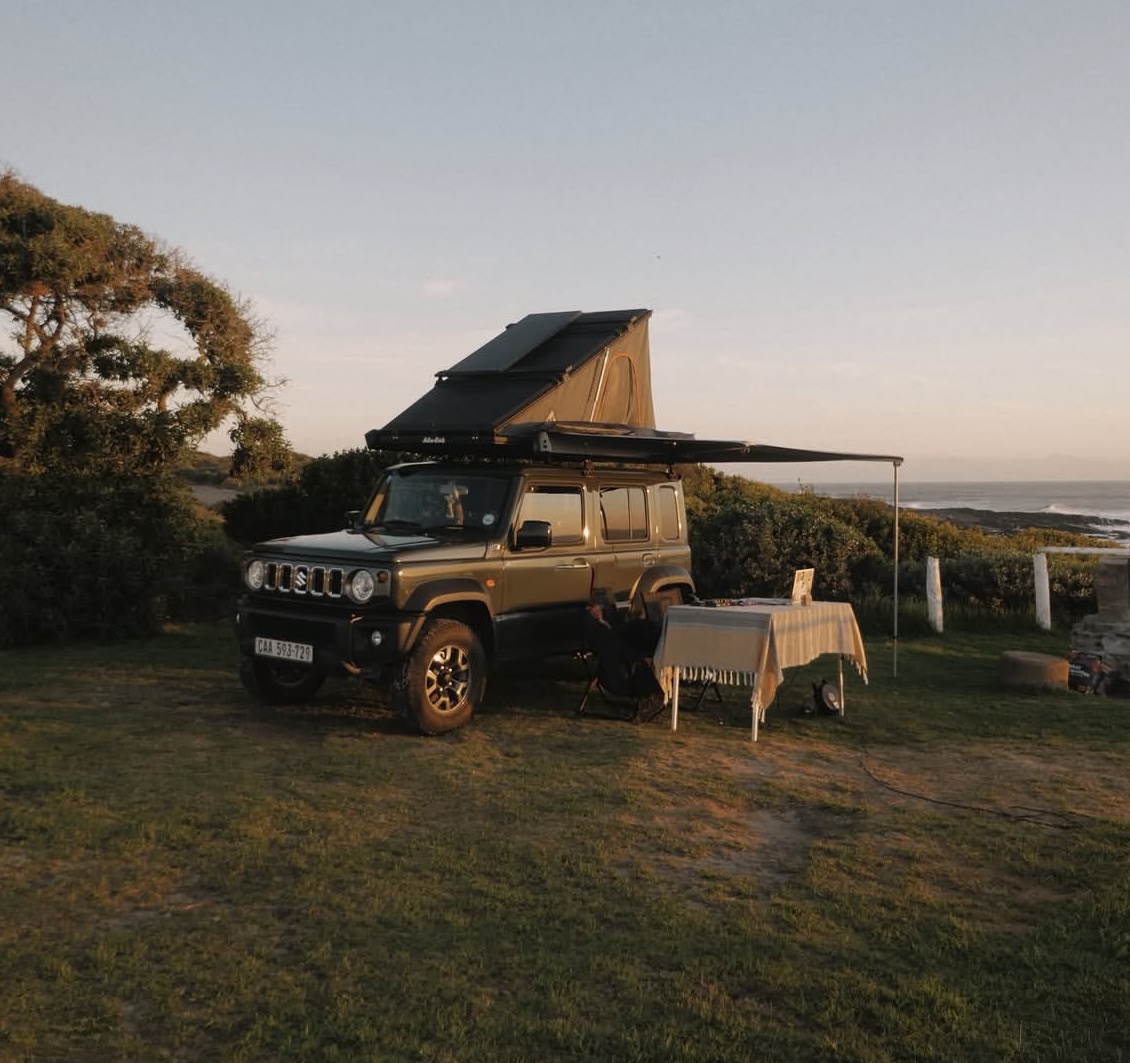
A South Africa road trip can take you from coastal towns to wildlife reserves and quiet inland roads. The vehicle, the route and the overnight stops all need to work together. A 4×4 can be useful for the roads and camping setup you choose, but it does not make every track suitable or every overnight stop permitted.
This guide covers driving on the left, licence requirements, road conditions, self-drive park rules and practical safety planning. Start with the places you want to visit, then check the arrangements for the particular vehicle you intend to hire.
Do you need a 4×4 in South Africa?
Choose the vehicle around your route and how you want to sleep. A trip using surfaced roads and guesthouses has different requirements from one combining permitted gravel roads with booked campsites. Four-wheel drive and extra ground clearance may be useful on some routes; a rooftop tent or pick-up camper may suit the way you want to camp.
Check the actual vehicle specification before deciding. The number of belted seats and the number of sleeping places are separate questions. Also confirm the gearbox, fuel type, luggage space and included equipment. Do not assume that every vehicle has an automatic transmission, a fridge or the same camping kit.
Explore the South Africa 4×4 rentals on Pampa Cruz to compare the listed vehicles, then confirm your dates, route and requirements for the one you prefer.
Driving rules and documents
Drive on the left and give yourself time to adjust
South Africa drives on the left. If this is unfamiliar, allow time at collection to get comfortable with the controls and make your first driving day manageable. Before setting off, adjust the mirrors and seating, secure loose items and review the route while parked.
Seatbelts are compulsory. Keep your phone out of your hand while driving, and stop somewhere safe before changing your route or making a call. Avoid alcohol when you are the driver. South African Tourism provides an official introduction to driving in South Africa.
Check the requirements for your driving licence
The South African Embassy’s guidance on foreign driving licences says visitors need a full national licence. It accepts licences printed in English and calls for an International Driving Permit when the licence is in another language. Check the requirements for your own licence before departure, and carry your national licence alongside any required permit or translation.
Ask separately about the rental provider’s minimum age, required driving experience and accepted documents. Have every intended driver approved and listed on the rental agreement. Keep the documents you need accessible when driving and store them securely when you leave the vehicle.
Speed limits are in kilometres per hour
The general limits described by South Africa’s Road Traffic Management Corporation are:
- 60 km/h on roads within urban areas.
- 100 km/h on roads outside urban areas, other than freeways.
- 120 km/h on freeways.
Follow the posted limit and any restrictions applying to your vehicle. These figures are ceilings, not target speeds: visibility, traffic, surface condition and weather may require a much slower pace. The RTMC road safety guidance distinguishes the three road categories.

Plan for the road surface, not just the distance
Build each day around realistic driving time, breaks and your arrival deadline. A short stretch of gravel or a slow park drive can take longer than the same distance on a clear surfaced road. Leave room for fuel stops, shopping, roadworks and unexpected delays.
Before including an unpaved section, check current conditions with the destination and confirm that the rental agreement permits it. A line on a map does not establish access, road condition or insurance cover. If heavy rain or a closure affects the route, change the plan rather than trying to make up time.
- Reduce speed before rough surfaces and avoid abrupt braking or steering.
- Watch for potholes, pedestrians, livestock and changing road conditions.
- Ask for a demonstration of the vehicle’s four-wheel-drive controls, where fitted, and follow its operating instructions.
- Confirm the fuel type and refuelling plan before a remote leg; carry drinking water and keep your navigation information available offline.
If your plans include a remote track or an event such as AfrikaBurn, obtain vehicle-specific permission before committing to it. Suitability, permission to enter and insurance cover must each be checked.
Self-driving in Kruger and other parks
Each park has its own access arrangements. At Kruger, SANParks specifies maximum speeds of 50 km/h on tarred roads and 40 km/h on gravel roads. Stay on authorised roads, obey closures and no-entry signs, and remain inside the vehicle except in designated places. Keep your body inside the vehicle and do not feed or disturb wildlife.
Plan to reach your camp or leave the park before the applicable gate deadline. Overnight visitors must use a booked, recognised facility. A rooftop tent does not permit roadside camping. Read the official Kruger visitor rules and check current notices before visiting.
Kruger also limits daily visitor numbers. Review the day-visit booking arrangements and seasonal gate times when planning your dates. A vehicle booking, a campsite booking and park admission are separate parts of the trip; confirm each one.
For another park or a private reserve, check that destination’s own rules. Access to one reserve does not establish permission for another, and an approved park road still needs to be compatible with your rental conditions.
Road trip safety: plan each day’s route
The UK Foreign, Commonwealth & Development Office warns of serious crime in South Africa, including carjacking and vehicle-related robbery. Read its current safety and security advice, as well as the advice issued for your own country, before travel and during your stay.
- Plan daylight journeys and check the route with a trusted local contact. Do not follow a navigation shortcut without considering the area it crosses.
- Avoid demonstrations and routes affected by unrest. Follow official instructions where roads are closed, and adjust your route to local warnings.
- Keep doors locked, windows closed and valuables out of view. Check that the vehicle is actually locked when parking.
- Use secure parking where possible and remain alert at junctions, fuel stops and accommodation entrances, particularly after dark.
Before a long leg, agree a practical contact plan with your accommodation or travelling companions. Save the rental provider’s assistance instructions and find out what to do after a breakdown, collision or delay. Do not assume that roadside assistance or recovery is included in the price.
Confirm the rental and insurance conditions before departure
Official rules establish where and how you may travel. The rental agreement and insurance terms add their own conditions. Ask for clear written answers for your chosen vehicle:
- Which roads, gravel sections, events and destinations are permitted?
- Are there mileage limits, extra-kilometre charges or restrictions on night driving?
- What insurance is included, what excess applies, and what exclusions affect tyres, glass, the underbody or recovery?
- Where exactly will the vehicle be handed over and returned? Is an airport transfer or delivery available, and at what cost?
If you want to add Namibia, Botswana or another country, treat that as a separate approval. Confirm the permitted country, authorisation documents, border charges, return arrangements and territorial insurance cover. A 4×4 listing in South Africa is not evidence that cross-border travel is allowed.
Build the route from your confirmed collection point
Start your itinerary with the written handover address and timing. Allow for the vehicle briefing, checking the equipment and buying supplies before a long drive. Delivery to an airport or another city, if agreed, is a service arrangement; check its details rather than assuming a permanent rental branch there.
Keep your first and last days flexible enough for collection and return. Choose overnight stops that fit the season, the road conditions and your pace, and include time to enjoy them. You do not need to combine every region in a single trip.
Compare South Africa 4×4 and camper rentals, check the individual vehicle information and request confirmation for your dates and route before finalising the itinerary.
More South Africa road trip guides
- Planning your South Africa road trip budget
- Planning a family safari in South Africa
- Planning a surf road trip in South Africa
- Choosing the best time for a South Africa road trip
- Planning campsites for a rooftop tent road trip
Official sources checked on 10 November 2026. FCDO South Africa travel advice was updated on 5 November 2026. Road conditions, park arrangements and travel advice can change; recheck the relevant official pages before departure.