

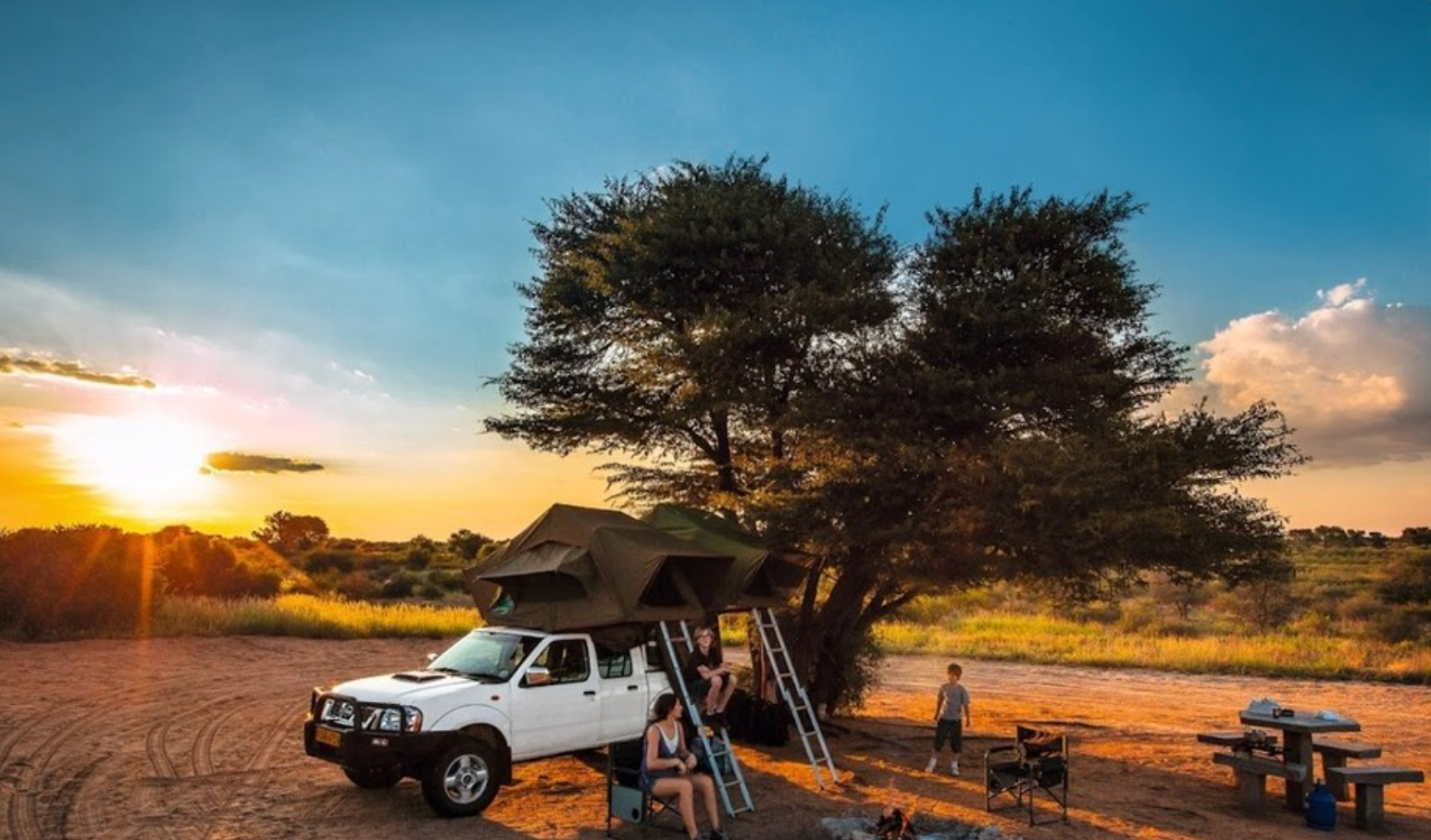
A family safari in South Africa can combine wildlife watching with the everyday pleasures of a camping trip: breakfast outside, a familiar place to sleep and time to slow down between drives. An equipped 4×4 can help organise that experience, provided its seats, sleeping arrangements and camping setup suit everyone travelling.
Start with the children’s needs and your confirmed vehicle collection point. Then choose the parks, overnight stops and daily distances. A rooftop tent or a 4×4 badge does not determine how many people can travel comfortably, which roads you may use or where you may camp.
What an equipped 4×4 can bring to a family safari
Keeping your luggage and camping equipment together can make moving between camps easier. A fridge, cooking kit or awning may also be useful, but check the equipment list for the particular vehicle: photographs and a general description of “camping equipment” are not enough to confirm every item.
Consider how the setup works during an ordinary day. Can you reach drinks and snacks without unpacking everything? Is there room for luggage once child seats are fitted? Will you need to pack away the tent before each wildlife drive? These practical details often matter more than choosing the largest-looking vehicle.
You can compare Pampa Cruz’s South Africa 4×4 rentals and use the individual listings to draw up a shortlist. Availability and the final configuration must still be confirmed for your dates.
Check seats and sleeping places separately
A vehicle with four sleeping places does not necessarily have four suitable passenger seats, and a spacious camper body does not automatically accommodate a family. Before requesting a rental, confirm:
- The number of approved seats for travelling, their seat belts and compatibility with the child restraints you need.
- The number and dimensions of the beds or tent sleeping areas, including how your family would use them.
- Ladder access, supervision of children and the practicalities of getting to the toilets at night.
- Storage space with all passengers, child seats and bags on board.
- Which camping items are included, which are optional and whether suitable child seats can be provided.
A 4×4 with a rooftop tent, a pickup with a camper body and a vehicle towing a camping trailer each need to be assessed on their own layout. Ask for confirmation of the exact configuration being offered. Do not assign a family capacity to an entire vehicle type.
Choosing parks for a family self-drive safari
Kruger: plan around your booked camp and entry gate
For a Kruger trip, build each day around your overnight camp rather than trying to cover a long list of wildlife sightings. A short loop with time to stop can work better for children than a full day spent crossing the park. Check the facilities at the specific camp you are booking; do not assume every camp has the same shops, restaurant or swimming pool.
Kruger limits daily visitor numbers. Advance day-visit reservations involve a booking fee separate from conservation fees, and vehicle hire does not reserve either park entry or a campsite. Read SANParks’ Kruger day-visit and booking information before fixing your schedule. Gate and camp opening times vary, so allow a margin between your planned arrival and closing time.
SANParks identifies Kruger as a malaria-risk area. Discuss the route and appropriate precautions with a travel-health professional before deciding whether it suits your children.
Addo: an option to consider with a coastal trip
Addo can be considered alongside a Garden Route itinerary, provided the extra driving and the return journey fit your rental. SANParks states that the ordinary tourist roads are accessible to normal cars, although gravel roads may close in very wet weather. An equipped 4×4 is therefore a choice of camping setup, not a requirement for every wildlife drive.
A trailer needs particular attention: the southern access road from Matyholweni is not open to vehicles towing trailers or caravans. Check Addo’s vehicle and road restrictions before choosing your entrance. Also use the park’s current approach-route advice rather than accepting a navigation app’s shortest route without checking it.
Pilanesberg: check its own booking arrangements
Pilanesberg is another option to investigate for an inland safari. It is managed by the North West Parks and Tourism Board, as confirmed by the provincial tourism and conservation department. Check its current access, road conditions, accommodation and activity arrangements directly; Kruger’s booking rules should not be assumed to apply there.

Set a rhythm the children can enjoy
Plan a manageable wildlife drive, a proper break and another outing only if everyone still wants one. Keep some afternoons free for rest at your booked camp. Binoculars, an animal notebook and quiet games can help children enjoy the waiting as well as the sightings.
Avoid making your first rental day the longest drive. Allow time for the handover, checking equipment, shopping and getting used to the vehicle. When changing camps, include packing, meal stops and the slower pace of wildlife viewing in your estimate. A transfer day does not need an ambitious safari loop added to it.
Park rules, rental permission and insurance are separate checks
For SANParks-managed parks, stay on designated open roads, obey the applicable speed limits and leave the vehicle only in permitted areas. Keep everyone inside the vehicle during wildlife viewing; a sunroof is not a viewing platform. Overnight stays must use recognised, booked facilities. Some organised activities also have age restrictions. Read the official SANParks rules and the instructions for your chosen park.
Separately, ask the rental provider to confirm the roads, regions and any trailer use permitted by your contract. Check the insurance terms and exclusions for the proposed journey. Permission to enter a park does not establish permission under a rental agreement or insurance policy.
For the wider journey, review current official travel safety advice, check access routes locally and plan transfers in daylight where possible. Discuss your itinerary and the children’s needs with a travel-health professional before departure; official health advice is a useful starting point.
Build the itinerary from the agreed collection and return points
If collection in the Cape Town area is confirmed, consider how a coastal route and an Addo extension would fit the time available. For an inland trip, assess the chosen park from the actual handover address. Do not assume that an advertised city means an airport desk, airport transfer or delivery is included.
A return in another city needs separate confirmation and pricing. Keep Namibia and Botswana out of the plan unless the countries, documents, fees, return arrangements and insurance have been confirmed for the specific vehicle.
Before finalising the itinerary, work through driving and camping in South Africa and a budget for a South Africa road trip, including fuel, park entry, campsites and rental extras. If you are planning a coastal surf trip as well, allow separate days for the coast and the safari rather than adding a long transfer after an early wildlife drive.
Choose a vehicle for your family’s actual needs
Send Pampa Cruz your dates, the number and ages of the children, your preferred collection and return locations and the parks you would like to visit. Include your child-seat requirements and the sleeping arrangement you need. This gives the team a practical basis for checking suitable listings and rental conditions.
Explore South Africa 4×4 rentals and prepare your family enquiry. Choose the vehicle once its seating, sleeping layout, equipment and permitted itinerary have been confirmed.
For route ideas and vehicle options, plan a self-drive safari in South Africa. Confirm the vehicle, collection arrangements and permitted route, and check any park bookings needed for your family’s travel dates.
More South Africa road trip guides
- Driving in South Africa: practical road trip advice
- Planning your South Africa road trip budget
- Planning a surf road trip in South Africa
- Choosing the best time for a South Africa road trip
- Planning campsites for a rooftop tent road trip
Information checked on 10 November 2026. Recheck official park notices, entry arrangements and travel advice before departure.