

A useful budget for a Canada 4×4 road trip starts with a defined route and an accurate night count. A daily rental rate is only part of the cost: mileage, fuel, campsites and any ferries can change the total considerably. Separate the vehicle quote, the money you expect to spend while travelling, and the funds you may need to keep available for a security deposit.
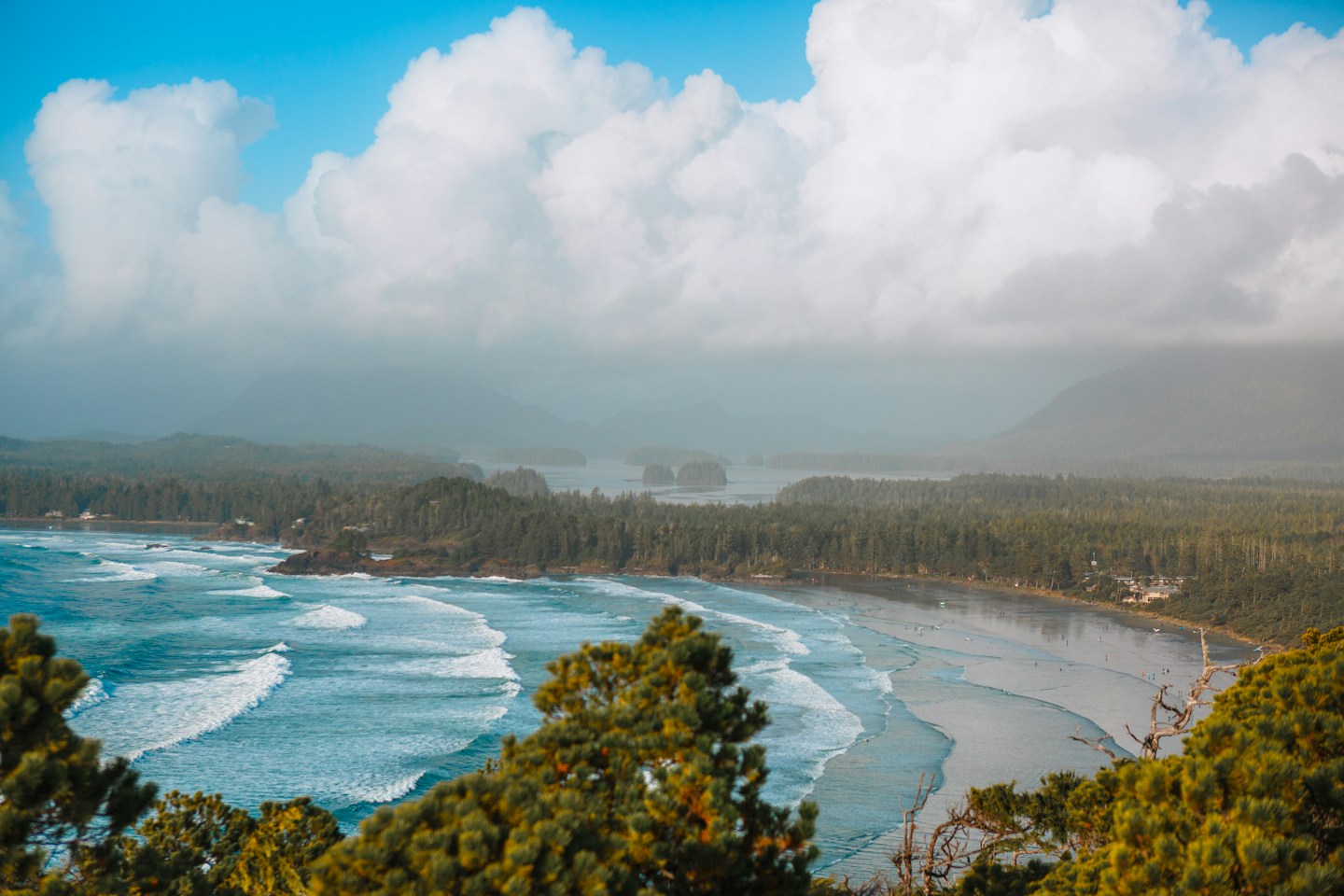
Illustrative photograph : Micah McKerlich / Unsplash.
The relevant Pampa Cruz listings are Toyota Tacomas with rooftop tents, departing from Vancouver. This guide does not set a Pampa Cruz rental price. It provides a calculation method and a fully fictional Canadian-dollar example, to be replaced with your own quotes and bookings.
Define the trip before comparing prices
Write down pickup and return dates and times, group size and your intended route. Keep three counts separate: itinerary days, accommodation nights and charged rental days. Ten travel days and nine nights do not, on their own, establish how many rental days will be billed. The quote must state the charging method and the agreed handover times.
Include any nights before pickup or after return, transfers and time for the handover. Driving a long first leg straight after an overseas flight is a poor way to save a night’s accommodation. Build a schedule you can comfortably follow, with a final stop within practical reach of the Vancouver return location.
Read the vehicle quote line by line
| Item | What to confirm |
|---|---|
| Rental | Dates, times, charged days, currency and total amount. |
| Mileage | Total allowance for the trip, calculation basis and extra-kilometre rate. |
| Insurance and assistance | Cover, deductibles, exclusions, roadside assistance and paid options. |
| Equipment | Bedding, kitchen kit, number of chairs, child seat and any other required extras. |
| Fees and taxes | Cleaning, preparation, additional drivers, any delivery, and whether taxes are included. |
| Security deposit | Amount, currency, payment method, card limit needed and release conditions. |
A refundable security deposit is not an ordinary trip expense, but it may tie up funds. It is separate from an insurance deductible and from the cost of optional protection. Have each item confirmed independently. Our driving and rental-conditions guide will help you prepare questions about your route.
Estimate distance and fuel
Count the roads between overnight stops, campground access, shopping trips, local sightseeing and the return to base. A route measured only between major towns can miss a meaningful share of the actual driving. Allow a modest distance buffer, without using it as a reason to add distant regions at the last minute.
The fuel formula is: planned kilometres × assumed litres per 100 km ÷ 100 × price per litre. Use an assumption suitable for the loaded vehicle and the type of trip. An official test figure or an incomplete listing field is not a promise of real-world fuel consumption.
For extra mileage, calculate the greater of zero or estimated kilometres minus included kilometres, multiplied by the contractual extra-kilometre rate. Confirm whether the allowance is based on charged days, nights or the whole booking. Unlimited mileage, when confirmed, does not remove geographic or road restrictions.
Campsites, taxes and ferries: use final totals
BC Parks’ fee information separates camping, transaction fees, services and applicable non-resident charges. Costs vary by park and season. Record each booking’s final amount, then add the correct number of nights. Multiplying a basic nightly rate without checking extras can give a misleading result.
Keep local costs in CAD in your planning sheet. Compare quotes in the same currency, allowing for your bank’s conversion and payment terms. The Canada Revenue Agency explains that tax treatment depends on the supply and its location. Do not add one blanket percentage to every travel expense.
For Vancouver Island, obtain a ferry price using all passengers and the vehicle’s actual dimensions. Confirm rental permission for the crossing as well. At the 19 November 2026 check, vehicles travelling from Horseshoe Bay to Nanaimo–Departure Bay had to be booked and paid for in advance. This rule does not apply to every route and should be checked again before travel.
A fictional example: ten days, nine nights, two adults
This is a calculation example, not a quote, observed price or validated itinerary. It assumes pickup in Vancouver on day 1, return on day 10, and nine campground nights, on nights 1–9. The request assumes ten charged rental days, subject to the quote confirming that count. The imaginary route remains on the mainland and totals 1,200 km. No ferry is included.
| Fictional item for two adults | Calculation assumption | CAD allowance |
|---|---|---|
| Fuel | 1,200 km × 14 L/100 km × CAD 1.80/L | 302.40 |
| Campsites, with fees allowed for | 9 nights × CAD 65 | 585.00 |
| Groceries and meals | 10 days × CAD 60 for two | 600.00 |
| Sightseeing and parking | Allowance selected for this example | 160.00 |
| Contingency | Planning reserve | 200.00 |
| Total allowance excluding rental | Sum of the rows above | 1,847.40 |
These fictional allowances are intended as all-in amounts. Replace them with actual costs including taxes and fees. Add your final rental quote and any mileage overage. Flights, transfers, hotels outside these ten days, personal travel insurance, entry-document costs, ferries and activities beyond the chosen allowance are also excluded. Keep the security deposit available separately.
The example shows why distance matters: under the same assumptions, another 300 km adds CAD 75.60 in fuel, before any mileage surcharge. Removing a distant stop can release both money and time. Changing the vehicle alone will not remove campsite, food or activity costs.
Reduce costs without undermining the trip
Limit the number of regions, spend several nights in a place when it suits your plans, and compare different dates while keeping the same service requirements. A Sea-to-Sky trip and a Vancouver Island journey have different cost components. Compare each as a complete trip. Check the season guide before choosing dates solely because a quote is cheaper.
An apparent saving can disappear if it requires a long detour, a late arrival or a rushed return. Keep enough flexibility to replace a camping night, shorten a drive or change the route when conditions call for it. Treat contingency as part of the plan, not as money that must be spent.
Frequently asked questions
What is the minimum budget for a Canada 4×4 rental?
A reliable minimum requires your dates, rental length, vehicle and mileage. Review the listings and request a final total. The fictional example above cannot be used to infer a Pampa Cruz rental price.
Does the daily rate include everything?
Check the summary: taxes, fees, equipment and insurance may be itemised separately. Compare the total for your whole booking, together with its inclusions and exclusions.
Can I save money by camping free everywhere?
Do not build a budget on that assumption. Rules depend on the place and its manager. Use the camping and overnight-stay guide, choose lawful overnight locations and budget for their actual charges.
Prepare my 4×4 request from Vancouver
Your request is free, with no commitment and no immediate payment. Availability, final price, currency, mileage package and conditions must be confirmed for your specific request.
Sources and checks
Sources checked on 19 November 2026. Review current information before travelling.