

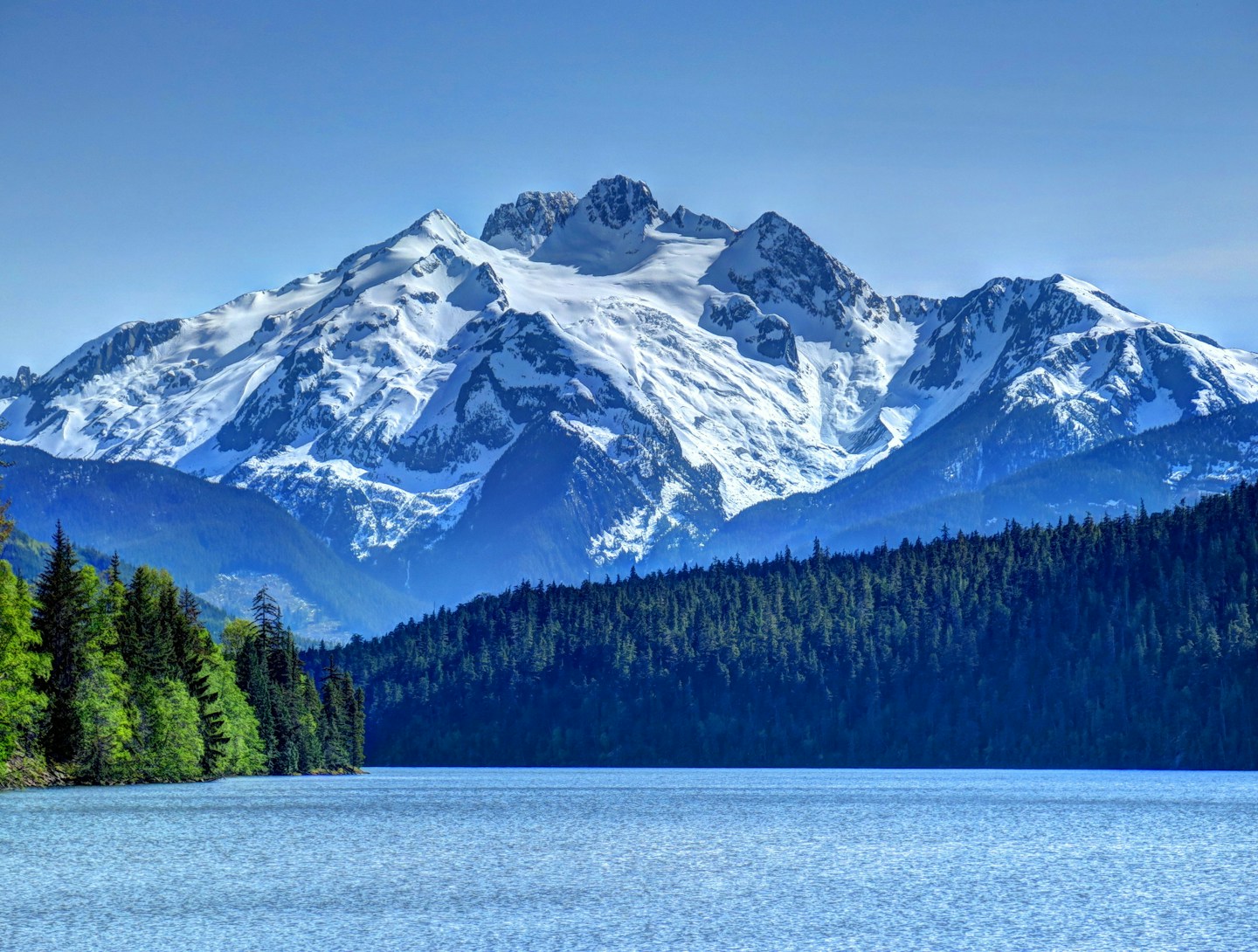
A week between Vancouver, Squamish and Whistler leaves time for walks, lakeside stops and unhurried evenings at camp. This suggested route follows British Columbia’s Sea-to-Sky corridor, starting and finishing in the Vancouver area. It is built around the Toyota Tacoma rooftop-tent vehicles listed in Vancouver. Vehicle availability, the actual collection address and permitted access must be confirmed for your request.
Illustrative photograph : morbital / Unsplash.
Lire cet itinéraire en français
The plan: 7 days and 6 nights
Day one is the vehicle collection day. After a long-haul flight, arriving the previous day and booking a separate night may be the better option. That additional night is not included in the six nights below.
| Day | Plan | Overnight |
|---|---|---|
| 1 | Collection, groceries and first camp setup | Vancouver area |
| 2–3 | Sea-to-Sky drive and Squamish | 2 nights near Squamish |
| 4–5 | Whistler and weather-dependent activities | 2 nights in the Whistler area |
| 6 | Return towards Vancouver | Vancouver area |
| 7 | Pack up and return the vehicle | No overnight included |
This adds up to six nights. Billable rental days depend on the handover times and the contract. A seven-day itinerary does not, by itself, establish the number of rental units charged.
Driving distances and time for stops
Allow roughly 70 km and one hour from Vancouver to Squamish, followed by 60 km and 45 minutes to Whistler. The return from Whistler to Vancouver is about 120–130 km and two hours, before breaks and traffic. These planning figures draw on Tourism Squamish, Tourism Whistler and the regional district’s distance table listed below.
Adding those three main legs gives 250–260 km. This is not the full trip mileage: it excludes journeys from the actual collection address, campground approaches, trailheads and sightseeing. Add those journeys before choosing a mileage package.
The route day by day
Day 1: settle in around Vancouver
Leave enough time for the vehicle briefing, condition check and rooftop-tent demonstration. Practise opening and closing the tent and using the ladder before leaving the handover location. Check where the cooking equipment, water and bags will go. A first night at an authorised campground in the Vancouver area gives you time to adjust the setup. Do not assume the vehicle is handed over at the airport or that a car park permits overnight camping.
Day 2: follow Howe Sound to Squamish
After buying groceries, check DriveBC before setting off. Use designated stopping places along Highway 99. Near Squamish, Shannon Falls Park makes a useful break: BC Parks describes a 350-metre walking trail to the waterfall viewpoint. Keep to the trail and viewing areas, especially in wet weather. Continue to your confirmed campsite near Squamish and settle in for two nights.
Day 3: spend a full day around Squamish
Choose an outing that suits everyone’s ability. Alice Lake Park offers woodland walking options. Hiking up the Stawamus Chief is another possibility, but BC Parks describes it as a steep, difficult climb, so it should not be treated as a casual short walk. Check park notices and restrictions before hiking or climbing. Staying at the same campground tonight avoids another move and makes it easier to adjust plans if rain arrives.
Day 4: reach Whistler with time to spare
The short main drive leaves room for a relaxed morning and an early arrival. Explore the village, then choose a section of the Valley Trail, a shared network of paths and boardwalks connecting neighbourhoods, lakes and viewpoints. Check the map and current conditions for your chosen section. For your two nights around Whistler, book a campground that accepts the vehicle and accommodates its footprint with the tent open.
Day 5: walk, ride or take a slower day
With no transfer planned, you can prepare a suitable hike, choose a bike ride matched to your skills or spend more time beside the lakes. Road vehicles and bicycles have different access rules; check each route rather than assuming access is shared. An outing into Garibaldi needs separate planning. If conditions deteriorate, choose a shorter valley activity and keep the day flexible.
Day 6: return to the Vancouver area
Drive back towards Vancouver with a flexible afternoon. The two-hour estimate does not include roadworks, traffic or stops. Returning the day before handback avoids relying on the longer drive on your final morning. Confirm a sixth night at a campground that works with your return location and appointment. One spare night is still no guarantee against a major road closure: follow official updates and change the schedule if necessary.
Day 7: return the vehicle without rushing
Allow time to pack, refuel as required by the contract and complete the return inspection. If the tent is wet, follow the rental instructions for handling it. For a same-day flight, separately allow for handback, the transfer to the airport and the airline’s requested check-in time. An early flight may require returning the vehicle the previous day and booking another night outside it.
Garibaldi: hiking and vehicle camping are separate plans
Garibaldi Park provides access to hiking routes and backcountry campsites. A reservation to sleep in the backcountry is not a pitch for the Tacoma. BC Parks specifically prohibits camping or remaining overnight at or near the Garibaldi Lake parking lot. Check any day-use pass requirements, reservations, trail conditions and the exact access road. The park warns that snow can occur at any time of year.
Plan the campsites and check the rental terms
In Squamish, municipal camping rules differ from rules for public land outside municipal boundaries. Choose authorised pitches, check opening dates and follow food-storage and waste instructions. Our camping and wildlife guide covers these points in more detail.
This itinerary follows the road corridor and does not propose an off-road route. Having four-wheel drive does not establish permission to use an access road or insurance cover for it. Read our guides to driving and rental terms, Canada’s camping seasons and the road-trip budget before confirming dates, equipment, mileage and fees.
Frequently asked questions
Is seven days enough?
It works for this suggested route limited to Vancouver, Squamish and Whistler, subject to conditions and suitable campsites. Two nights at each main stop give you a full day to explore.
Can I add Vancouver Island?
Give the island a separate trip. Our 12-day Vancouver Island itinerary allows for the crossing, the necessary checks and a return buffer. This Sea-to-Sky week does not include a ferry.
How do I request a vehicle?
Start with the Canada listings and provide your dates, group size and proposed route. The request is free, with no obligation and no immediate payment. Availability, the final price and rental terms must be confirmed for that request.
View rooftop-tent 4×4 rentals in Vancouver
Sources and planning notes
Sources consulted on 19 November 2026. Driving times are estimates; this guide does not guarantee road opening or campsite availability.
- Squamish-Lillooet Regional District: highway distances, page 23 — an older document used only for distances between towns.
- Tourism Squamish: driving times and Tourism Whistler: travel information.
- BC Parks: vehicle-accessible camping and reservations, together with the park pages linked in the itinerary.
- DriveBC: road conditions — check before driving.