

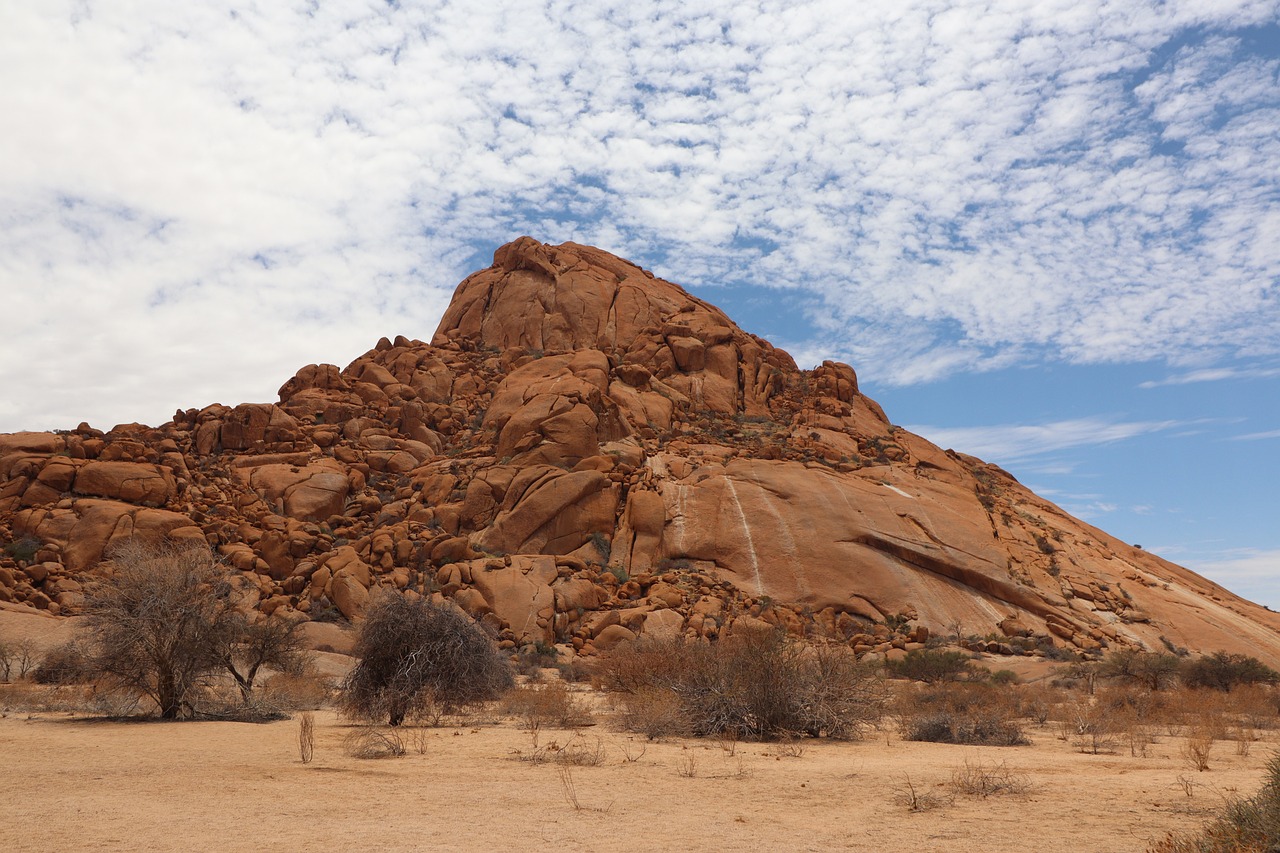
Fifteen days lets you combine the Namib dunes, the Atlantic coast and Etosha wildlife with several two-night stops. This suggested Namibia road trip starts and finishes in Windhoek, adding Spitzkoppe’s rock landscapes and Twyfelfontein’s engravings along the way.
The plan covers 15 days on the ground and 14 nights, excluding international flights. Adapt it to confirmed campsites, current road conditions and vehicle collection times. Begin by comparing camping 4×4 rentals in Namibia for your dates and sleeping requirements.
The route and overnight plan
Follow Windhoek, Sesriem, Swakopmund, Spitzkoppe, Twyfelfontein, Etosha and Otjiwarongo before returning to Windhoek. This order links the regions without repeated returns to the capital.
- Day 1: Windhoek, 1 night.
- Days 2–3: Sesriem area, 2 nights.
- Days 4–5: Swakopmund, 2 nights.
- Days 6–7: Spitzkoppe, 2 nights.
- Days 8–9: Twyfelfontein area, 2 nights.
- Days 10–12: Etosha, 3 nights distributed around confirmed camps.
- Day 13: Otjiwarongo area, 1 night.
- Day 14: Windhoek, 1 night. Day 15: vehicle return and departure.
Transfer days remain full travel days. Calculate distances between your actual accommodation addresses: campsites described as being in the same region can be far apart.
Day 1: arrive in Windhoek and prepare your vehicle
Allow time to recover, collect the 4×4 and buy supplies. Ask for a tent demonstration, try the fastenings and locate the cooking equipment before leaving the handover point.
Confirm your Windhoek 4×4 collection arrangements. If your flight arrives late, collect the following morning and simplify the programme; a late arrival should not become a night-time drive into the desert.
Days 2 and 3: reach Sesriem and explore Sossusvlei
Use day 2 to reach your booked stop in the Sesriem area and settle in before dark. On day 3, devote the morning to Sossusvlei and Deadvlei, then adjust the rest of the day to the heat and your energy.
The official Sesriem campsite page lists local visits and the Deadvlei shuttle. Check the access times applying to your accommodation. For the sandy section, confirm rental permission and your ability to drive it, or use an available shuttle.
Days 4 and 5: take a coastal break in Swakopmund
On day 4, travel towards the coast through the Solitaire area on a route checked before departure. Allow for breaks and save sightseeing for the next day: the transfer needs more room than a navigation app’s driving estimate.
Spend day 5 in Swakopmund, with Walvis Bay as an optional outing. Choose a town walk, a guided activity or a quiet afternoon. Dune excursions are separate arrangements, and booking a rental vehicle does not itself grant permission to drive into the dunes.
Days 6 and 7: spend two nights at Spitzkoppe
Reach Spitzkoppe on day 6 without adding a long activity list. Two nights provide a full day for viewpoints, photography and walks offered or authorised by reception.
The Spitzkoppe Rest Camp website states that pitches have no water or electricity. Plan your supplies and ask where the facilities are located. The practical arrangements deserve as much attention as the view.
Days 8 and 9: discover Twyfelfontein and Damaraland
On day 8, travel to the Twyfelfontein area using permitted main roads and allowing for gravel. Day 9 gives you time for Twyfelfontein’s World Heritage rock engravings. Check open routes and guiding arrangements at the visitor reception.
Add a local activity only if the day still leaves time at camp. Desert-adapted elephant sightings are never guaranteed; arrange an appropriate guided outing if interested instead of improvising a search along riverbeds.
Days 10 to 12: explore Etosha at wildlife-viewing pace
On day 10, head for southern Etosha and your booked camp. One possible arrangement is a night around Okaukuejo, followed by the Halali and Namutoni sectors. This is an example, not a fixed booking plan: confirmed nights determine your direction and daily range.
Use days 11 and 12 for wildlife viewing on open roads. Avoid trying to include every waterhole in one day. Consult NWR’s Etosha camp information and official access and accommodation conditions, and confirm when you must be back inside camp.
Days 13 to 15: break up the return to Windhoek
On day 13, leave through the exit suited to your last camp and continue to a booked stop in the Otjiwarongo area. Return to Windhoek on day 14. This split avoids making a flight depend on a long drive from Etosha that same day.
On day 15, allow for fuel, the vehicle inspection and any airport transfer according to your agreed arrangements. A final night in Windhoek provides a buffer, but you still need to check collection-company and flight schedules.
Turn the 15-day outline into a workable booking plan
Check vehicle options and the key Sesriem and Etosha nights first, then adjust the intermediate stops. Use our Namibia camping guide to compare facilities and the road trip budget guide to separate rental, nights, fuel and park entry.
Choose your vehicle for sleeping arrangements, luggage and daily use. Compare roof-top tent 4×4 rentals with the Toyota Hilux camper configurations; a model name alone does not establish its equipment.
The official Namibia road travel advice highlights gravel and night-driving risks. Confirm your route, leave time buffers and shorten a stage if conditions require it.
Frequently asked questions
Can I fit this route into 14 days?
You would need to remove a night and reconsider the transfers. Drop a stop or reduce a region rather than removing the final buffer night or increasing speed on gravel.
Do I need to camp every night?
No. You can mix camping with accommodation, especially in Windhoek and on the coast. Check vehicle parking and keep a confirmed booking for each night.
Which route works with more time?
Our 3-week Namibia itinerary adds Cape Cross, Waterberg and longer stays in the regions you visit. For a shorter holiday, see the 10-day itinerary.
Plan your road trip
Read next: choose when to travel · organise your camping nights · calculate your budget.
Suggested itinerary by Pampa Cruz. Sources checked on 6 November 2026; confirm access, opening times and conditions for your dates before booking.