

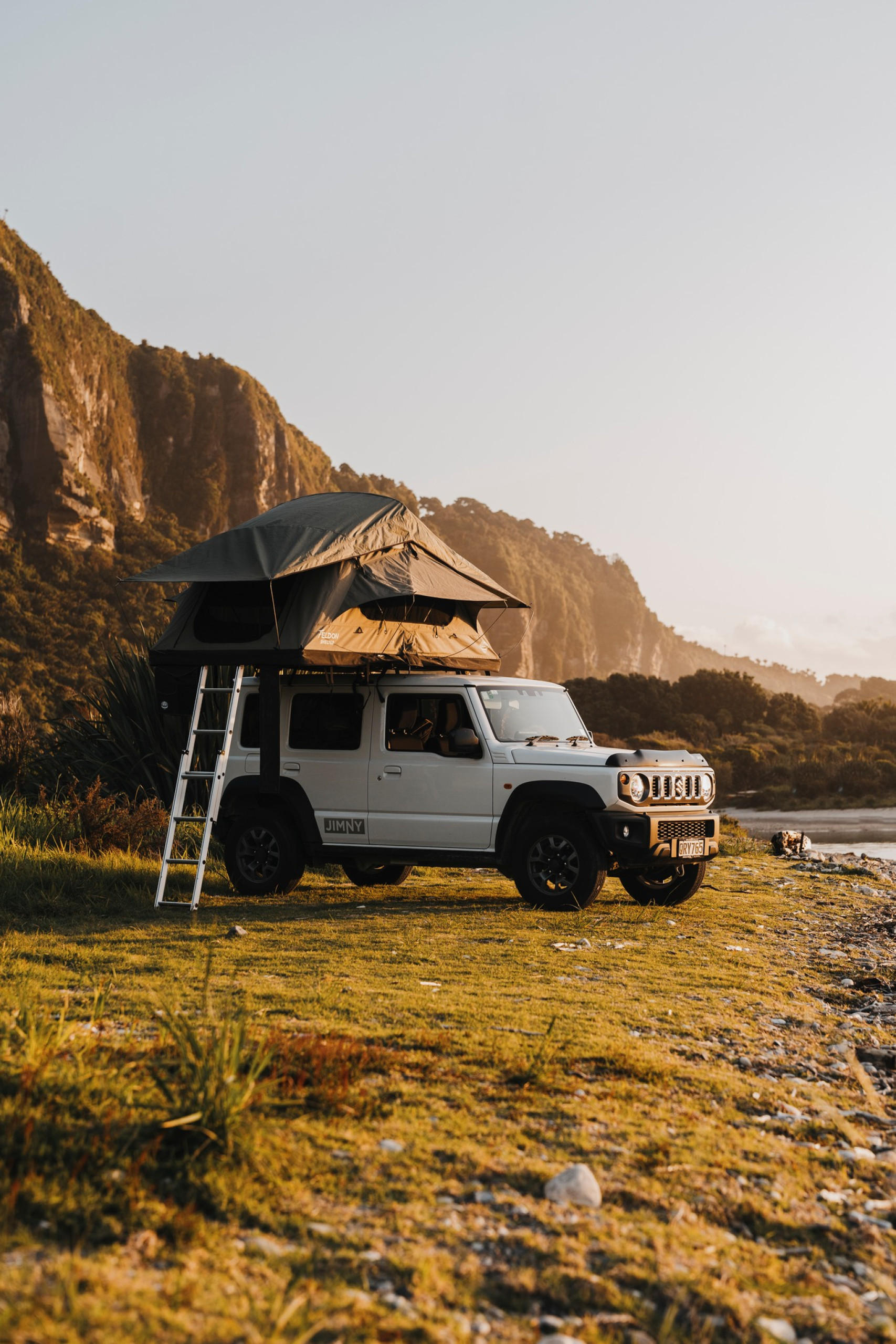
Planning a New Zealand road trip includes planning where to sleep. A rooftop tent provides a bed on your vehicle; a camper body creates a different living arrangement. Neither description tells you, by itself, where you may stay overnight. That depends on the site, your camping setup and, in some places, the vehicle’s certification.
Pampa Cruz currently documents a Ford Ranger with camper body in Auckland, on the North Island, and a Suzuki Jimny with rooftop tent in Christchurch, on the South Island. Self-containment certification needs to be confirmed for the actual vehicle supplied. Rules checked on 12 November 2026.
Free, non-binding reservation request, with no immediate payment.
Four kinds of overnight stop
Start with the facilities and type of pitch your trip requires. Toilets, vehicle access and site rules matter as much as the view.
| Overnight option | What to check |
|---|---|
| Holiday park or managed campground | Suitable pitch, toilets, showers, cooking facilities, arrival times and any power connection. |
| DOC campsite | Access road, pitch category, water, toilets, booking rules, fees and current alerts. |
| Private land | The owner’s or operator’s permission and conditions. |
| Freedom camping | Whether camping is permitted, local restrictions, certification requirements and maximum stay. |
Freedom camping takes place in certain public areas outside recognised campgrounds. Council rules and DOC rules can differ. Being allowed to park during the day does not, on its own, establish a right to stay overnight.
Self-contained certification: what counts as evidence?
Certification relates to an individual vehicle. The Plumbers, Gasfitters and Drainlayers Board explains that the requirements include a permanently fixed toilet usable inside the vehicle, alongside compliant water, wastewater, ventilation, sink and rubbish systems.
A portable toilet is not sufficient. A rooftop tent, camper body or promotional sticker is not proof either. Ask for the certificate, current green warrant card, expiry date and certified number of occupants. The registration should match the vehicle and its entry in the national register.
Old blue warrants no longer establish valid certification. Even a green warrant does not override camping bans or local restrictions. For the Pampa Cruz vehicles, obtain this evidence before building an itinerary around places reserved for certified self-contained vehicles.
Rooftop tents, ground tents and sleeping inside
A rooftop tent requires an authorised place to park the vehicle, unfold the tent and use its ladder. Check whether you may also set out an awning, chairs or cooking equipment. A designated overnight parking area may have different limits from a campground.
For a ground tent, confirm that tents are allowed and that the pitch accommodates your setup. A campsite reached on foot from a car park will not work for a rooftop tent. Similarly, an area reserved for certified vehicles does not automatically allow a separate tent.
A camper body changes comfort and storage, but access, vehicle dimensions and facilities still matter. Our New Zealand 4×4 camper and rooftop tent guide helps compare the documented configurations before choosing.
Using DOC campsites and the Campsite Pass
DOC sets out access and booking guidance for camping vehicles. Some roads are narrow, steep or unsealed. You also need to check that your rental agreement permits the approach road.
Bookable sites must be booked before arrival, including when paying with a pass. At first-come, first-served sites, have an alternative: a pass does not reserve space. Facilities vary, so do not assume that showers, drinking water or a dump station are available. Campsite toilets are not disposal points for chemical toilet waste.
At the check date, an annual DOC Campsite Pass costs NZD 295 per adult and NZD 147.50 for ages 5–17; under-fives are free. Site and seasonal exclusions apply. Compare its price with the nights your itinerary would actually cover before buying it.
Two examples of why pitch details matter
At White Horse Hill on the South Island, DOC lists non-powered and tent sites, compulsory booking and reduced winter facilities. This establishes useful campsite information, but it does not explicitly confirm acceptance of your particular rooftop tent on the pitch selected.
At Waikawau Bay in the Coromandel, the powered section is restricted to caravans and campervans holding the required electrical certification. Other camping setups are excluded from that section. The approach includes unsealed road. These examples illustrate the need to check both the campsite area and the rental’s road permissions; they are not a blanket compatibility confirmation for your vehicle.
A practical way to plan each night
- Choose a manageable daily route from your confirmed collection base.
- Read the campsite’s official page and current alerts.
- Check sleeping setup, vehicle access and facilities.
- Book where required and keep confirmation available offline.
- Identify another campground in case weather or road conditions change your day.
Do this for your first nights, popular stops and holiday periods. To shape the wider journey, use our 10–14 day North Island itinerary or 14-day South Island itinerary.
Questions before choosing your vehicle
Do I always need a self-contained vehicle?
It depends on where you intend to stay. Managed campgrounds and private sites have their own conditions. Certification matters where a location requires it, and never replaces checking that location’s rules.
Can I plan only free overnight stops?
Allow a budget for suitable campsites. Without documented certification and site permissions, an itinerary relying on free parking areas may not work.
How do I ask about a rooftop tent?
Explain that it opens on the vehicle and uses a ladder, and describe any equipment you plan to set up outside. Ask which pitch category to book.
Browse Pampa Cruz vehicles in New Zealand and share your dates and plans. Booking requests are free and carry no commitment, with no immediate payment.
To prepare a request for your chosen island, view the Ford Ranger camper in Auckland or the Jimny with a rooftop tent in Christchurch. Equipment and rental conditions must be confirmed for your specific vehicle and dates.