

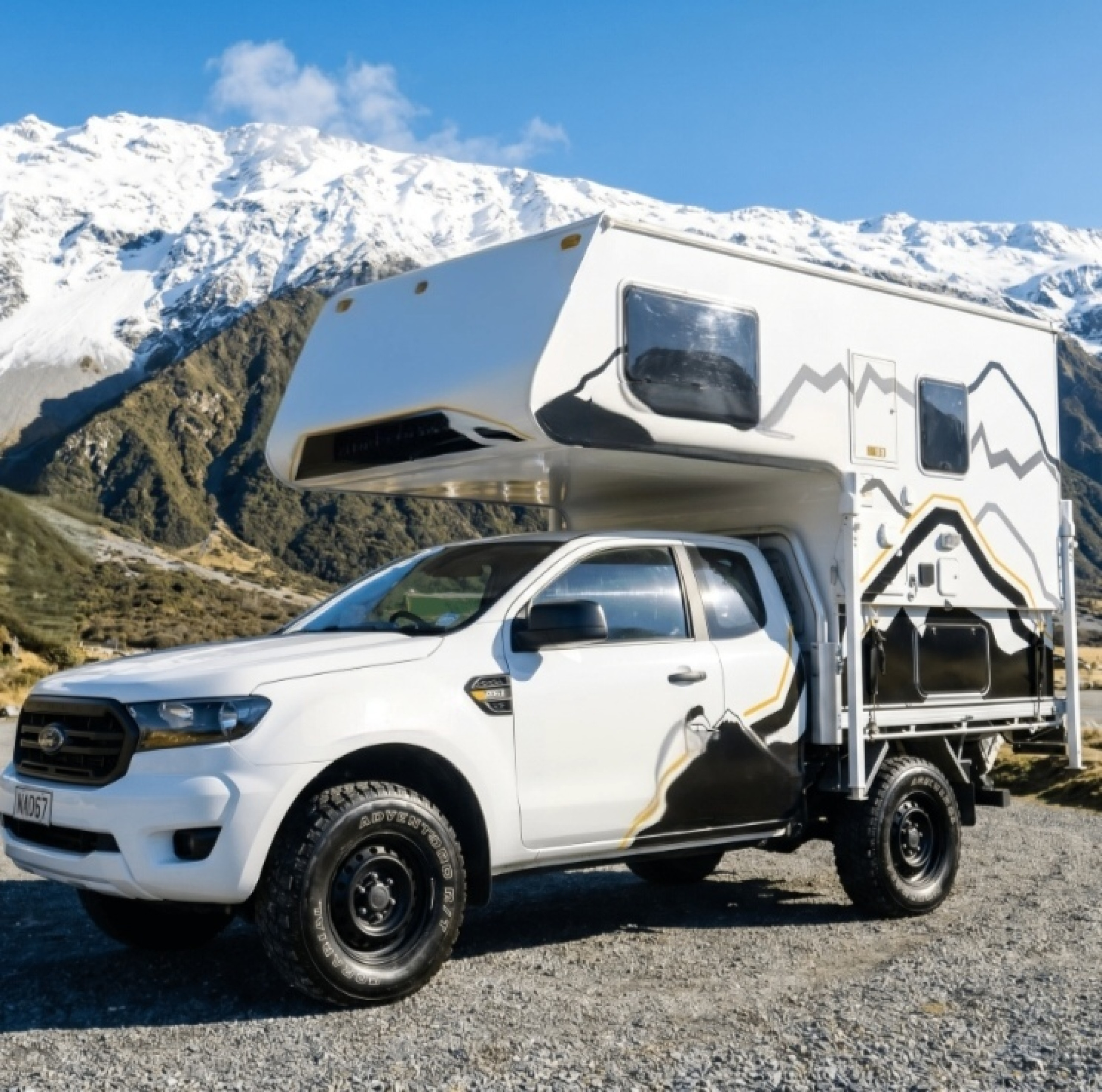
In New Zealand, “camper” can mean a conventional campervan, a pickup with a living module or a 4×4 carrying a rooftop tent. A useful comparison starts with three questions: where is the vehicle based, how will you sleep, and where can you set up for the night? Four-wheel drive alone answers none of them.
The Pampa Cruz catalogue checked on 12 November 2026 contains two listings: a Ford Ranger pickup camper in Auckland and a rooftop-tent Suzuki Jimny in Christchurch. This guide helps you compare those offers, subject to availability and confirmation of their rental terms.
Free, non-binding reservation request, with no immediate payment.
Choose your island and actual pickup base first
The Auckland Ranger camper provides a starting point for planning the North Island. The Christchurch rooftop-tent Jimny is listed in Sydenham on the South Island. These are separate offers, not two interchangeable configurations available in every city.
If volcanic landscapes and a return trip from Auckland are your priorities, start with the northern offer. If your trip centres on the lakes and Southern Alps, examine Christchurch. Queenstown, Wellington and Picton may feature in a route, but their presence on a map does not establish a Pampa Cruz pickup base. Have the logistics confirmed before committing to flights or a ferry for a two-island trip.
A pickup camper and a rooftop tent organise your day differently
A pickup camper provides sleeping accommodation within a living module mounted on the vehicle. The Ranger listing describes two berths, a kitchen, a refrigerator and water and bathroom equipment. Confirm how these work, their capacities and what is included. Their presence does not establish several days of autonomy or self-containment certification.
The Jimny has an advertised 2.4 × 1.4 m rooftop tent with a mattress. A camp kitchen and a roof-mounted bed require a different routine: an approved pitch, ladder access and packing away before driving. A bottom sheet is mentioned, while sleeping bags and pillows appear as an optional extra. Ask for the exact inventory before your first night.
| Comparison | Auckland Ranger | Christchurch Jimny |
|---|---|---|
| Advertised berths | 2 in the camper module | 2 in the rooftop tent |
| Listed seats / seat belts | 4 / 4 | 2 / 2 |
| Daily setup | Living and bathroom equipment described; details to confirm | Outdoor cooking and ladder access |
| Self-containment | Current evidence required | Current evidence required |
Count passengers and sleeping places separately
For two travellers willing to share the advertised sleeping area, both configurations are worth considering. Check the usable bed dimensions, bedding and luggage storage. A generous tent measurement does not tell you whether everyone will find the ladder, sleeping space and changing routine comfortable.
For a family, the Ranger lists four seats but only two berths. This does not establish accommodation for four. The Jimny lists two seats and two belts; a child-seat option does not create a third seat. Request a confirmed arrangement for every passenger, including suitable restraints and an authorised sleeping setup. Neither listing establishes that an additional ground tent is included.
Assess comfort using an actual travel day
Think through cooking in rain, storing wet clothes, charging devices, reaching a toilet at night and replenishing water. Ask about tank capacity, electrical autonomy, refrigerator power and waste disposal. “Equipped” does not provide those quantities.
For the rooftop tent, check seasonal bedding, insulation, drying instructions and what to do in strong wind. For the pickup camper, request its converted dimensions and parking guidance. Spending two nights in one area can make the trip more comfortable than moving to a new campsite every evening.
Verify self-containment for the individual vehicle
The official self-containment system requires vehicle certification and compliant equipment. A living module, rooftop tent or portable toilet is not proof. Ask for the certificate, green warrant, registration, certified occupancy and expiry date.
Certification does not permit camping everywhere. For each overnight stop, check local rules, the site’s conditions and whether it accepts your sleeping setup. Our camping and self-containment guide explains how to prepare suitable nights.
Compare the complete cost before fixing a route
The starting prices displayed during the check were €250 per day for the Ranger and €110 per day for the Jimny. They refer to different vehicles on different islands and do not, by themselves, compare the cost of two trips. Request a dated total covering duration, distance, equipment, tax, insurance and handover arrangements. The budget guide provides a practical comparison method.
Then build a North Island loop or a 14-day South Island route. A road physically accessible to a 4×4 may still be excluded by the rental agreement. Beaches, river crossings, private tracks and winter access require separate checks. Read the ferry and two-island planning guide if you want to combine both islands.
What to include in your rental request
- Dates, desired island and pickup city, and flight times.
- Passenger numbers and ages, child restraints and sleeping requirements.
- Outline route, approximate distance and any proposed inter-island travel.
- Bedding, outdoor equipment and comfort priorities.
- Questions about campsites, certification, insurance and the complete price.
Browse the New Zealand catalogue, open the relevant listing and enter your dates. Your reservation request is free and non-binding, with no immediate payment. A published listing and an accessible calendar do not yet confirm availability.