

The Wellington–Picton ferry can connect a North Island road trip with a South Island itinerary. With a rental vehicle, the first question concerns your agreement: may this particular vehicle cross, and where must you return it? Being able to buy space aboard the ferry does not establish either permission.
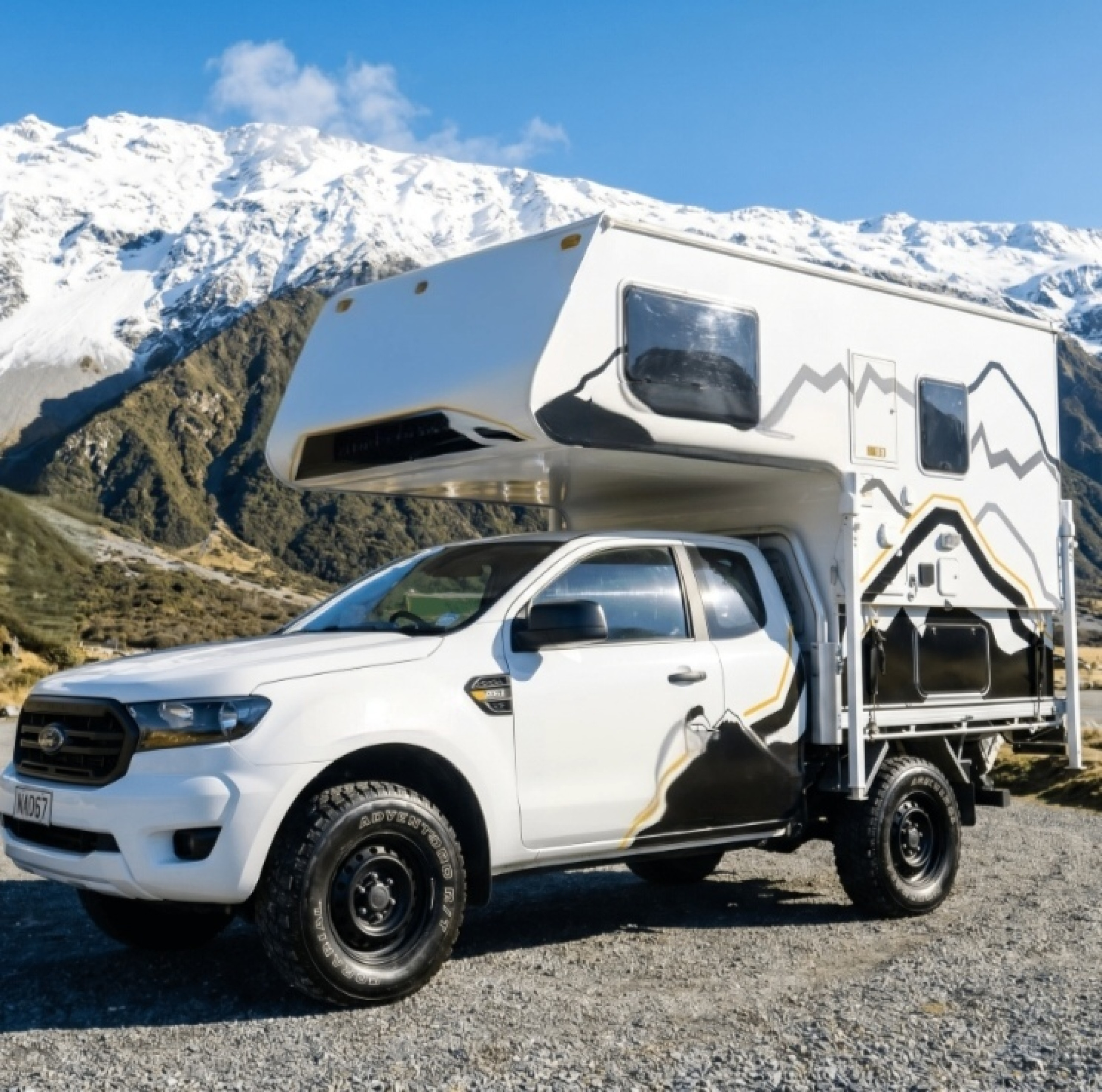
Pampa Cruz documents a Ford Ranger with camper body in Auckland and a Suzuki Jimny with rooftop tent in Christchurch. Ferry permission and returns in another city require confirmation. Wellington and Picton are ferry ports in this guide, not established Pampa Cruz collection bases. Information checked on 12 November 2026.
Free, non-binding reservation request, with no immediate payment.
Three different rental arrangements
| Plan | What it requires |
|---|---|
| Cross with the same vehicle | Rental permission, passenger and vehicle booking, applicable cover and an agreed return location. |
| Return one vehicle and hire another | Two confirmed rentals, transfers between bases and ports, and compatible dates. |
| Arrange a one-way rental | Permission to return elsewhere, an actual receiving base, fees and any scheduling restrictions. |
These arrangements can overlap, but none is automatic. Listings on both islands do not prove that two successive rentals will be available for your dates. Permission to take a ferry also does not mean that you may return the vehicle in a different city.
Build the route around confirmed collection bases
Begin with a route that respects the vehicle’s collection and return points. An Auckland rental involves a drive to Wellington before the ferry. For a Christchurch rental, Picton is not the default collection point. Include these land journeys in your days, mileage and costs.
On a shorter trip, a loop on one island may give you more time at each stop and reduce transfers. Compare our North Island route ideas from Auckland with the 14-day South Island road trip. A combined journey can then be planned around verified rental permissions and dates.
Get rental permission before buying the crossing
Both Interislander and Bluebridge tell travellers to check the rental provider’s terms before booking. Some agreements allow the vehicle to cross; others involve dropping one off and collecting another.
Ask for written confirmation covering the supplied vehicle: ferry permission, any operator restrictions, insurance conditions, assistance on the other island and return location. Also clarify what a cancelled crossing would mean for the rental end date. Resolve these points before committing to other bookings that rely on the ferry.
Use the fitted vehicle’s dimensions
Use measurements provided for the actual camping configuration. A camper body, folded rooftop tent or rear rack can change the dimensions. Manufacturer specifications for an unmodified vehicle may not describe the one you are hiring.
Interislander requests accurate vehicle details. Its vehicle measurement guidance explains how to account for projecting accessories. If the vehicle is longer than booked, an additional charge may apply, or there may be no room on that sailing.
Bluebridge also uses vehicle categories. If you do not yet know the registration number, it can be added later according to the operator’s process. You still need the correct category and the rental provider’s permission. Ask which dimensions to use before completing the booking rather than estimating from a model name.
Allow a realistic transfer day
Interislander describes the Wellington–Picton crossing as approximately three and a half hours, subject to conditions. Add the drive to the terminal, check-in, loading, disembarkation and travel to your next overnight stop. The operators require check-in at least an hour before departure; follow the instructions on your actual booking.
Keep the rest of the day manageable. A fixed-time activity immediately after scheduled arrival leaves little room for delay. A suitable overnight stop along your onward route can simplify the transfer, but it needs to be booked according to the campsite’s rules and your camping setup.
Our New Zealand camping and self-contained guide explains how to check overnight options without treating a parking area as an authorised campsite.
Compare the total cost and the right fare conditions
Obtain a fare for your dates, passenger numbers and ages, vehicle category and fitted dimensions. Prices vary with the sailing, availability, extras and flexibility. A headline starting price is not a reliable budget for a particular converted vehicle.
Compare changes and refunds separately. At Bluebridge, the more flexible products do not all have the same refund conditions, and a fare difference may still apply when changing dates. Read Interislander’s conditions alongside the fare selected there, too.
Include the mileage needed to reach each port, fuel, any road user charges, transition nights and contractually agreed return fees. Our road-trip budget guide helps compare the overall trip instead of the ferry ticket alone.
Prepare for the crossing and possible changes
Pack a small bag with documents, useful medication, warm layers and anything children will need. Operators require you to leave the vehicle during the sailing, so do not assume you can return to collect forgotten items. Follow instructions about gas bottles, securing the vehicle, the parking brake and alarms.
Weather and operational conditions can change a departure. Keep the rental provider’s details, campsite information and operator contacts accessible. A margin before vehicle return and an international flight makes changes easier to manage; the right amount depends on the route and bookings you have committed to.
Confirm these details before finalising two islands
- The exact vehicle and rental dates.
- Ferry permission and insurance conditions.
- Return base, any one-way agreement and associated fees.
- Length, height and category with camping equipment fitted.
- The chosen fare, check-in deadline and useful flexibility.
- Overnight stops and contingency time.
Browse the New Zealand vehicle listings and tell us which islands you would like to explore. The conditions for your proposed vehicle can then be clarified. Booking requests are free and carry no commitment, with no immediate payment.
To prepare a request for your chosen island, view the Ford Ranger camper in Auckland or the Jimny with a rooftop tent in Christchurch. Equipment and rental conditions must be confirmed for your specific vehicle and dates.