

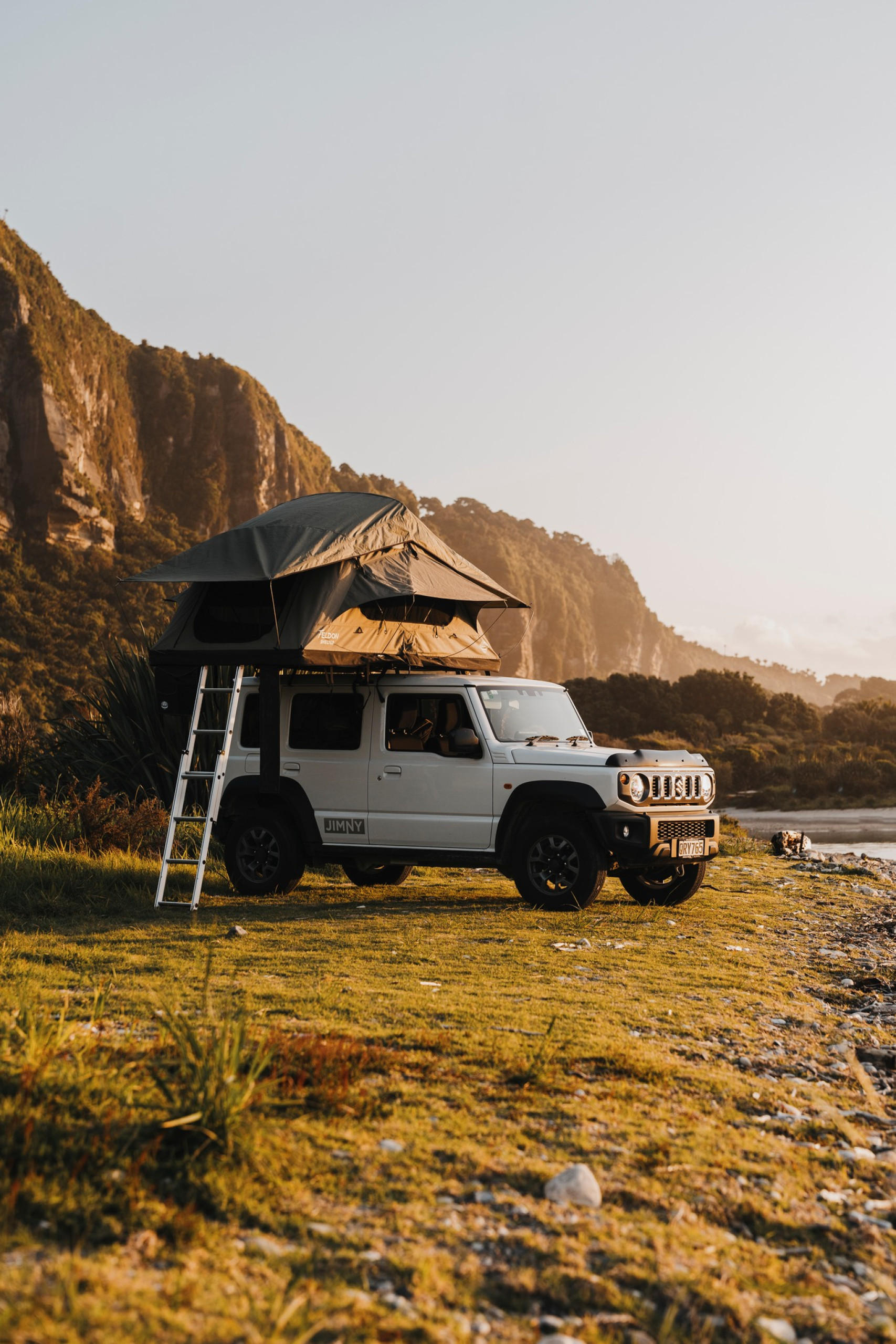
The best time for a New Zealand road trip depends on your island, pace and sleeping arrangement. A rooftop tent makes it especially useful to plan for cool evenings, wind and alternative overnight options. A camper body still requires checking its equipment, route permissions and practical conditions.
Pampa Cruz currently documents a Ford Ranger with camper body in Auckland and a Suzuki Jimny with rooftop tent in Christchurch. Start with a collection base and a manageable trip length, then prepare for weather, driving and entry requirements. Information checked on 12 November 2026.
Free, non-binding reservation request, with no immediate payment.
Choose the season around your trip
New Zealand’s seasons follow the Southern Hemisphere calendar. Use this to prepare the trip, rather than as a forecast for a particular week.
| Period | Road-trip preparation |
|---|---|
| Summer, December–February | Arrange important overnight stops early around holidays; still carry rain protection and warm layers. |
| Autumn, March–May | Adjust driving days and sleeping equipment as temperatures fall; check seasonal facilities. |
| Winter, June–August | Build the route around open roads, cold conditions and equipment actually supplied. |
| Spring, September–November | Keep plans flexible and check alerts before mountain stages. |
For a rooftop tent, confirm bedding, rain protection and what to do if conditions prevent its use. For a camper body, ask how heating and power operate if they are advertised. Do not assume that a particular system is fitted just because the vehicle belongs to a camping category. Choosing the sleeping setup and season together makes these details easier to assess.
One island or both: leave time to enjoy the route
A loop on one island simplifies logistics, with fewer transfers, more freedom to change a stop and an easier return to the agreed base. Our 10–14 day North Island route and 14-day South Island itinerary provide starting points to adapt.
Visiting both islands adds decisions about vehicle ferry permission, the possible availability of another rental, transfers and return location. Read the Wellington–Picton rental vehicle ferry guide before committing to ferry tickets or connecting flights. An available listing on each island does not confirm a workable combination for your dates.
Driving licences: the rule from November 2026
For arrivals on or after 1 November 2026, an overseas car licence may be used for up to 12 months from the most recent entry, subject to NZ Transport Agency’s conditions. For arrivals before that date, the overseas car licence period is 18 months. Older advice referring to 18 months without qualification is therefore no longer suitable for every visitor.
Your licence must remain valid. If it is not in English, carry an accepted English translation or international driving permit alongside the original licence. NZTA lists accepted translation sources. Then check the rental contract separately for minimum age, driving experience and additional drivers; these conditions should not be copied from another destination.
Drive on the left and allow realistic journey times
NZTA’s visitor guidance highlights narrow, winding, steep and sometimes unsealed roads. Distances can take longer than expected. Everyone must wear a seat belt. If travelling with a child, confirm an appropriate restraint and compatible attachment points with the rental provider.
After a long-haul flight, allow time to rest before a lengthy drive. Avoid combining vehicle collection, shopping and several hours on the road in an overfilled first day. During the trip, leave room for breaks, sightseeing and arrival at camp. A map’s driving estimate is only one part of the day, especially when you stop frequently.
Road permissions, weather and winter equipment
Four-wheel drive describes mechanical capability. Permitted routes come from the rental agreement, while road authorities determine whether a route is open. Ask about exclusions for gravel roads, tracks, beaches, river crossings and private access, together with the limits of insurance cover.
Check MetService warnings and the NZTA Journey Planner before travelling. In winter, confirm suitable snow chains, fitting instructions and any local requirements. NZTA’s winter guidance advises respecting closures, adjusting speed and carrying water, food and warm clothing. A 4×4 does not make a closed road available.
Check entry requirements for each traveller
Whether you need a visa or an NZeTA depends on your passport, reason for travel and status. Visa waiver eligibility generally does not mean that you can skip the NZeTA. Check the requirements for every member of your party rather than assuming one adult’s position applies to everyone.
At the check date, an NZeTA application costs NZD 17 through the official app or NZD 23 online. The IVL is NZD 100 where applicable; exemptions exist. Allow at least 72 hours for NZeTA processing; additional checks can take longer. Visa waiver visitors must also meet entry conditions, including an appropriate passport, onward travel and sufficient funds. The passport must remain valid for at least three months after the planned departure from New Zealand.
The New Zealand Traveller Declaration is free and required for every traveller, including children. Air travellers can submit it from 24 hours before starting their journey to New Zealand. It does not replace a visa or NZeTA.
Prepare outdoor equipment and the first nights
New Zealand’s biosecurity guidance requires declaring used outdoor equipment, including hiking footwear and camping gear. Remove soil and seeds before departure, pack items where they can be inspected and declare them even if they appear clean. Food must also be declared.
Confirm the equipment supplied with your rental before bringing duplicate items. Book your first nights according to the sleeping setup and each site’s rules. Our camping guide explains managed campsites, freedom camping and self-contained certification as separate questions.
Choose a New Zealand camping vehicle and share your dates, party size and preferred island. Booking requests are free and carry no commitment, with no immediate payment.
To prepare a request for your chosen island, view the Ford Ranger camper in Auckland or the Jimny with a rooftop tent in Christchurch. Equipment and rental conditions must be confirmed for your specific vehicle and dates.