

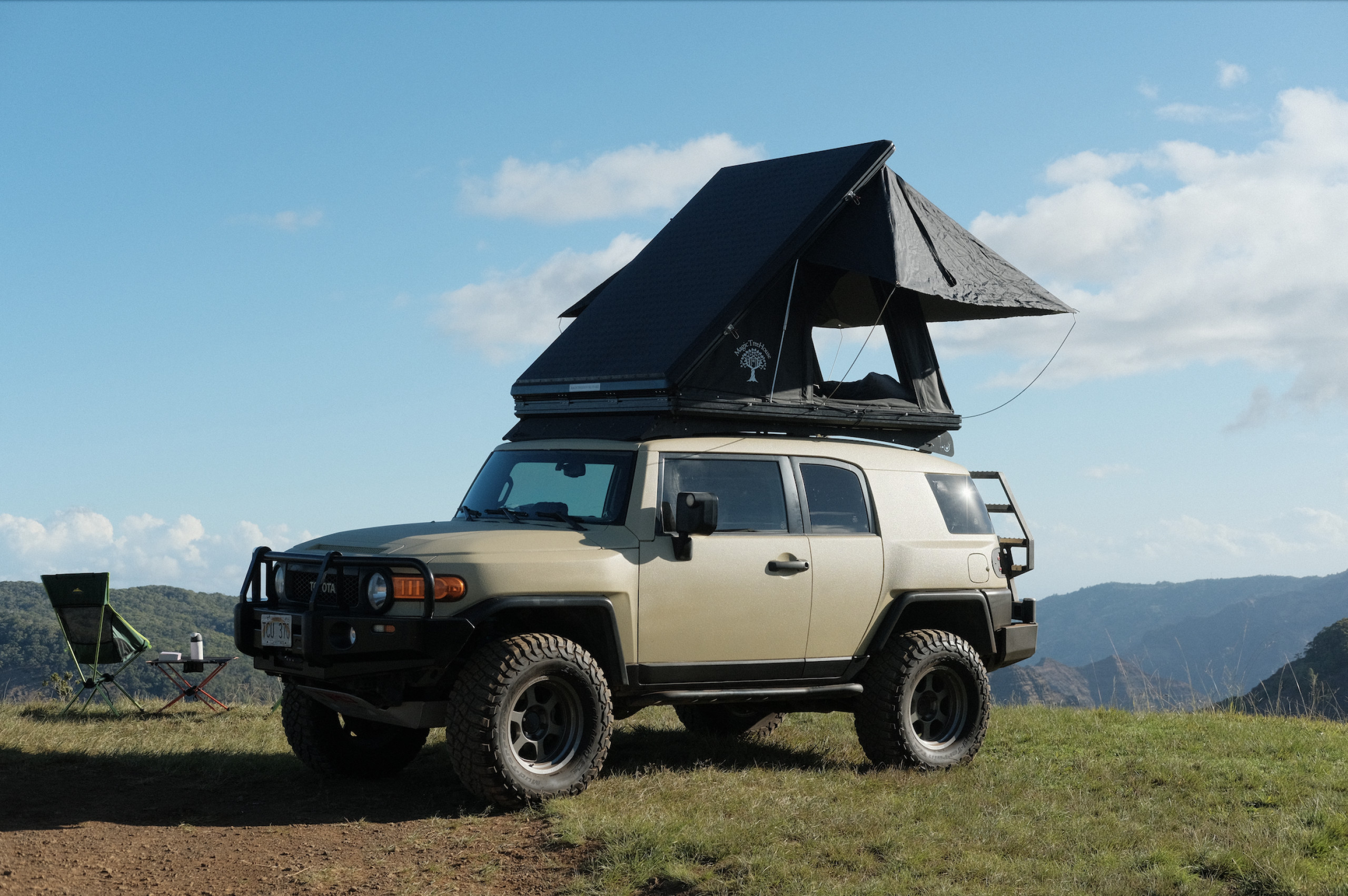
Choose a Hawaii rooftop tent vehicle by thinking through your days and nights, not just the model name. How many people are travelling? Who will sleep in the roof tent? Where will luggage go? Which campsites will accept the setup? Pampa Cruz’s Hawaii listings let you plan a trip on Kauai or Big Island with vehicles equipped for camping. This guide helps you compare the practical arrangements and provide the information needed to find a suitable vehicle before sending a booking request.
Choose the island and collection arrangements first
Hawaii can mean the archipelago, while Hawaiʻi Island, or Big Island, is one specific island. Make that distinction first. The reviewed catalogue includes several models on Kauai. The Big Island listings are around Kona and feature Toyota FJ Cruisers with rooftop tents.
Kauai listings may show Lihue or Kauai County. Those labels help locate the offer, but the collection address, opening hours and airport transfer need to be confirmed for the particular vehicle. A shuttle to a rental base is a different arrangement from having a vehicle delivered to the airport.
Explore rooftop tent rentals on Kauai and Big Island rentals around Kona. Match the collection arrangement to your itinerary. A region you want to explore should not automatically be treated as a pickup location, and visiting another island means checking a separate local plan.
Count passengers and sleeping spaces separately
Make two separate counts: people who can travel in properly belted seats and people with suitable sleeping places. A vehicle with several passenger seats does not necessarily have a roof tent of the same capacity. Some configurations supplement the rooftop sleeping space with a ground tent.
Ask for mattress dimensions, the tent manufacturer’s stated capacity and the equipment provided for each sleeping place. An extra tent without mats or bedding is different from a complete additional sleeping setup. Say whether your group needs to sleep together in the same tent.
If a listing card shows no berths but the description includes a tent, ask for clarification. Likewise, different numbers of seats and seat belts need to be resolved. Base your decision on the confirmed transport capacity and sleeping arrangement for your group. A total advertised guest count should not replace those two checks, particularly when you are travelling with children or several adults.
Compare SUVs and pickups using practical criteria
On Kauai, the catalogue includes SUVs such as FJ Cruisers, 4Runners, Wranglers and a Lexus GX470, alongside Tacoma and Gladiator pickups. Those names provide a starting point, but the storage and camping installation on the actual vehicle matter more than a general comparison between brands.
| Question | Equipped SUV | Equipped pickup |
|---|---|---|
| Luggage | Check space left in the cabin and boot | Check weather protection and locking storage |
| Cooking | See whether gear stays accessible with luggage loaded | Check cooking height and equipment layout |
| Sleeping | Inspect tent, ladder and opening arrangement | Inspect the particular tent installation too |
| Driving | Confirm drivetrain and dimensions | Confirm drivetrain, dimensions and visibility |
The documented offer here uses rooftop tents. If you need an indoor bed, an enclosed shower or standing room inside, explain that before selecting a listing. The word camper alone does not establish that these features are included.
Think through a complete camping day
Imagine reaching your campsite: opening the tent, taking out your bags, preparing food and putting things away before bed. Ask for photographs of the equipment in use and a complete inventory. They help show where the cooking gear, water, chairs and luggage sit when the vehicle is set up.
Then think about packing up in the morning. Where would you put shoes or damp fabric? Does closing the tent require moving luggage? Can you reach groceries without emptying the boot? Everyday questions often reveal which arrangement suits your pace better.
For cooking, check the stove, fuel, utensils and food storage. For electricity, explain what you want to charge and ask which outlets are available. For water, distinguish the container provided from the places where you will refill it. Finally, compare the bedding with the conditions and comfort you expect at your overnight stops. Build this list before choosing solely from the vehicle photographs.
Match the vehicle to your overnight stops
Choose the vehicle and overnight stops together. If you expect to use a ground tent regularly, confirm that one is supplied and that the complete setup suits your group. If sleeping in the roof tent is central to the trip, have each campsite confirm that it accepts that exact arrangement.
The DLNR states that sleeping in vehicles in State Park campground parking lots is not permitted, so a camping permit alone is not enough. Kauai’s county campground rules also distinguish tent camping from vehicle camping.
Access conditions, pitch layout and arrival hours may influence your choice. Check these before planning a late arrival. Our Kauai camping and permit guide and Big Island overnight guide help you work through the questions for your chosen island. For private property, obtain the operator’s permission for your specific setup and dates rather than relying on a general description of the site.
Check family seating and sleeping arrangements
When travelling as a family, start with the journey. Share children’s ages and sizes, the restraints you need and whether you will bring your own. Confirm that the chosen seats can be installed appropriately in the vehicle. NHTSA guidance recommends choosing a restraint for the child’s age and size and following both the seat manufacturer’s instructions and the vehicle manual.
Next, plan the sleeping arrangement: who sleeps where, how adults will accompany children and how you will handle the ladder and trips to the facilities. Check dimensions, access and the tent’s instructions. A family shown in a photograph does not establish a suitable capacity for every age group.
Leave room for everyday belongings too. A pushchair, bags, wet clothing and groceries all need space. A photograph of storage with the camping equipment loaded can help you decide what luggage to bring and what to leave at home.
Read the rental conditions before judging capability
Drivetrain is a technical specification. Permission to use a particular road also depends on the rental contract and local rules. Before choosing a vehicle for a specific excursion, ask for written confirmation of whether that access is allowed and what cover applies. Four-wheel drive should not be taken as permission to drive on tracks, beaches or private land.
Check the accepted drivers, required documents, mileage allowance, deposit and excess or deductible as well. Some listing details may need clarification; have the final answer tied to your particular vehicle and dates.
Then compare the full cost rather than the headline price. Essential equipment, delivery or protection can change the total. Our Hawaii road trip budget guide provides a framework for comparing setups alongside overnight stays and transport. This makes it easier to see whether an apparent saving still suits the trip you want to take.
Send the details needed for a useful recommendation
For a useful recommendation, send the details that help distinguish between listings:
- Your island, dates and flight arrival and departure times.
- The number of travellers and drivers, plus children’s ages.
- Your sleeping preference: everyone together, roof and ground tents, or particular mattress dimensions.
- Luggage volume and essential camping equipment.
- The areas you want to visit and overnight stops already considered.
- Your overall budget and any rental conditions you need clarified.
Shortlist a few relevant vehicles rather than comparing the entire catalogue. Ask the same questions about each and have the deciding details confirmed. A published listing lets you study the setup; availability still needs to be checked for your dates.
From an island page, open the vehicle listing, review its calendar and prepare your request. On Pampa Cruz, the booking request is free and non-binding, with no immediate payment. You can use that step to explain your plans clearly and confirm that the selected configuration fits your trip.
Information and catalogue checked on 12 November 2026. Recheck opening status and terms for your dates.