

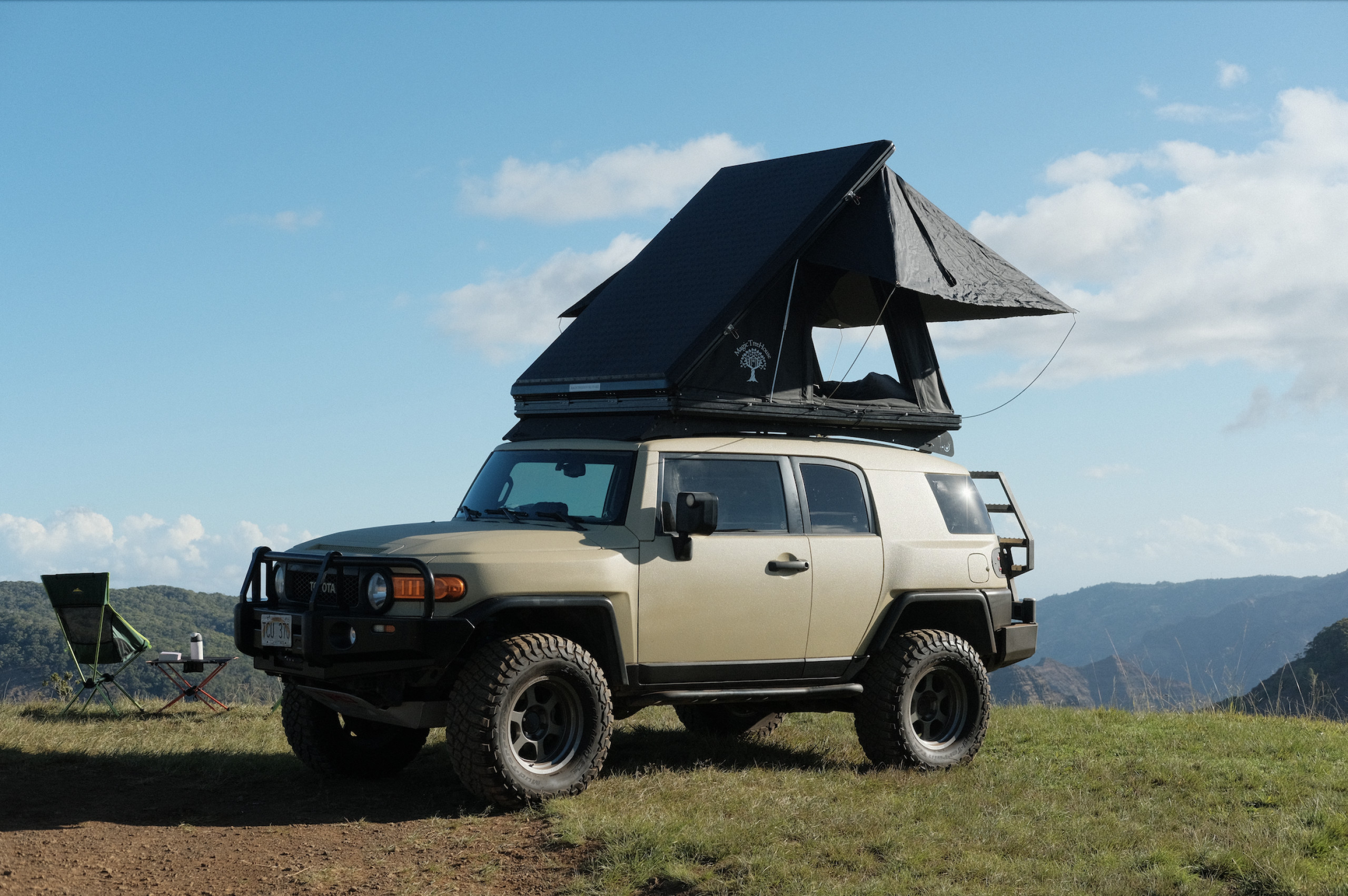
A Hawaii rooftop tent road trip budget starts with your actual plans: one island, travel dates, your group and overnight stops that accept your sleeping setup. The advertised daily rental rate is only one part of that picture. Campsites, food, transport and useful extras belong in the calculation too. You also need to separate money you will spend from money that may be held as a security deposit. This guide gives you a practical way to compare quotes and plan the full cost of travelling on Kauai or Hawaiʻi Island, usually called Big Island.
Start with your island, dates and travel group
Write down your flight dates and times, the number of travellers and the island where you want to collect the vehicle. Pampa Cruz currently presents rooftop tent vehicles on Kauai and Big Island. Your rental period, transfer arrangements and overnight bookings will then depend on the vehicle and collection details you choose.
Count rental days and travel nights separately. A late arrival may make an airport hotel useful, while an early flight can affect where you spend your last night. Ask about collection and return times before finalising that part of the itinerary.
If your trip includes two islands, prepare a separate local budget for each and add flights and transfers. Ask what can be arranged on each island; do not assume a single vehicle booking includes moving the vehicle between them. Start by reviewing the Hawaii vehicles listed on Pampa Cruz and identifying which island fits your plans.
Compare quotes for the same trip
Quotes are useful to compare when they cover the same dates, drivers and essential equipment. Note the total rental price, then check its inclusions: vehicle protection, taxes, bedding, cooking equipment, any additional ground tent and the mileage allowance. Equipment already included in the quote should not appear again as a separate cost in your budget.
Check how each item is charged. A daily rate, a nightly rate and a fixed charge for the whole trip are different. An airport transfer may be charged in each direction; an equipment extra may cover the full rental. Have essential items and quantities recorded in your confirmation.
Keep three figures separate: the rental price, the security deposit and the excess or deductible that may apply to a covered claim. A deposit is not ordinary holiday spending, but it can affect your available card limit. Confirm the amount, payment method and release conditions for the particular vehicle before planning your remaining spending.
Build the complete budget, item by item
Use one currency for your overall estimate while keeping the original amount and currency beside every item. When converting costs, record your exchange rate and any card fees you expect to pay. This table is a planning framework, not a Pampa Cruz price list.
| Item | Calculation | What to confirm |
|---|---|---|
| Vehicle rental | Complete quote for your dates | Taxes, cover and included extras |
| Overnight stays | All campsites and accommodation | Accepted setup; per-person or per-site charges |
| Transport | Fuel, transfers and parking | Distance, fuel use and local prices |
| Everyday spending | Groceries, meals, water and supplies | Equipment already provided |
| Visits | Entry fees and selected activities | Reservations and cancellation conditions |
| Flexibility | Money kept available | A workable alternative overnight stay |
Add these items to reach your trip total. Calculate a per-person figure afterwards, separating shared costs from personal purchases. Keep the security deposit in a separate line so it does not make the holiday itself appear more expensive than it is.
Budget for campsites that suit your sleeping setup
A useful campsite budget is built around places that accept your actual equipment on your travel dates. Permission to pitch a ground tent does not automatically allow sleeping in a rooftop tent. Kauai’s county campground rules require campers to sleep in tents and prohibit vehicle camping. A county permit therefore belongs to a ground-tent plan with the right equipment. For a rooftop tent, find a different authorized arrangement that explicitly accepts that setup.
Look beyond the nightly price. Check how many people it covers, parking, drinking water, showers and arrival requirements. Official pages may report closures or reduced facilities. A vehicle being available does not establish that a compatible campsite has space.
On Big Island, keep park admission separate from camping. The National Park Service explains that park entrance fees also apply when staying at Nāmakanipaio. Use our Kauai camping and permit guide or Big Island overnight planning guide to work through your proposed stops.
Calculate fuel and transport costs
Estimate driving distance from an itinerary you would actually follow, including grocery stops, campsite access and the return to the rental base. A map full of attractions is not yet a mileage estimate. Group visits by area to avoid unnecessary repeated journeys.
For a metric calculation, multiply kilometres by litres consumed per hundred kilometres, divide by one hundred, then multiply by the price per litre. For a US-unit calculation, divide miles by fuel economy in US miles per gallon, then multiply by the price per US gallon. Do not mix US and imperial gallons. Keep each calculation in a consistent set of units.
Ask for a useful fuel-consumption estimate for the chosen vehicle carrying its camping equipment. Confirm the return fuel policy as well. If your quote has a mileage limit, add any expected extra distance using its stated charge. Where a listing’s summary and description appear to disagree, have the allowance clarified before treating it as a confirmed part of your budget.
Match your priorities to the way you travel
For two people, begin with the sleeping space and how easily you can use the equipment. Check bedding, luggage storage and the cooking arrangement. A kitchen that suits your normal meals may be worth more to you than an accessory you would use only once.
For a family, include equipment for every traveller: additional sleeping places, mats, bedding, child restraints and the capacity of each booked campsite. Passenger seats do not tell you how many people fit in the rooftop tent.
For friends travelling together, compare a shared setup with separate vehicles using the complete cost of each option. Include fuel, campsites and collection arrangements rather than simply comparing the rental prices. These are scenarios to price through quotes, not a reason to assume the largest vehicle is automatically best value.
Decide which comforts matter most. Mixing meals you prepare with restaurants, or including an occasional conventional room, can give you a more realistic budget than expecting to camp and cook every night.
Leave flexibility without paying twice
Keep some money available for a change of plan, particularly when several reservations depend on one another. That flexibility might cover another campsite, a forgotten item or a night under a solid roof. Choose the amount around your group and the alternatives you would genuinely be willing to use.
Ask for the equipment inventory before renting supplies separately. Also check whether a service included in one quote costs extra in another. A lower headline daily rate may be offset by transfers or essentials you would otherwise have to add.
Keep each booking’s cancellation terms in the same folder. Changing a vehicle rental and changing a campsite are separate processes. Checking the dates, hours, overnight arrangements and conditions before payment is more useful than choosing solely on a daily rate. Record which costs are confirmed and which are still estimates so you know what remains to be settled.
Questions to ask before accepting your quote
Is a rooftop tent vehicle always cheaper than hotels?
It depends on the complete trip. Compare both options for the same dates: an equipped vehicle plus compatible overnight stays, against a car plus accommodation. Include the meals, transfers and services you would actually use.
Can I budget using only the vehicle rental price?
You also need overnight stays, fuel, food and visits. Establish which fees are already included to avoid adding them twice.
What should I send to receive a useful quote?
Share your island, dates, flight times, drivers, group size and children’s ages. Explain the sleeping arrangement you need and your main stops. Browse the options on Kauai or on Big Island with collection around Kona, then open a suitable vehicle listing. Your booking request is free and non-binding, with no immediate payment.
Information and catalogue checked on 12 November 2026. Recheck opening status and terms for your dates.