

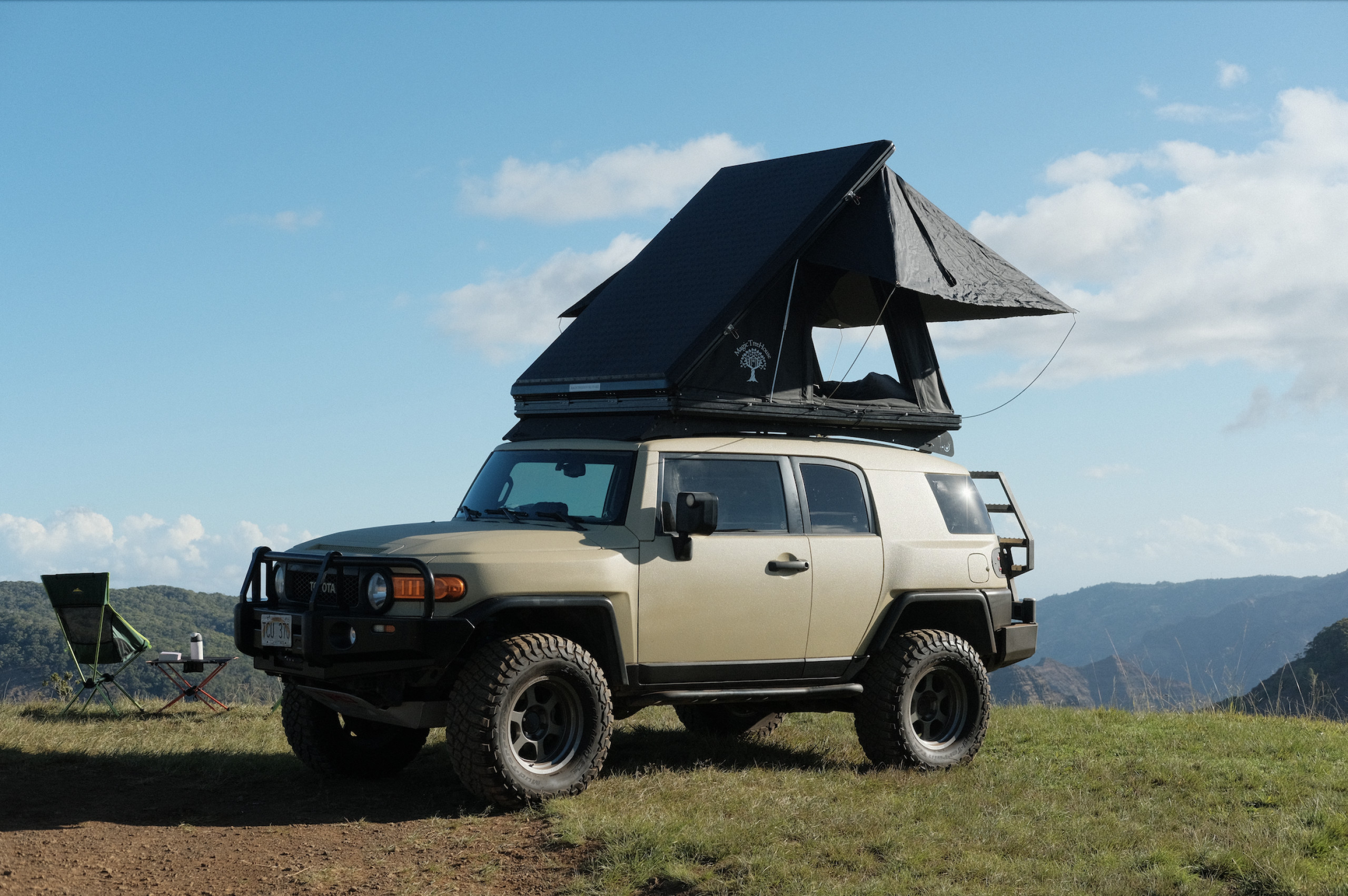
The right time for a Hawaii road trip depends on what you want to do and the overnight comfort you need. Beach temperatures describe neither mountain conditions nor an exposed camping space. For rooftop-tent travel, consider the season, island, authorized overnight options and the flexibility to change your programme.
This guide covers the documented offers on Kauai and Big Island from Kona. It does not assume rentals are available on every Hawaiian island. Official sources were checked on 12 November 2026; current forecasts, permits and rental conditions still need checking for your own dates.
Start with the way you want to travel
If you want to sleep outdoors almost every night, begin with overnight places that actually accept your vehicle and setup. If you prefer a mix of camping and accommodation, you can organize the trip differently. Either way, avoid booking flights solely because a month is described as ideal before checking the vehicle offer and overnight spaces.
| Your priority | Compare | Practical decision |
|---|---|---|
| Mostly camping | Authorized nights and equipment | Confirm each evening before fixing the route |
| Mountain visits | Local forecasts and clothing | Keep a day that can move |
| Family travel | Beds, tent access and toilets | Prefer straightforward stages |
| A controlled budget | Complete quotes for alternative dates | Compare totals, not only daily rates |
Dates that work for experienced adult campers may require a different approach with young children or on a first rooftop-tent trip. Decide how much improvisation feels comfortable before choosing the itinerary.
Seasons and microclimates: useful tendencies, not guarantees
The official Go Hawaii weather guide describes summer from May to October and winter from November to April. The National Weather Service emphasizes the effect of terrain: windward and sheltered slopes can receive very different rainfall over short distances.
A generally drier period can be a useful starting point for a camping-focused trip, but it does not guarantee a rain-free week. A wetter season does not mean every day will be unusable either. Overnight arrangements and your ability to adapt are as relevant as monthly averages.
When comparing two possible dates, use the same vehicle requirements, overnight plan and cost categories. That shows what changes in comfort, availability and total cost, without attributing every difference to the season. Avoid drawing conclusions from a single attractive daily rental rate that excludes important extras.
| Period | Useful tendency for planning |
|---|---|
| May to October | Generally warmer summer conditions. A first period to compare for a mostly camping trip, while still checking rain and wind. |
| November to April | Cooler winter conditions; GoHawaii identifies November to March as the wettest months. Keep greater flexibility in overnight plans. |
This climate reference does not rank months by price or availability. Winter swell on north-facing coasts can also affect water activities; local guidance remains decisive.
Kauai and Big Island need separate preparation
On Kauai, connect your sightseeing programme to authorized overnight options for your chosen sleeping setup. Spending a day on the north shore or in the uplands does not establish that rooftop camping will be possible there. The Kauai camping guide explains the differences between ground-tent permits, parking and sleeping in a vehicle.
On Big Island, elevation changes need to influence your clothing choices. The National Park Service notes that Kīlauea’s summit can be chilly and rainy throughout the year, while the park’s coast has different conditions. Kona’s forecast alone therefore cannot prepare you for a volcano day.
The Big Island camping guide covers the overnight planning. For a multi-island holiday, arrange rentals and sleeping options separately; do not assume the same vehicle can travel with you to the next island.
Wind, rain and ocean conditions: check the actual location
The Central Pacific Hurricane Center places the official hurricane season between 1 June and 30 November. That is not a forecast for your dates, but it is a reminder that summer travel still requires checking alerts.
Before each driving day, consult the Honolulu weather service for the relevant area. Look at wind, rain and surf warnings as well as park and campsite access. Sunshine at the starting point does not describe every stop on the route or that evening’s overnight conditions.
A rooftop tent has its manufacturer’s operating limits. Ask the rental provider for the wind and wet-packing guidance for that model rather than applying one generic threshold to all tents. On the road, the NWS advises against entering floodwater or driving around a closure barrier. Four-wheel drive does not change that advice.
Altitude and volcanoes: keep another option in the programme
On Big Island, the Maunakea Visitor Information Station is already at 2,804 metres, or 9,200 feet. Travelling higher brings specific altitude and vehicle requirements. The proposed route must also be allowed by the rental agreement. A plan to visit the area is different from guaranteed summit access.
For volcanic sightseeing, follow the park’s access and air-quality guidance. What can be seen depends on activity and open areas. No month guarantees a lava-viewing experience, and an attractive photograph does not establish current conditions.
Prepare an alternative day that does not depend on the same access. Having it ready avoids spending the morning rebuilding the entire trip when conditions change. Check that the return journey still fits the arrival deadline at your booked campsite or accommodation, especially after an evening activity.
Prepare the tent, luggage and daily routine
Ask what is supplied before buying or packing equipment: bedding suitable for your programme, pillows, lighting, kitchen kit, water storage, food cooling and luggage space. Check sleeping capacity separately from seats with seat belts. Families should confirm child restraints and the actual sleeping arrangement rather than relying only on a passenger icon.
Choose luggage that is easy to store and keep a small bag of overnight essentials accessible. Bring rain protection, warm layers for higher visits and a way to isolate damp clothes. During handover, practise opening and packing the tent with the demonstration, and ask how to handle damp fabric when moving on.
Plan the arrival routine as well: replenish food and water, reach the site within its check-in window, locate the toilets, set up and cook where permitted. Those simple arrangements make the trip smoother and leave more time for the activities you came to enjoy.
Entry requirements depend on nationality and passport
Hawaii follows United States entry rules. The Visa Waiver Program allows eligible travellers to visit for up to 90 days without a visa, provided they have valid ESTA approval and meet its other requirements. Nationality, passport and travel history can affect eligibility. ESTA is not a universal rule for all international visitors.
For French travellers, France Diplomatie explains passport requirements and recommends applying for ESTA at least 72 hours before departure. Some circumstances require a visa and more advance planning. Check official procedures before committing to non-refundable expenses.
For driving, ask which documents every driver must bring, together with minimum age, additional-driver arrangements, deposit and insurance exclusions. Conditions from another rental company or destination do not automatically apply. Keep identification and booking details organized for handover, while storing an appropriate backup separately.
A simple preparation timeline
Before the main bookings, choose the island and pace, check entry requirements and request a vehicle quote. When overnight reservations become available, confirm suitable spaces and adjust the route. Close to departure, recheck opening hours, access, equipment and cancellation terms. During the trip, use current local information instead of treating the original plan as fixed.
Use the seven-day Kauai itinerary or seven-to-ten-day Big Island itinerary as flexible suggestions. Add the expense categories in the Hawaii road-trip budget guide before comparing quotes.
Is there one perfect month for everyone?
No. The right dates fit your confirmed overnight options, desired comfort and ability to adapt. Local forecasts remain necessary in every season.
Start by exploring the vehicles offered in Hawaii. A booking request is free and non-binding, with no immediate payment, so you can clarify dates and conditions for the particular vehicle you want.
Information and catalogue checked on 12 November 2026. Recheck opening status and terms for your dates.