

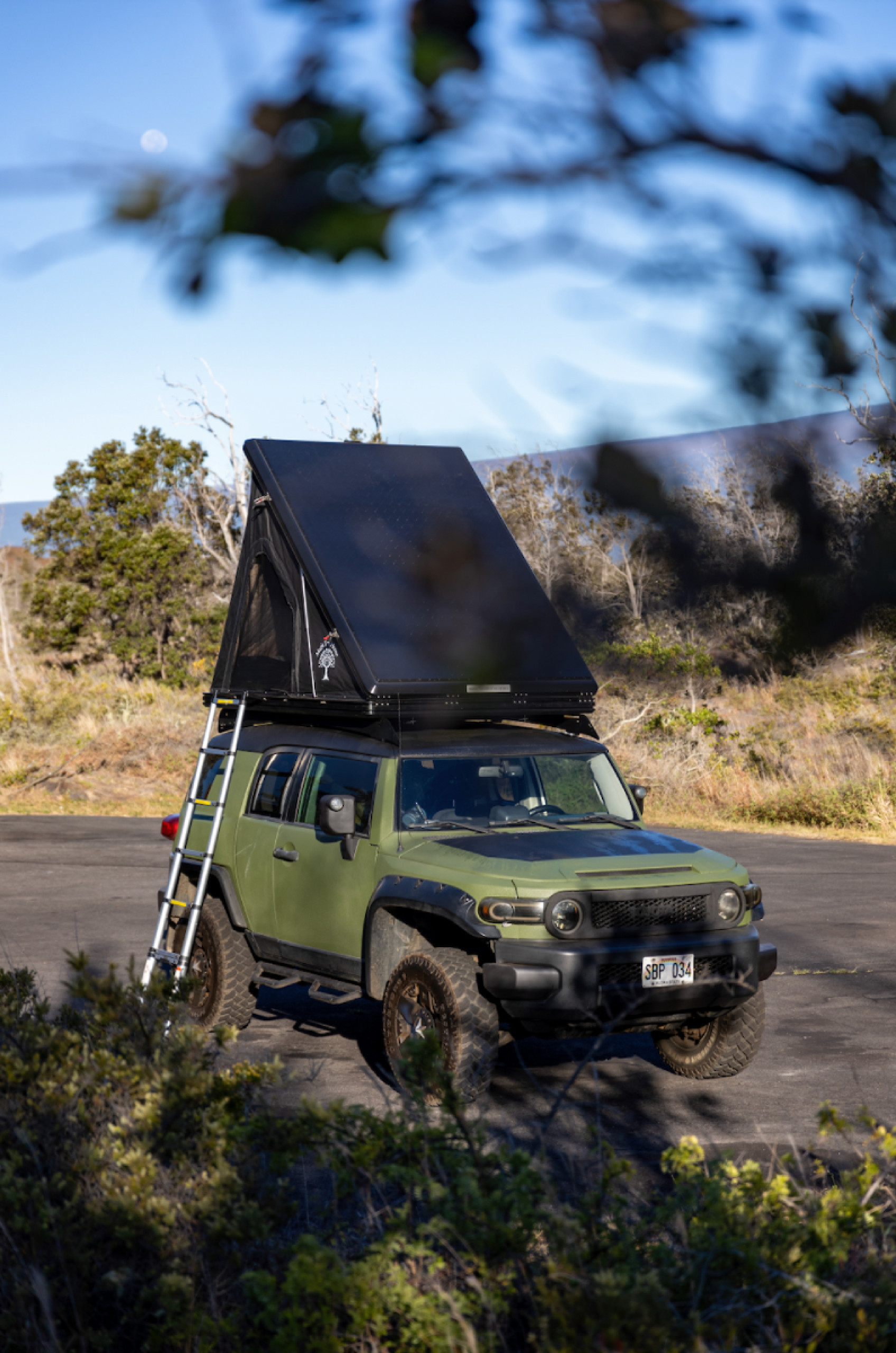
Big Island means the island of Hawaii, one island within the Hawaiian archipelago. Seven to ten days with a camping-equipped vehicle allow you to connect the Kona coast, Kaʻū, Hawaiʻi Volcanoes National Park and the Hilo side of the island. This suggested itinerary starts and finishes in Kona, matching the bases documented in the Pampa Cruz catalogue. Hilo is a sightseeing stop, not an assumed vehicle-return location.
Start with confirmed nights and the Kona handover
The Big Island listings observed are Toyota FJ Cruisers with rooftop tents, located in Kona. Before booking flights, agree the exact handover point, opening hours and any transfer. The city name alone does not establish collection at the airport terminal.
Next, arrange where you will sleep. A campground you can drive to does not necessarily permit sleeping in the vehicle or in a rooftop tent. Choose a site explicitly accepting your setup, a ground tent on an authorised pitch, or accommodation. Our Big Island camping guide distinguishes land managers and permit systems. Every suggested overnight area below depends on a suitable option actually being confirmed for your dates.
Useful distances for building the route
These reference distances come from the National Park Service. They describe one-way trips between specific places; add the drives to your actual overnight addresses and any detours. Kilometres are rounded conversions. The table is neither a total rental-mileage estimate nor a promise of driving time.
| Reference journey | Approximate miles | Approximate kilometres |
|---|---|---|
| Kailua-Kona → Puʻuhonua o Hōnaunau | 23.5 | 38 |
| Kailua-Kona → Volcanoes National Park on southern Highway 11 | 95 | 153 |
| Hilo → Volcanoes National Park on Highway 11 | 30 | 48 |
| Chain of Craters Road, one way to the end | 18.8 | 30.3 |
Sources: Hōnaunau directions, Volcanoes National Park directions and Chain of Craters Road. Driving the latter to the end and back adds approximately 37.6 miles or 60.6 km, before your other journeys.
Day 1: handover and an easy start on the Kona coast
Keep arrival day for the vehicle briefing, shopping and a first walk. Learn how to close the tent, secure the ladder, use the stove and manage the water supply. Check assistance arrangements and download useful information before leaving areas with reliable reception.
Head to your first booked night in the Kona area, or accommodation if you arrive late. Avoid planning an island crossing after a long flight. Starting gradually also gives you a chance to notice missing equipment while you are still close to the handover point, rather than discovering it at a distant stop.
Day 2: South Kona and Hōnaunau
Travel south for a day combining scenery and cultural history. Reach Puʻuhonua o Hōnaunau National Historical Park by the roads described by the NPS. Visit the open areas respectfully and keep the cultural site’s visitor facilities separate from your overnight arrangements.
You could add a pre-booked local visit, then return to your confirmed night or continue south only if another suitable stay is arranged. Keep water activities conditional: choose the location and supervision to match the sea conditions and your ability. An appealing coastal driving route does not establish safe conditions for swimming or snorkelling on the day.
Day 3: through Kaʻū towards Volcano
This is your positioning day for the national park. Follow Highway 11 through the south of the island with a limited number of stops. The Kona-to-park reference of approximately 95 miles or 153 km shows the scale of the transfer; the actual distance depends on where you spent the previous night.
Leave time for supplies and arrival at your next stay. Do not add a coastal track simply because an app shows it. Any road used must be open and permitted by the rental agreement. Finish at a confirmed overnight stop suitable for reaching the park, using the rooftop tent only where that exact arrangement is explicitly accepted.
Day 4: a full day in Hawaiʻi Volcanoes National Park
Review the NPS alerts before entering. Construction, closures, volcanic activity and air quality can change the day’s options. A park visit does not guarantee a lava sighting. Select open viewpoints and trails suited to your group, allowing time for stops and parking.
If Chain of Craters Road is open and part of your plans, treat it as an out-and-back excursion. The NPS states that there is no food, water or fuel along the road. Carry what you need before heading down and respect protected areas throughout the visit.
After sightseeing, return to your booked night. A campground within a national park does not give general permission to sleep in a parking area. Confirm the precise site category, facilities and rules. Make this check before committing to a long day that leaves little time to reach an alternative.
Day 5: Hilo and the east coast
Travel from the park area towards Hilo on Highway 11. The NPS reference is approximately 30 miles or 48 km between Hilo and the park; include the extra distance from your actual starting and finishing points. A Hilo day can combine a town walk, supplies and one open natural attraction.
For a visit to ʻAkaka Falls State Park, check hours and fees. The developed path includes steps, so match the outing to everyone’s mobility. Do not follow an unofficial route down towards a waterfall.
Hilo remains a sightseeing stop in this itinerary. The catalogue checked does not document a Pampa Cruz handover or return base there. Keep the remaining route compatible with the agreed return in Kona, even if your preferred flight search shows a departure from Hilo.
Day 6: Hāmākua and the return towards the west
Follow the Hāmākua coast with a few accessible stops, then head west on open roads permitted for the vehicle. Plan the day around your overnight address, the time you actually want at each stop and the eventual Kona return. Calculate the exact distance after fixing those addresses.
Do not plan to drive your rental vehicle down Waipiʻo Valley Road. The official Waimanu access page explains the valley access restrictions: the road is not open to ordinary tourist driving. For any other track, check both current access and the rental contract; 4×4 capability does not confer permission. If weather slows the journey, reduce the number of stops and continue directly to your confirmed night rather than arriving without time to settle in.
Day 7: weather margin and return in Kona
Keep the final day in the Kona area. It can absorb a postponed visit and leaves room for packing, refuelling and the vehicle inspection. Return hours and the airport transfer should already have been agreed before the trip.
Avoid an island crossing, long hike or boat excursion immediately before flying. If the vehicle is due back early, spend the previous night a realistic distance from the meeting point. Arrange a separate rental for another island unless an explicit agreement establishes otherwise. No inter-island vehicle transport is included or assumed in this itinerary.
Extend the trip to eight, nine or ten days
With eight days, add another day around Volcanoes National Park to spread out walks and allow for changing conditions. With nine, give Hilo or the Kona coast an additional day. With ten, add a pause in an area where a suitable overnight stay is confirmed, rather than filling the time with more long transfers.
The benefit of extra days is flexibility. You can move a cancelled activity, dry equipment and enjoy a place without immediately packing again. For families, two nights in one location may be more valuable than adding another region. Check that the overnight plan works before multiplying non-changeable reservations and tours.
Maunakea, altitude and sensitive roads require a separate decision
Maunakea’s summit is not part of this standard route. Any optional visit requires reading the University of Hawaii’s official guidance, checking current access and obtaining the necessary contractual permission. Altitude, the group’s health and the vehicle’s precise characteristics matter alongside four-wheel drive.
Camping and overnight sleeping are prohibited on the relevant Maunakea lands, so this cannot fill a gap in your overnight plan. More generally, carry suitable layers and check the forecast before each day’s activities. Our Hawaii seasons and road-trip guide helps you plan for these changes without treating a season as a guarantee.
Choose the vehicle, build your budget and request dates
Compare Big Island rooftop-tent rentals from Kona using sleeping arrangements, seat belts, equipment and restrictions. For a family, distinguish the rooftop tent capacity from a possible ground tent. A headline total does not always explain how the sleeping spaces are divided.
Your budget should combine the vehicle quote, cover, fuel, overnight stays, attraction fees, food and any transfers. Confirm included mileage, minimum rental duration, the deposit and insurance exclusions rather than inferring them from a general description. Calculate the full price for your actual dates and group.
Send your dates, arrival and departure times, traveller count and sleeping needs. A Pampa Cruz booking request is free and carries no obligation, with no immediate payment. It allows a proposal for your dates to be checked; a published vehicle listing is not confirmation of availability.
Complete your planning with the Hawaii road-trip budget guide and compare the documented island options on the Hawaii rental page.
Information and catalogue checked on 12 November 2026. Recheck opening status and terms for your dates.