

A California road trip from San Diego can combine the Pacific coast, Anza-Borrego’s desert landscapes and Joshua Tree’s rock formations without crossing the entire American West. With 7 to 10 days in a camping vehicle, a Southern California loop leaves time for walks, unhurried meals and more than one night at each main stop.
The itinerary below is a suggested round trip, to be adapted to weather, road openings and campsite bookings. Start with the camping vehicles listed in San Diego before fixing your flights: a published listing does not confirm availability for your dates or collection at the airport.
Choose a 7-day or 10-day Southern California loop
For one week, concentrate on two main outdoor stops: Anza-Borrego and Joshua Tree. With ten days, spend longer in each and finish on the coast north of San Diego. Yosemite, San Francisco, Death Valley and Las Vegas are not added to this loop; including them would require different choices about time, distance and season.
| Trip length | Suggested overnight stops | Best suited to |
|---|---|---|
| 7 days / 6 nights | San Diego 1; Anza-Borrego 2; Joshua Tree 2; San Diego area 1 | Two parks, a full day in each and a final night near the return location. |
| 10 days / 9 nights | San Diego 1; Anza-Borrego 3; Joshua Tree 3; coast north of San Diego 2 | More walking, downtime and flexibility without another long cross-country drive. |
These are suggested travel durations, not confirmed minimum rental periods. Calculate your mileage using the actual campsite and handover addresses, then compare it with the allowance agreed in your quote. Include driving within parks, shopping trips and a margin for diversions.
The 7-day itinerary, step by step
Day 1: collection, supplies and a night near San Diego
Allow time for the vehicle handover, groceries and your first campsite setup. Ask for a demonstration of the bed, water system, electricity, storage and cooking equipment. Practise packing everything away before driving. Staying close to the collection area on your first night makes it easier to resolve an equipment question before heading into the desert.
Book a campground that accepts your camping setup. A listing located in San Diego does not automatically include an airport meeting point, so arrange your transfer around the agreed collection details.
Days 2 and 3: two nights in Anza-Borrego
Head towards Borrego Springs on open roads, carrying the water and supplies you need. Use the afternoon to settle in and check conditions at the visitor center instead of immediately starting a long walk. The following day, choose an outing suited to the forecast and return to the same campsite without moving your entire camp.
The official Anza-Borrego Desert State Park page provides visitor information and links to reservations for Borrego Palm Canyon and other campgrounds. Select a site according to your vehicle, the facilities you need and seasonal opening arrangements.
Sandy approaches to viewpoints such as Font’s Point are not part of the basic itinerary. Read the park’s dirt-road conditions: a route marked for 4WD may demand suitable clearance and experience. Rental permission and applicable insurance cover must also be confirmed.
Day 4: travel to Joshua Tree and settle into camp
Keep most of this day for the drive and campsite arrival. Depending on where you have booked, the southern entrance near Cottonwood or one of the northern entrances may work best. Compare your booking with the official Joshua Tree map before choosing an approach. Different parts of the park require different access plans.
Top up fuel and water before entering. Download the map and booking confirmation so you can use them offline. Arriving in daylight makes it easier to find the parking space and check the room needed to open your sleeping setup.
Day 5: a full day in Joshua Tree
Choose a park area and a few walks instead of trying to visit every viewpoint. Hidden Valley, Barker Dam or Keys View may fit your day if access is open and conditions are suitable. The NPS trip-planning page helps you match places to the entrance you are using.
Keep a break for the hottest part of the day and return to the same campground. Stargazing can be part of the evening, but parking at a scenic overlook does not give you permission to sleep there.
Days 6 and 7: return towards San Diego and hand back the vehicle
On day 6, drive back towards San Diego and spend your final night within a sensible distance of the return location. This leaves day 7 for the requested cleaning, refilling and handover. Avoid combining a long desert drive with the morning of an international flight.
The 10-day version: slower park visits, then the coast
Add a night in Anza-Borrego and another in Joshua Tree. These extra days provide room for a weather change, a second walk or a morning without immediately packing the vehicle. Finish with two nights on the coast north of San Diego, then return the vehicle on day 10.
San Elijo State Beach is one option to investigate for the coastal stop, subject to availability and the site’s suitability for your vehicle. Check the parking length, facilities and rules in the booking details. A day-use beach parking lot is not a substitute for a campground.
When does this itinerary make sense?
Much of this route is in the desert, so begin by considering the cooler periods of autumn, winter and spring. That does not remove the possibility of cold nights, strong wind or weather-related disruption. Check forecasts for every stop, not just San Diego.
In summer, shortening a hike may not be enough to make the plan comfortable or suitable. Joshua Tree publishes seasonal closures and restrictions linked to heat and fire risk. During extreme heat, redesign the trip around the coast or postpone the desert section. Our guide to the best time for a USA camping road trip explains how to compare regions and seasons.
Where to stay and what to reserve
Secure the most restrictive overnight bookings first, then check that the driving stages still work. Most Joshua Tree campsites can be reserved; the few first-come, first-served campgrounds are not a guaranteed backup. The NPS prohibits sleeping in vehicles along roads and roadside pull-offs. Check the official campground information and rules.
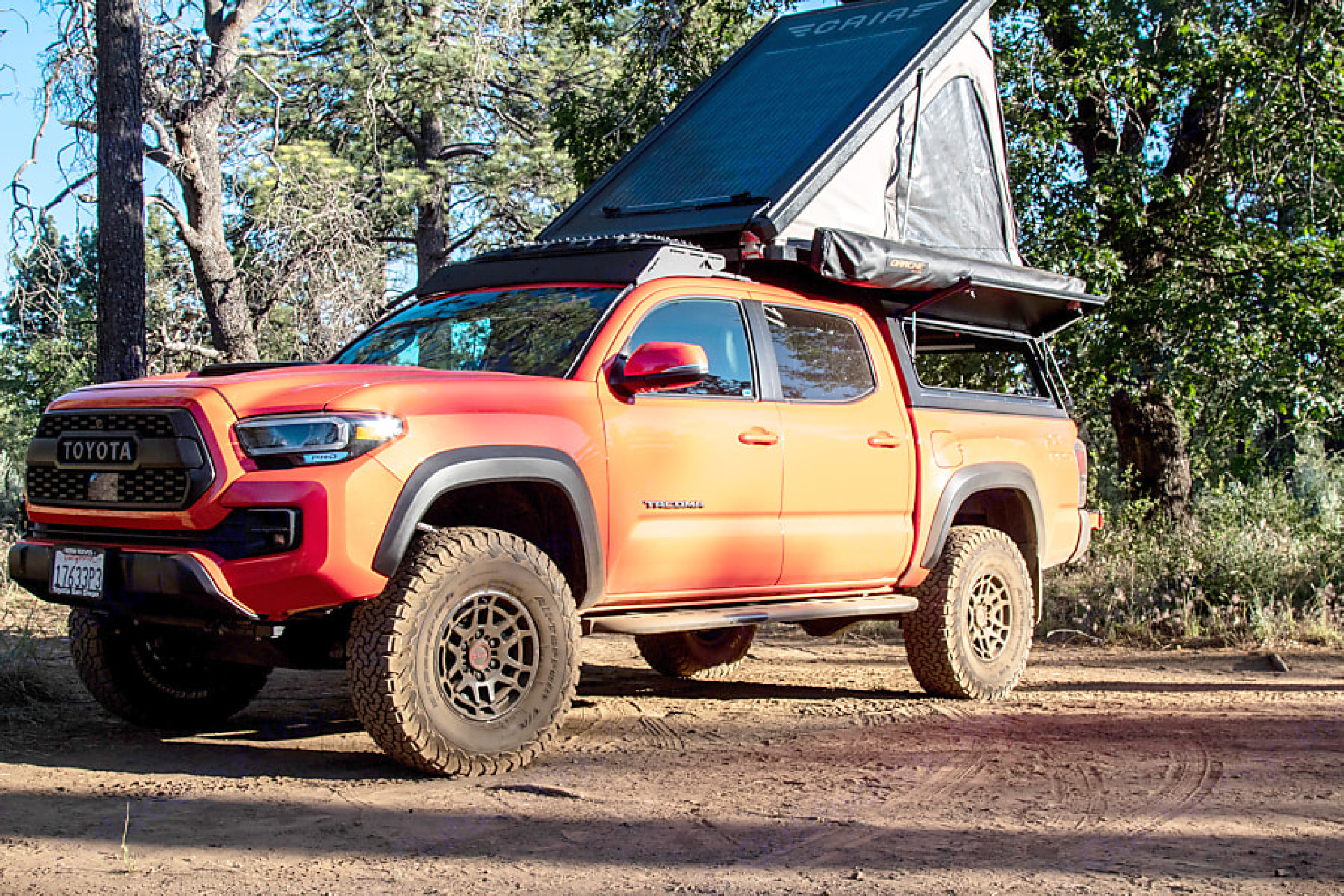
A rooftop tent needs a site where the vehicle can park and the tent can be deployed. Some “tent only” sites may be walk-in sites, so read the description rather than relying on the label. For a campervan, check vehicle-length limits, water access and any waste-disposal facilities you need. Our guide to overnight stays in a camping vehicle in the USA covers these checks in more detail.
Which vehicle suits the trip?
The San Diego listings describe two different setups: an AWD Sprinter with an interior bed for two and a Tacoma with a camper setup for two. The Sprinter lists two belted seats. The Tacoma lists five seats but only two sleeping berths, so it should not be treated as a five-person sleeping arrangement.
An interior bed changes the way you set up camp compared with a deployable sleeping arrangement. Your choice also depends on included equipment, dimensions, total cost and rental restrictions. Compare the San Diego camping vehicle options and confirm the details that matter for your stay. This route on permitted roads does not require you to plan technical off-road driving.
Checks to make before each driving stage
- Check state highways through Caltrans and read park alerts before setting off.
- Confirm dates, collection arrangements, miles or kilometres included, fees, deposit and driving restrictions in your quote.
- Keep a backup campground and an accommodation option if conditions prevent you from using the sleeping setup.
- Check water, bedding, cooking equipment and protection from cold or sun; the word “camper” does not define how long you can stay without services.
- Keep booking confirmations offline and check fire restrictions before using any permitted cooking equipment.
Frequently asked questions
Can I add Baja California in Mexico?
This itinerary stays in the United States. The San Diego vehicle listings say that travel outside the country is not allowed. A Mexico trip needs a suitable vehicle offer and rental conditions; it cannot simply be added by changing the route.
Can I collect in Los Angeles instead?
The listings referenced here are located in San Diego. They do not confirm collection in Los Angeles, delivery or a one-way rental. Arrange flights and transfers around the collection and return details accepted for your request.
Do I have to pay to ask about availability?
A Pampa Cruz booking request is free and carries no obligation, with no immediate payment. Browse the USA vehicle catalogue, choose the setup that suits you and provide your dates to receive the conditions for your trip.