
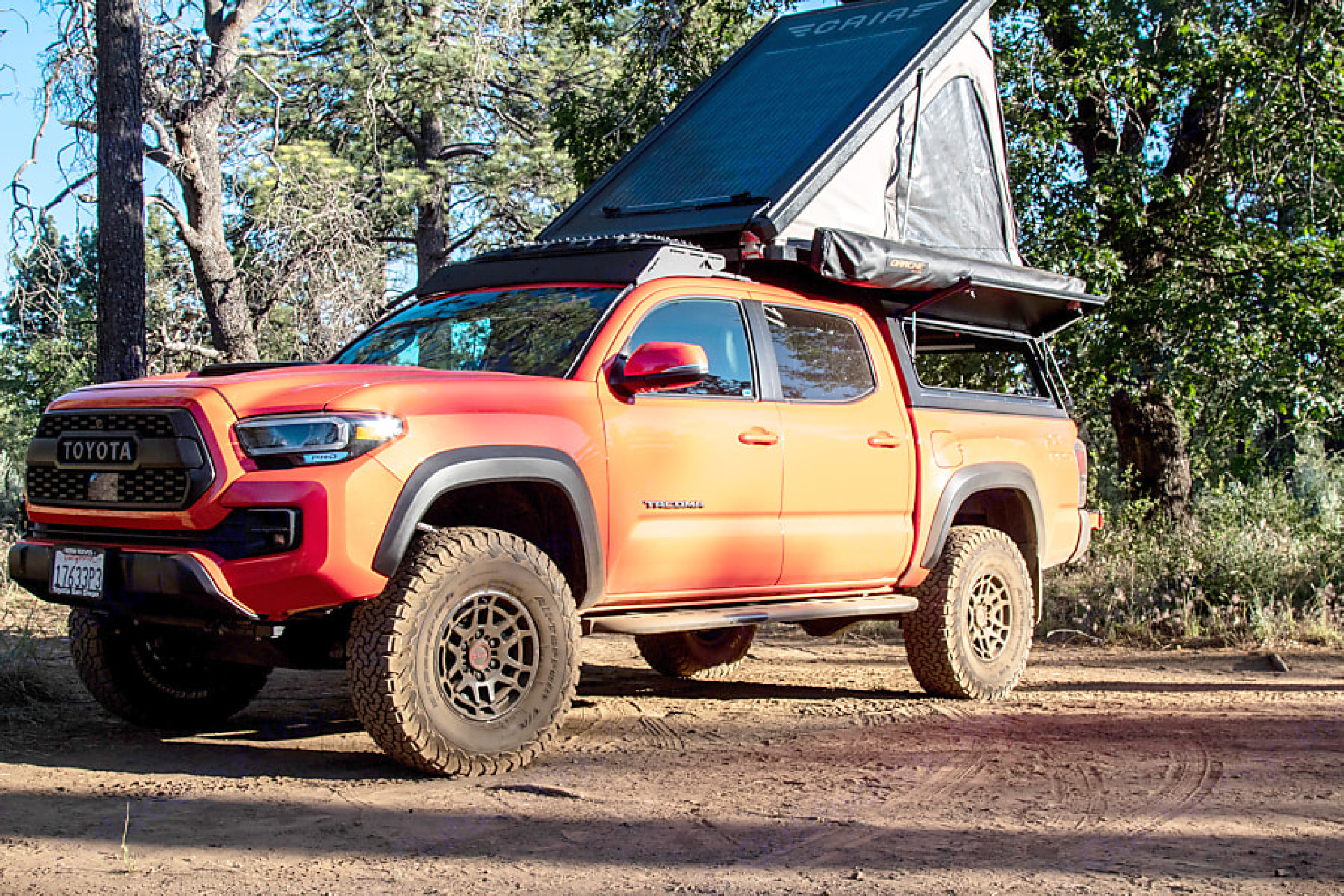
Unfolding a rooftop tent beside a desert landscape or waking near a forest can be a memorable part of an American road trip. Choosing the overnight stop takes planning, too. Permission to camp, a suitable access road and a pitch that accepts your setup are three separate checks.
This guide covers the continental United States, with trips from San Diego and Denver in mind. Start with our USA rental listings, then plan each night around the sleeping setup you will actually use: a rooftop tent, a pickup camper or an interior bed.
Which type of overnight stop suits your trip?
The best option can change from one day to the next. A developed campground makes a useful first stop after a flight; a night without services needs more preparation. Use this comparison to decide what to ask, rather than treating a type of land as automatic permission to camp.
| Type of place | Why consider it? | Check before arrival |
|---|---|---|
| National Park campground | Stay near the places you plan to visit. | Reservation, pitch dimensions, accepted vehicle type and actual facilities. |
| State Park campground | Add a coastal, desert or forest stop. | The individual park’s rules, booking process and fees. |
| Private campground | Choose a stop around the services you need. | Acceptance of your rooftop tent or camper, arrival times and total price. |
| BLM land | Consider a night outside a developed campground where allowed. | Local rules, stay limits, fire restrictions and legal vehicle access. |
| National Forest | Find a stop reached by an open forest road. | Permission to camp in that area, the MVUM and current closures. |
National Park campgrounds vary in facilities and rules. The National Park Service’s campsite guidance explains checks such as size restrictions and reservations. State Parks have separate rules: Anza-Borrego in California is one example.
Dispersed camping does not mean camping anywhere
On BLM land, dispersed camping (outside developed facilities) is often possible, but some areas are closed or restricted. Check conditions, stay limits and fees with the local field office; do not assume it is free. Keep vehicles on authorised routes. The official BLM camping guidance is a starting point for these checks.
A pin in an app is a research lead, not a reservation or proof of permission. Identify the land manager and check their current rules. If you cannot establish who manages the site or whether overnight camping is allowed, choose a different stop.
A trailhead parking area, picnic site and campground are different facilities. Being able to park during a visit does not establish that you may spend the night there. Check signs, operating hours and site rules before opening the tent or setting up camp.
Five checks when booking a rooftop-tent or camper pitch
- Describe your setup. Give the vehicle model, length and height, then explain where the tent, ladder and any awning extend. Calling it simply a car leaves too much uncertainty.
- Check the specific pitch. Ask whether the vehicle can remain where you will sleep. A walk-in tent site does not provide that arrangement.
- Confirm each service. Drinking water, toilets, showers, waste disposal and electricity are separate facilities. List what you need and check which services operate on your dates.
- Plan your arrival. Save the latest entry time, late-arrival instructions, booking reference and check-in procedure.
- Keep an alternative. Identify a second campground or accommodation option before leaving an area with mobile reception.
A useful message is: “We are travelling with a vehicle-mounted rooftop tent that opens to the side. May we sleep in this setup on the pitch we have selected? What space and facilities are available?” For an interior-sleeping camper or van, describe that arrangement and its dimensions instead.
Keep the answer with your booking details. A saved confirmation is much more useful at arrival than trying to remember a phone conversation, particularly when another staff member is on duty. If your selected vehicle changes, check that the replacement still fits the agreed pitch.
Legal access, vehicle suitability and rental permission
In a National Forest, a Motor Vehicle Use Map, or MVUM, identifies designated motorised routes and seasonal conditions. A track appearing on a general map or on the ground is not sufficient evidence of permission. Check current closures with the forest as well.
Then compare the route with the vehicle and rental agreement. Ask three separate questions: is this route legally open to this vehicle type? Do its current conditions suit the vehicle and your experience? Does the rental agreement and insurance permit that exact use? One positive answer does not answer the other questions.
An AWD van, a 4×4 and a pickup camper can differ in clearance, dimensions and loading. Four driven wheels do not create a right to travel off designated routes. For National Parks, read the NPS guidance on off-road driving and the rules for the park you intend to visit.
Reservations and costs: entry, camping and access are separate
When booking a federal campground, start with the park’s official camping information and follow its booking link, often to Recreation.gov. Check when reservations are released rather than assuming every site has the same booking window. A full campground should not turn into a last-minute search for a parking space at sunset.
Park costs need particular attention. As checked on 12 November 2026, the NPS lists the Non-Resident Annual Pass at USD 250. An additional USD 100 per nonresident visitor aged 16 or over applies at eleven major parks unless covered by an eligible pass. Check your circumstances and the rules for your travel dates; the former USD 80 annual price is not a universal visitor rate.
The federal annual pass does not pay for campground nights; budget for any pitch services separately. In California, State Parks have their own passes. An entrance pass does not replace a timed-entry reservation where required. Keep three lines in your budget: admission, the campsite, and additional reservations or services.
Compare the full overnight cost, too. A pitch with the facilities you need may fit the trip better than a cheaper site that adds a long detour for water or a shower. Do not confuse this planning calculation with a fixed price: confirm the actual booking total for your party and dates.
Water, fire, waste and food: preparing a night without services
Before a remote stop, check what is actually in the vehicle: usable water, power, refrigeration, cooking equipment, lighting and a toilet arrangement. Plan supplies to the next refill point, with a margin for changing the route. An advertised tank capacity does not establish how much drinking water will be provided at collection.
Check whether your stove may be used and read the current fire restrictions. In California, a campfire permit does not override a local fire ban. The BLM’s California fire restrictions distinguish open fires from appliances allowed under specific conditions. Carry a meal that needs no cooking if conditions require it.
Plan rubbish and wastewater disposal before arriving. Locate appropriate toilets and disposal points; for undeveloped areas, ask which human-waste method is required. The NPS explains that suitable practices depend on the location. Do not assume that a shovel or portable toilet is included in your rental.
In bear areas, store food, rubbish and other scented items according to local rules. The NPS food-storage guidance varies by park: a fridge or box inside the vehicle does not automatically replace a required food locker. Keep food out of your tent.
Make these checks part of the daily routine. Before driving away, ask whether you have enough supplies to reach the next planned stop and whether that stop is still usable. A short refill or a change of campground is easier to manage early in the day.
Planning nights from San Diego or Denver
For Southern California, choose your stops with our road-trip guide from San Diego and compare the described setups on the California and San Diego rental page. For Colorado, use the route from Denver and the Denver and Colorado rental page. These cities are departure points; a park on the itinerary is not an advertised collection location.
Secure the overnight stops that matter most, then allow flexibility between them. Before each drive, review the weather, road and arrival time. Our guide to when to travel in California and Colorado helps you choose a period and prepare alternatives.
Frequently asked questions
Should I book a tent site or an RV site?
Ask the campground to classify your setup. “Tent site” may mean a ground tent, while an RV pitch may have particular requirements. Describe the vehicle and how the sleeping area opens before booking.
Does a rooftop tent give me access to more camping land?
It changes your sleeping setup, not the land rules. First find a place that accepts your vehicle and this form of camping, then check the space and access it needs.
What if my planned campground becomes inaccessible?
Contact the campground if possible, use your alternative and adjust the day’s route. Shortening an itinerary is preferable to searching an unfamiliar area very late or continuing along a road whose condition is unclear.
Can I rely on equipment described in another listing?
No. Plan around the vehicle you request and the confirmation for your trip. Before confirming the rental, ask about the essentials, particularly the sleeping setup, bedding, water and cooking arrangements.
Browse the USA vehicles and provide your dates, number of travellers and intended route. Your booking request is free and carries no obligation, with no immediate payment; availability and arrangements are confirmed for your trip.