

Cover photo: Meg von Haartman / Unsplash.
Updated 19 November 2026. Lire en français
Choosing the best places to visit in Peru starts with a practical question: how do you want to travel between them? A camper can take you between towns in the Sacred Valley, but the usual journey to Machu Picchu continues by train. A coastal reserve has designated visitor routes, while a mountain lake may require a substantial hike. A rewarding Peru adventure trip comes from matching the region to your time, interests and pace.
This guide connects the highlights with the journeys they involve. The suggested stays are planning recommendations, not official minimum visit times. Long transfers, acclimatisation and contingency days need their own space in your schedule. Once you have chosen a region, use our two- and three-week Peru road trip itineraries to turn those choices into a route.
Which part of Peru fits your trip?
| What interests you? | Region to consider | How you visit | Suggested time in the region |
|---|---|---|---|
| Desert, coast and archaeology | Paracas, Ica, Huacachina and Nazca | Main roads and walking; separate boat trip or scenic flight if wanted | 5–8 days, excluding the return journey from Lima |
| A city break and Andean scenery | Arequipa and Colca | Mountain roads, viewpoints and walks; canyon trekking is a separate activity | 5–7 days or longer, depending on acclimatisation |
| Inca history and valley towns | Cusco and the Sacred Valley | Road between places, walking at sites, then train for Machu Picchu | 6–9 days at a pace suited to altitude |
| Hiking and mountain lakes | Huaraz and the Cordillera Blanca | Road to permitted access points, then trails; park operator requirements apply | A week or more, excluding the long approach |
| Lake scenery and community visits | Puno and Lake Titicaca | Road to lakeside places; boat for lake excursions | 3–4 days after allowing for acclimatisation |
| Rainforest and wildlife | Tambopata | River transport, trails and an authorised operator | 3–5 days locally as a separate part of the trip |
Treat these as alternatives to compare. Trying to combine all of them in a fortnight leaves little time beyond transfers. If you want to drive at an unhurried pace and spend several nights in the same place, give your first trip a clear geographical focus.
The southern coast: Paracas, Huacachina and Nazca
Paracas: where the desert meets the Pacific
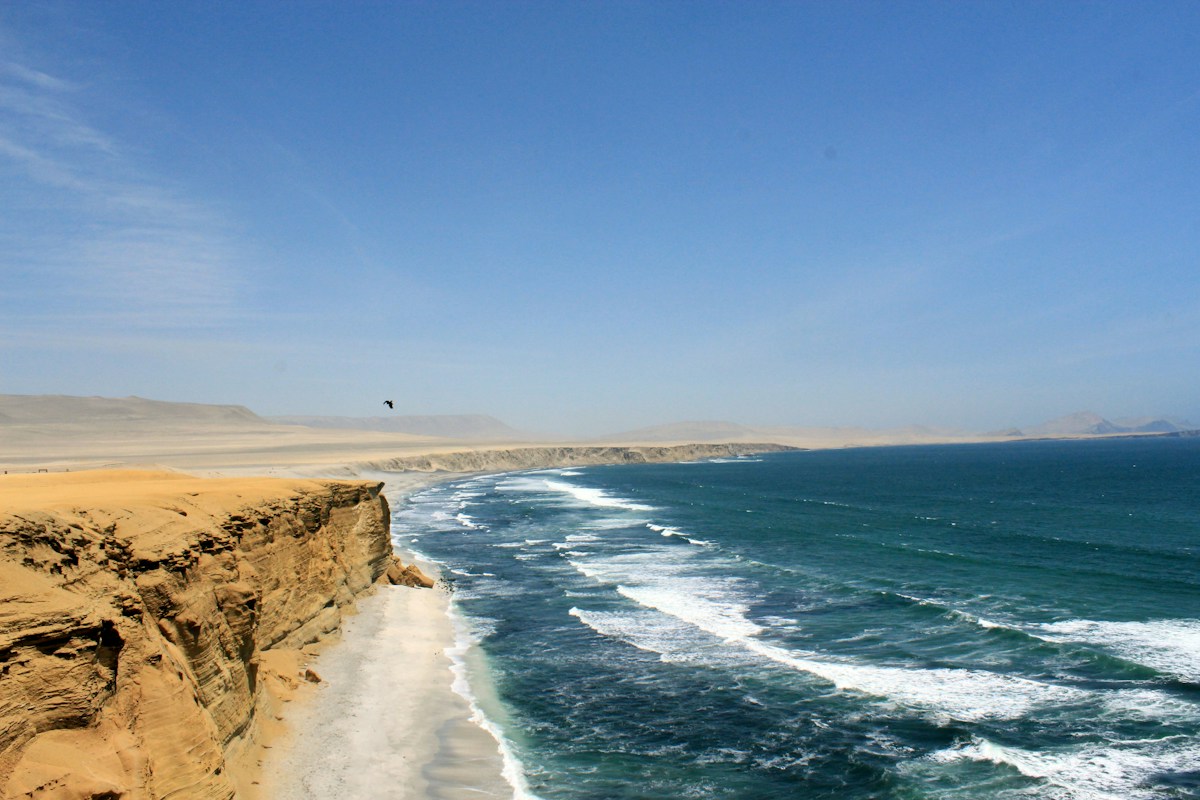
Paracas suits travellers who want a landscape day without another long intercity drive. Coastal viewpoints, desert scenery and walks in open visitor areas can fill a day. A vehicle gives you control over the order of those stops, subject to the reserve’s permitted routes. Check the SERNANP visitor information for Paracas National Reserve for entry arrangements and current access.
Arrange the overnight stop separately from the reserve visit. A visitor ticket does not automatically allow camping. A confirmed place to stay is especially useful early in a camper trip, when you are still getting used to the sleeping arrangement, storage and meal preparation. Leave enough daylight to settle in rather than searching for a place after the excursion.
The Ballestas Islands: leave the vehicle ashore
The Ballestas Islands are a boat excursion, not a driving destination. SERNANP describes the maritime visitor route and its wildlife interests. Book the outing separately and confirm that it is operating. Keeping a second possible morning in Paracas gives you some flexibility if sea conditions change. Wildlife sightings should always be treated as a possibility, never a promised part of the trip.
Huacachina and Nazca: dunes and archaeology
Near Ica, Huacachina brings a different desert landscape, with an oasis framed by dunes. Allow a relaxed half-day, or longer if you arrange an activity. The Huacachina conservation area is not an unrestricted driving playground. Hiring a 4×4 does not give you permission to take it onto the dunes. Parking, sand activities and any guided excursion have to be organised on their own terms.
Further south, the Nazca Lines call for a deliberate stop rather than a quick detour. Roadside observation points and scenic flights offer different ways to approach the archaeology. Choose according to your interests, budget and the conditions at the time. The geoglyphs are protected landscapes, not tracks to explore. Two nights around Nazca can make the journey feel less rushed and leave time to return north in stages.
Arequipa and Colca: allow time before going higher
Arequipa gives a nature-focused trip some time in a city. Several days without a major transfer let you explore on foot and prepare the next part of the journey. Reaching it by road from Lima takes several driving days. It fits more naturally into a three-week plan than into the final spare days of a short coastal trip.
There are several ways to experience the Colca Valley and Canyon. Villages and viewpoints, including Cruz del Cóndor, form one kind of visit. Trekking down into the canyon is another, with its own time and physical demands. A road-accessible viewpoint can still be a high-altitude outing, and the approach itself crosses higher terrain.
The CDC’s altitude guidance stresses the importance of ascent rate; fitness does not prevent altitude illness. Build in a gradual approach and an option to omit Colca. If symptoms develop after ascent, do not continue higher and seek help. The itinerary must remain changeable.
Cusco, the Sacred Valley and Machu Picchu
Give the valley time of its own
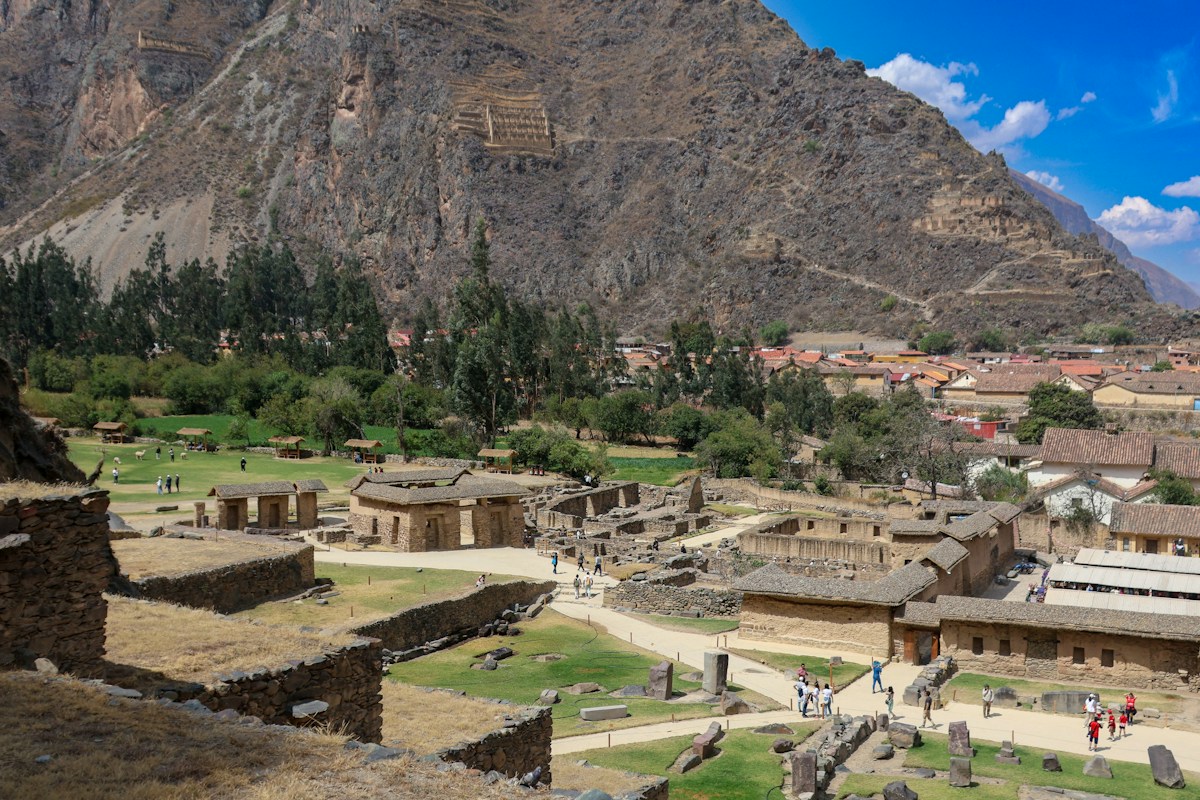
If Inca history is your main reason for visiting Peru, the Cusco region can be the centre of the trip. The Sacred Valley includes places such as Pisac, Maras, Moray and Ollantaytambo. A vehicle can connect them, but the sites themselves are explored on foot and have individual entry conditions. There is no need to compress every place into a single day.
Choose a few visits that interest you and leave time for the towns, local markets and rest. Staying an extra night in one valley may be more satisfying than driving a long way to a place described as hidden. Ask before photographing people and respect community spaces. These everyday decisions help make independent travel thoughtful without turning each encounter into an activity to collect.
Machu Picchu is not the end of a camper road
The usual route to Machu Picchu combines a road journey to Ollantaytambo, a train to Machu Picchu Pueblo and a permitted transfer or walk to the citadel. Arrange secure parking and decide what to take with you. Train tickets, entry, transfers and a guide, if chosen, are separate bookings.
The visitor regulation published in September 2026 ties admission to the named visitor, date, time and route. Check entry availability first, then choose compatible transport. Avoid relying on a tight arrival after a long drive; include an overnight stay appropriate to your train and entry times. A vehicle booking does not secure a Machu Picchu ticket.
One way to combine this region with the coast is to return the camper in Lima and arrange Cusco as a separate stay. A second rental or a different return city would need explicit confirmation. A route drawn on a map does not establish a rental handover arrangement.
Huaraz and the Cordillera Blanca: plan around the hikes
The Cordillera Blanca makes sense for travellers who want several days in the mountains. Getting to Huaraz is only the beginning: allow time to adjust to altitude, reach the trail areas and move an activity when conditions are unsuitable. Long approaches should not use up the days you intended to spend walking.
A lake reached by a hike is not a roadside stop. Keep that distinction in mind for Laguna 69. The official Huascarán National Park page sets out visitor sectors, activities and authorised operator requirements. Confirm the rules for the activity you choose, including whether your vehicle may reach the relevant access point. A listed camping area does not establish that a camper can enter or stay there.
If hiking is the priority, build the journey around this region. Adding it to a schedule already extending far into southern Peru introduces another major set of transfers and can remove useful rest days.
Lake Titicaca and the Amazon need different travel arrangements
Lake Titicaca can be experienced from its shores and from the water. SERNANP describes lake routes and community tourism initiatives. A vehicle helps with some land journeys, but it does not replace the boat arrangements for an island visit. Give this region its own nights and account for altitude before adding it to your route.
Tambopata has a different travel pattern again. The national reserve’s visitor information describes river and walking approaches and requires an authorised operator. Organise the transfers, accommodation and activities as a distinct rainforest stay. It should not be presented as a straightforward extra camper night at the end of a road.
Turn a wish list into a workable adventure
Start with three decisions: your main interest, your actual number of days in Peru and how much driving you enjoy. Choose one geographical group of places. Put fixed-date visits, rest nights and the return buffer into the calendar before adding detours. If the plan is too full, remove an entire region rather than shaving a little time from every stop.
Next, check whether the season suits the route. The climate regions described by PROMPERÚ do not share one ideal calendar. Our guide to the best time for a Peru road trip connects travel dates with route choices. Review your government’s current advice, the FCDO regional information where relevant, and SUTRAN road alerts before finalising the journey.
Use our camping and camper preparation guide to plan overnight stops and supplies. Then check the actual seating and sleeping capacity, documented equipment, permitted roads and rental terms. Your Peru road trip budget should include the activities and transfers that happen without the vehicle as well.
Send a free, no-obligation rental request with no immediate payment. Vehicle availability and rental terms must be confirmed for your dates.
Questions about Peru’s highlights
Can I see the main sights in two weeks?
You can visit a well-chosen selection. A coastal return trip from Lima gives an independent driver time for visits and breaks. If Machu Picchu is the main goal, give the Cusco region a substantial share of the holiday rather than adding it to an already long road loop.
Do I need a 4×4 to visit the highlights?
That depends on the permitted route and its condition. Four-wheel drive does not authorise access to a track, dunes or protected land. Choose the route first, read our driving in Peru guide, then compare suitable vehicles and their living arrangements.
Does adventure travel mean hiring a guide everywhere?
You can plan suitable parts of the journey independently while booking individual activities separately. Protected areas have their own rules. For each stop, establish which part is by road, which is on foot, and whether an operator or an advance ticket is required.
Information and sources checked on 19 November 2026. Recheck openings, access rules and visit conditions before travelling.